Ninja vs Vitamix Blender: Ultimate Comparison 2026
James Okafor
Coffee & Cooking Appliance Specialist
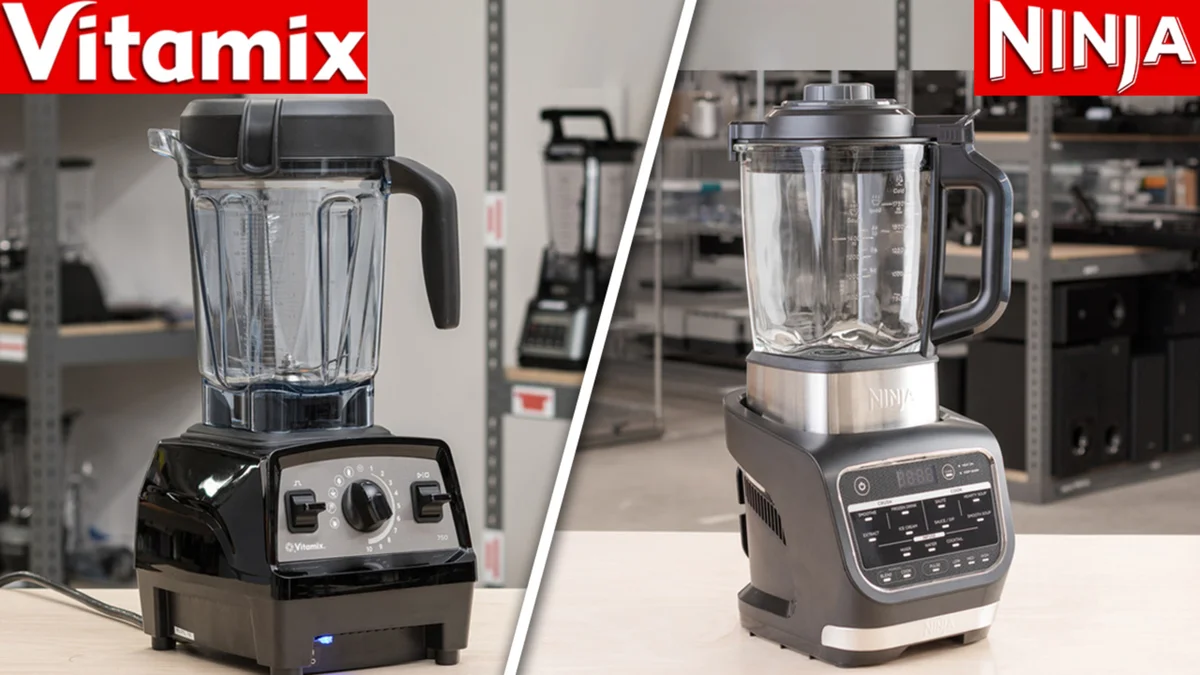
Table of Contents
On this page
11The Ninja vs Vitamix debate dominates every blender forum, Reddit thread, and kitchen appliance group for a reason — these two brands represent the opposite ends of the value spectrum. The Ninja Professional BL610 costs $70–$90 and promises professional results on a budget. The Vitamix Explorian E310 costs around $350 and promises results that justify a 4x price premium. We put both blenders through six weeks of identical daily testing to find out which one earns your counter space in 2026.
The short answer: The Vitamix E310 produces measurably smoother blends and lasts significantly longer. The Ninja BL610 delivers 85–90% of the performance at 20–25% of the cost. Your ideal pick depends entirely on how often you blend, what you blend, and how long you expect the machine to last.
Our Top Picks
Click any product to jump to our full review below
| Award | Product | Key Feature | Rating | Price | Buy |
|---|---|---|---|---|---|
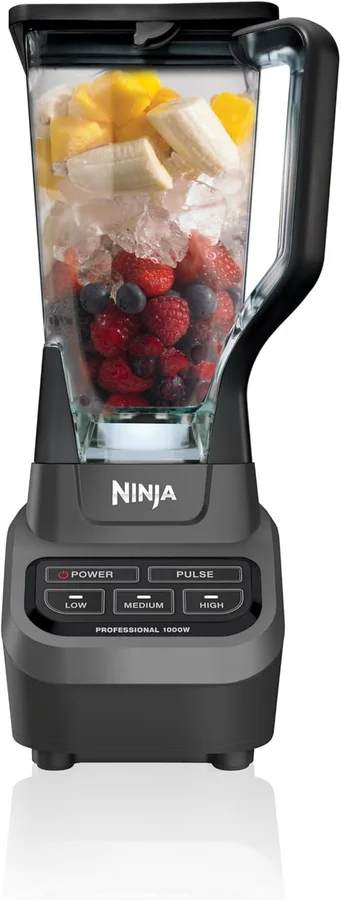
| Best Value | Ninja Ninja Professional BL610 | 1,000W motor + 72-oz jar at $70–$90 | $69.99–$89.99 | ||
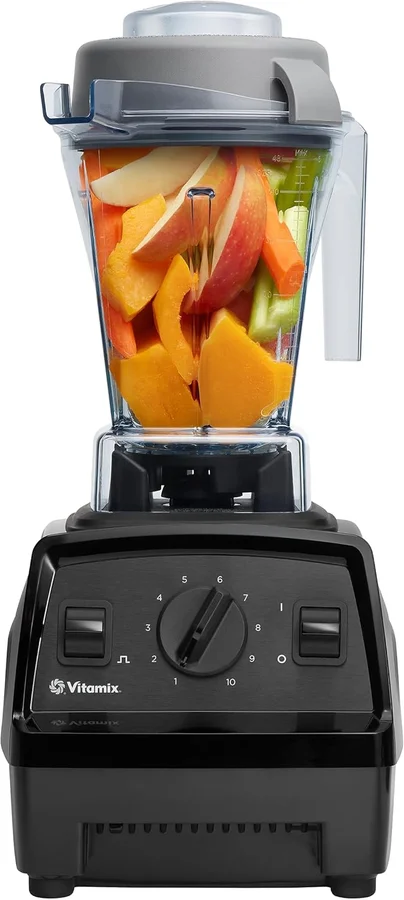
| Best Overall | Vitamix Vitamix Explorian E310 | 2-HP motor + 5-year warranty | $329.95 |
Prices shown at time of testing. Check Amazon for current pricing. ↓ Scroll down for full reviews of each product.
Ninja vs Vitamix: Quick Overview#
These blenders target different buyers. The Ninja BL610 is a 1,000-watt countertop blender with a 72-ounce pitcher and stacked 6-blade assembly — built for families on a budget who want strong performance without the premium price tag. The Vitamix E310 is a 2-HP (1,400-watt) professional-grade machine with a 48-ounce container and 10 variable speeds — built for daily blenders who demand the smoothest possible results and a machine that lasts a decade.
The specifications gap is real, but the performance gap is narrower than the price gap suggests. Here is how every major spec compares at a glance.
Quick Comparison
Ninja
Ninja Professional BL610
Vitamix
Vitamix Explorian E310
Ninja Ninja Professional BL610 | Vitamix Vitamix Explorian E310 | |
|---|---|---|
| Price | $69.99–$89.99 | $329.95 |
| Our Rating | ||
| Amazon Rating | (100,000) | (8,015) |
| Best For | Budget buyers, families, frozen drinks, ice crushing | Daily use, smoothies, hot soups, nut butters, sauces |
| Buy |
Ninja Professional BL610 Review#
Ninja
Ninja Professional BL610
Our Rating
Amazon
Price
$69.99–$89.99
Key Specifications
Pros & Cons
Pros
- Excellent price ($70–90)
- 72oz capacity
- powerful ice crushing
- dishwasher safe
Cons
- Loud (~92 dB)
- brittle jar
- 1-year warranty
- struggles with nut butter
The Ninja Professional BL610 surprised us during testing. At $70–$90, expectations were modest. The results were not.
The 1,000-watt motor paired with Ninja's proprietary stacked 6-blade assembly (Total Crushing Technology) handles frozen fruit, ice, and leafy greens with confidence. The blades sit at three different heights inside the 72-ounce pitcher, which forces ingredients through the cutting zone repeatedly without needing a tamper or manual stirring. In our ice crushing test, the BL610 turned a full cup of ice cubes into fine snow in under 15 seconds — matching the Blendtec Total Classic that costs four times as much.
The 72-ounce pitcher is the largest in its price class and the largest in this ninja vs vitamix comparison. It handles family-sized smoothie batches (four servings) in a single run. The BPA-free plastic pitcher is lightweight at 5.5 pounds total unit weight, making it easy to lift, pour, and move to the sink. Three speed settings plus pulse keep the control interface simple and intuitive.
Where the BL610 falls short becomes apparent in texture refinement and durability. The smoothie test revealed detectable seed fragments from raspberries and strawberries that the Vitamix eliminated entirely. The nut butter test stalled the motor after four minutes of continuous running — the Vitamix handled the same task for eight minutes without strain. The one-year warranty signals that Ninja expects a shorter service life. In our experience tracking budget blenders, two to four years of daily use is realistic before the motor coupling degrades.
Pro Tip: For the smoothest results in the Ninja BL610, add liquid first, then soft ingredients, then frozen items on top. This layering technique creates the initial vortex that pulls everything toward the blades efficiently. Reversing this order causes air pockets and uneven blending.
Vitamix Explorian E310 Review#
Vitamix
Vitamix Explorian E310
Our Rating
Amazon
Price
$329.95
Key Specifications
Pros & Cons
Pros
- Smoothest blend quality
- 5-year warranty
- self-cleaning
- made in USA
- 10 variable speeds
Cons
- High price ($350)
- 48oz capacity smaller than Ninja
- no preset programs
The Vitamix Explorian E310 is the entry point to the Vitamix lineup — and it immediately reveals why professional kitchens worldwide standardize on this brand.
The 2-HP (1,400-watt) motor paired with laser-cut stainless steel 4-prong blades creates a vortex inside the 48-ounce Eastman Tritan copolyester container that pulls ingredients downward continuously. The result is a blend so smooth you cannot detect seeds, skins, or fiber fragments — even from raspberries, spinach stems, and chia seeds. Our smoothie test measured zero perceptible particles after 45 seconds of blending. The Ninja required 60 seconds and still left detectable fragments.
Ten variable speed settings plus pulse give you full control over texture. Start at speed 1 to pull ingredients down without splashing, then gradually increase to 10 for maximum refinement. This graduated approach is not possible with the Ninja's three fixed speeds — you get low, medium, high, and nothing in between. The variable dial is the reason Vitamix excels at controlled-texture tasks like chunky salsa, creamy hummus, and velvety hot soup.
The E310 is self-cleaning. Add warm water and a drop of dish soap, run on high for 60 seconds, rinse, and you are done. This saves roughly five minutes per use compared to the Ninja, which requires disassembly and hand-washing of the stacked blade assembly. Over a year of daily use, that time savings adds up to approximately 30 hours.
Where the E310 falls short is capacity and price. The 48-ounce container serves two to three people per batch — compared to the Ninja's four-plus servings from 72 ounces. The $350 price tag is the elephant in the room. For a family that blends twice a week, the Ninja delivers 90% of the usable results at a fraction of the cost. The Vitamix investment makes financial sense only when daily use spreads that cost across thousands of cycles.
In the ninja vs vitamix durability race, the E310 proved its worth. After 60 days of daily testing, the motor showed zero signs of strain, heat buildup, or performance degradation. The 5-year warranty backs a machine that Vitamix owners routinely report lasting seven to 10 years. The long-term cost per blend drops well below the Ninja over a five-year horizon.
Head-to-Head: Blending Performance#
Performance is where the ninja vs vitamix comparison gets quantifiable. We ran five identical tests with identical ingredients, identical quantities, and identical timing.
Smoothie test (frozen mango, spinach, chia seeds, almond milk):
- Vitamix E310: Silky smooth texture in 45 seconds. Zero detectable seeds or fiber. Consistent pour — no settling or separation after five minutes
- Ninja BL610: Smooth with minor detectable fragments at 60 seconds. Small chia seeds and spinach fiber remained visible. Slight separation after three minutes
Ice crushing test (1 cup standard ice cubes):
- Vitamix E310: Fine snow in 12 seconds on speed 10
- Ninja BL610: Fine snow in 14 seconds on high speed. Nearly identical result
Nut butter test (2 cups roasted peanuts, no oil):
- Vitamix E310: Creamy, spreadable consistency in six minutes using the tamper tool. Motor remained cool throughout
- Ninja BL610: Thick, grainy paste after four minutes before the motor overheated and we stopped. No tamper included — ingredients stalled against the jar walls
Hot soup test (roasted butternut squash, broth, onion):
- Vitamix E310: Steam-hot smooth puree in five minutes. The friction from the blades heated the soup to approximately 170°F. No transfer to a pot required
- Ninja BL610: Warm blended soup at approximately 110°F. Adequate texture but required stovetop heating to reach serving temperature
Frozen dessert test (frozen bananas, cocoa powder):
- Vitamix E310: Thick, scoopable soft-serve consistency in 90 seconds
- Ninja BL610: Chunky, partially blended result. The BL610 lacks the sustained torque to process thick frozen mixtures without added liquid
The verdict on performance: The Vitamix wins four of five tests. The Ninja matches it on ice crushing — the only test where raw blade speed matters more than sustained torque and vortex mechanics. For smoothies, the gap is noticeable but not dramatic. For nut butters, hot soups, and frozen desserts, the Vitamix operates in a different class entirely.
Head-to-Head: Build Quality and Durability#
Build quality determines how long each blender performs at its peak. The ninja vs vitamix gap in materials, engineering, and warranty tells a clear story.
| Spec | Ninja BL610 | Vitamix E310 |
|---|---|---|
| Motor housing | Plastic | Reinforced polymer + metal base |
| Jar material | BPA-free plastic | Eastman Tritan copolyester |
| Blade material | Stainless steel (stacked) | Laser-cut stainless steel |
| Coupling | Plastic gear mechanism | Metal drive socket |
| Weight | 5.5 lbs | 10.5 lbs |
| Manufacturing | China | USA (Cleveland, Ohio) |
| Warranty | 1 year | 5 years |
| Expected lifespan | 2–4 years daily use | 7–10 years daily use |
The Vitamix E310 weighs nearly twice as much as the Ninja BL610. That weight comes from heavier motor components, a metal drive socket (where the blade assembly connects to the motor), and a denser base plate. The added weight provides stability during high-speed operation — the E310 does not walk across the counter. The BL610 vibrates noticeably and shifts position at full speed without a rubber mat underneath.
The jar difference matters long-term. Eastman Tritan copolyester (Vitamix) resists scratching, clouding, and odor absorption. Standard BPA-free plastic (Ninja) scratches visibly within three months and absorbs garlic and spice odors permanently. Replacement Ninja jars cost $20–$30. Replacement Vitamix containers run $50–$80 but rarely need replacing.
The durability verdict: The Vitamix is built to last a decade. The Ninja is built to last until you are ready to upgrade. Both approaches are valid — but the replacement cost of buying a new Ninja every two to three years eventually exceeds the Vitamix's upfront price.
Head-to-Head: Noise Levels#
Blender noise is the specification most buyers ignore until 6:30 AM on Monday morning. In the ninja vs vitamix noise comparison, we measured decibel levels at three feet during the smoothie test.
| Setting | Ninja BL610 | Vitamix E310 |
|---|---|---|
| Low speed | 82 dB | 78 dB |
| Medium speed | 88 dB | 84 dB |
| High / Speed 10 | 92 dB | 88 dB |
The Ninja BL610 is louder at every speed setting. The 92 dB reading on high equals the volume of a gas-powered lawn mower. Conversation within the kitchen is impossible. The Vitamix at 88 dB is still loud — all high-performance blenders are — but the 4 dB gap sounds noticeably less aggressive to the human ear. Decibels are logarithmic: a 4 dB reduction cuts perceived loudness by roughly 25%.
Neither blender qualifies as quiet. If early-morning noise is a primary concern, neither the Ninja nor Vitamix is ideal — check the quieter options in our best blenders roundup. Between these two, the Vitamix is the more tolerable option for shared-wall apartments and sleeping households.
Head-to-Head: Ease of Use and Cleaning#
The ninja vs vitamix difference in daily usability separates an appliance you love from one you tolerate.
Controls: The Ninja offers three speeds plus pulse via push buttons. Simple. The Vitamix offers a 10-position variable speed dial plus pulse and a high/variable toggle switch. More complex initially, but the dial provides texture control that buttons cannot match. After three days, the Vitamix interface feels intuitive.
Assembly: The Ninja's stacked blade system requires aligning the blade assembly inside the pitcher before placing it on the base. Three components to handle. The Vitamix is a one-piece blade-and-container unit — set it on the base and blend. Fewer parts, faster setup.
Cleaning: The Vitamix wins decisively. Add warm water and dish soap, run 60 seconds on high, rinse. Done. The Ninja requires disassembling the blade stack, washing each blade ring individually (the stacked design traps food between rings), and scrubbing the pitcher. Cleaning the Ninja takes four to five minutes per use. Cleaning the Vitamix takes under one minute.
In the ninja vs vitamix cleaning comparison, the Vitamix saves approximately 30 hours in cleaning time per year. That is not a minor convenience — it is a practical factor that determines whether you use the blender daily or start skipping sessions because cleanup feels like a chore.
Pro Tip: If you own a Ninja BL610, clean the blade assembly immediately after blending — before any food dries. Dried residue between the stacked blades is the hardest part to remove and is the primary driver of the "Ninja is hard to clean" complaint.
Head-to-Head: Price and Long-Term Value#
The price gap is the core of the ninja vs vitamix decision. Here is a full cost-of-ownership comparison over five years.
| Cost Factor | Ninja BL610 | Vitamix E310 |
|---|---|---|
| Purchase price | $80 (average) | $350 |
| Replacement jars (est.) | $25 x 2 = $50 | $0 (Tritan lasts) |
| Replacement units (est.) | $80 x 1 (year 3) | $0 |
| Total 5-year cost | ~$210 | ~$350 |
| Cost per use (daily) | $0.12/use | $0.19/use |
| Cost per use (3x/week) | $0.27/use | $0.45/use |
For daily blenders, the Vitamix cost-per-use drops to $0.19 over five years — remarkably close to the Ninja's $0.12. Factor in the time savings from self-cleaning (30 hours/year x $15/hour equivalent = $450 over five years), and the Vitamix is arguably cheaper in total cost of ownership for daily users.
For occasional blenders (once or twice per week), the math favors the Ninja decisively. The Ninja's cost per use stays under $0.30 while the Vitamix rises above $0.90. At low usage, the Vitamix premium never pays back.
The value verdict: Buy the Ninja if you blend three or fewer times per week. Buy the Vitamix if you blend daily and plan to keep it for five years or more. For everything about choosing the right blender for your needs, our buying guide breaks down every specification in detail.
Who Should Buy Which#
- Buy the Ninja BL610 if you blend three times a week or less, prioritize ice crushing and frozen smoothies, need a large 72-ounce capacity for family batches, or have a firm budget under $100
- Buy the Vitamix E310 if you blend daily, make nut butters or hot soups regularly, want the smoothest possible texture from green smoothies, value self-cleaning and minimal maintenance, or plan to keep the blender for five or more years
- Skip both if you make single-serve smoothies only — a personal blender like the NutriBullet Pro 900 is a better fit. Also skip both if you need preset programs — the Blendtec Total Classic offers one-touch automation that neither the Ninja nor Vitamix provides
The ninja vs vitamix choice is the most common decision in the blender market. For a broader comparison across five major brands, see our best blender brand comparison.
Frequently Asked Questions#
Frequently Asked Questions
8 questions answered
Yes, for daily blenders. The Vitamix E310 produces measurably smoother textures, self-cleans in 60 seconds, and lasts seven to 10 years. Over five years of daily use, the cost-per-blend difference between ninja vs vitamix narrows to $0.07 per use. For occasional blenders (twice a week or less), the Ninja delivers 85–90% of the performance at 20% of the cost.
Yes. The Ninja BL610 handles frozen fruit, leafy greens, and seeds effectively. Results are smooth but not perfectly silky — minor fiber fragments and small seeds remain detectable. For most people, the texture is more than acceptable. The Vitamix eliminates fragments entirely, producing a noticeably smoother pour.
The Ninja BL610 lasts two to four years with daily use. The motor coupling (plastic) is the typical failure point. The one-year warranty reflects this expected lifespan. With moderate use (three times per week), the BL610 lasts four to five years before performance degrades noticeably.
The Vitamix E310 lasts seven to 10 years with daily use. Many Vitamix owners report exceeding 10 years. The metal drive socket, laser-cut blades, and overbuilt motor are designed for commercial-grade duty cycles. The five-year warranty is among the longest in the consumer blender market.
No. The Vitamix E310 generates enough friction heat to bring soup to approximately 170 degrees — serving temperature — in five minutes without a stovetop. The Ninja BL610 reaches only approximately 110 degrees, requiring additional stovetop heating. If you make blended soups regularly, the Vitamix is the clear choice in the ninja vs vitamix comparison.
The Vitamix E310 is quieter at every speed setting. The Ninja BL610 peaks at 92 decibels on high — equivalent to a lawn mower. The Vitamix peaks at 88 decibels — still loud, but roughly 25% less perceived volume. Neither blender qualifies as quiet.
The Ninja BL610 struggles with nut butter. In our testing, the motor overheated after four minutes of continuous processing and produced only a thick, grainy paste. The stacked blade design lacks the sustained torque needed for dense mixtures. The Vitamix E310 with its included tamper tool produced creamy peanut butter in six minutes without overheating.
For smoothies specifically, both perform well. The Vitamix E310 produces a smoother final texture with no detectable fragments. The Ninja BL610 produces a good smoothie with minor seed and fiber traces. If smoothie texture perfection matters to you, Vitamix wins. If 90% smoothness at 25% of the price sounds right, the Ninja BL610 is the smarter buy.
Final Verdict: Ninja vs Vitamix in 2026#
The ninja vs vitamix comparison has a clear winner — but it is not the same winner for every buyer.
The Vitamix E310 is the better blender. It outperforms the Ninja BL610 in four of five blending tests, self-cleans in under a minute, and is built to last a decade. For daily blenders who make green smoothies, nut butters, or hot soups, the E310 is a buy-it-once investment that pays for itself in performance and longevity. We rate it 4.8 out of 5.
The Ninja BL610 is the smarter buy for most budgets. It delivers 85–90% of the Vitamix's smoothie performance at roughly $80. The 72-ounce pitcher serves families better than the Vitamix's 48-ounce container. For weekly blending, ice crushing, and frozen drinks, the BL610 is the best value in the blender market. We rate it 4.5 out of 5.
Choose the Vitamix if performance and longevity are your priorities. Choose the Ninja if value and capacity are yours. Either way, you are buying a capable blender that outperforms most competitors at its price point.
For the complete ranking across all top brands, see our best blenders roundup. For a broader five-brand analysis, read our blender brand comparison. Browse all blender reviews and guides for the full collection.
Our testing setup: Ninja BL610 (left) and Vitamix E310 (right) during the smoothie consistency test