How to Choose an Air Fryer: Complete Buyer's Guide 2026
James Okafor
Coffee & Cooking Appliance Specialist
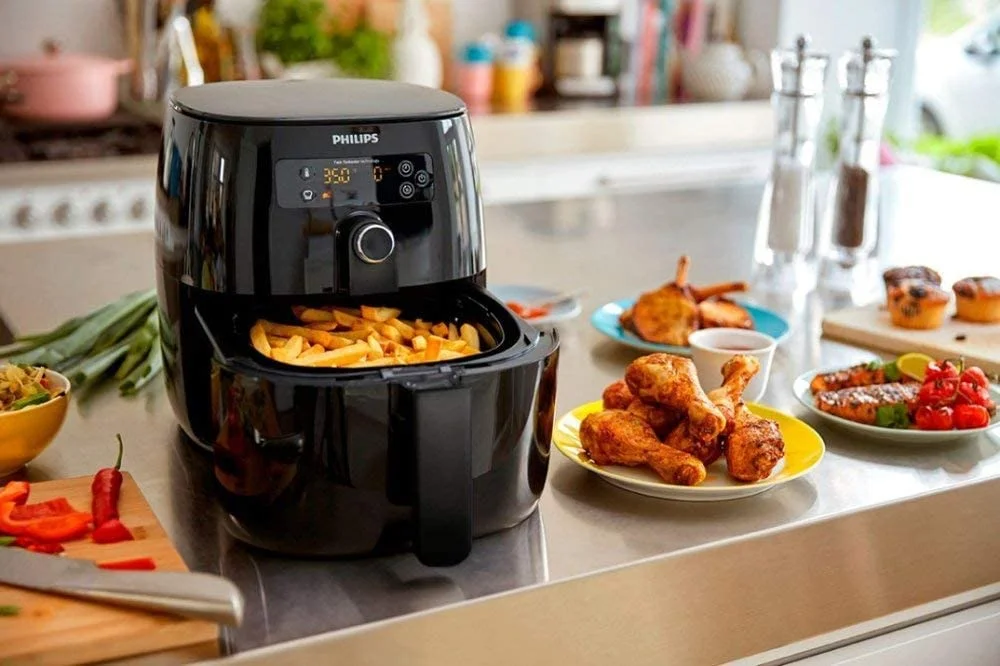
Table of Contents
On this page
26Picking the wrong air fryer means wasted counter space, undercooked food, and buyer's remorse. Knowing how to choose air fryer models that match your kitchen, your household size, and your cooking habits saves you from all three. This guide breaks down every specification, every type, and every mistake buyers make — so you walk into your purchase with confidence. Whether you cook for one or a family of six, you will know exactly what to look for by the end.
Air fryers have evolved rapidly since 2020. The 2026 market includes basket-style fryers, dual-zone models, oven-style units, and combination appliances that toast, bake, dehydrate, and rotisserie. Choosing the right one starts with understanding what separates a $40 impulse buy from a $250 countertop workhorse. We have tested over 30 air fryers across every price point and style. This guide distills those findings into actionable buying criteria.
For our full product picks, check out our best air fryers roundup. If you already own an air fryer and need cleaning advice, our air fryer maintenance guide covers every step.
How to Choose Air Fryer: Key Specifications That Matter#
Every air fryer purchase comes down to five core specifications. Understanding each one prevents overspending on features you don't need — and underspending on ones you do.
Capacity (Quarts)#
Capacity is the single most important specification. Buy too small and you cook in frustrating batches. Buy too large and you waste energy and counter space on an appliance that dwarfs your kitchen.
Here is a quick sizing guide based on household size:
- 1–2 people: 2 to 4 quarts is sufficient for single servings of fries, wings, or vegetables
- 3–4 people: 5 to 6 quarts handles a full meal without batch cooking
- 5+ people: 7 quarts or larger, or a dual-basket model that cooks two dishes simultaneously
A critical nuance: Advertised capacity is total basket volume, not usable cooking space. A 6-quart basket holds roughly 1.5 pounds of french fries in a single layer. Stacking food blocks airflow and produces soggy results. Always assume you will use about 60–70% of the advertised capacity for optimal results.
Pro Tip: If you frequently cook for guests or meal prep, size up by one tier. A 6-quart air fryer gives a couple of extra servings room to breathe without taking up drastically more counter space.
Wattage and Heating Power#
Wattage determines how quickly your air fryer reaches cooking temperature and how well it maintains heat during cooking. Most air fryers range from 800 watts to 1,800 watts.
- 800–1,200 watts: Found in compact 2–3 quart models. Adequate for reheating, small portions, and light cooking
- 1,300–1,500 watts: The sweet spot for 4–6 quart models. Enough power to crisp frozen foods and cook raw proteins evenly
- 1,600–1,800 watts: Found in large and oven-style models. Necessary for 8+ quart capacities and for achieving restaurant-quality browning
Higher wattage does not automatically mean better food. A 1,700-watt element in a 4-quart basket overheats thin items like tortilla chips. Match wattage to capacity. The ideal ratio is roughly 250–300 watts per quart of basket size.
Temperature Range#
Most air fryers operate between 180°F and 400°F. That range covers the vast majority of home cooking tasks. A few things to check:
- Low-temperature capability (below 200°F): Essential if you plan to dehydrate jerky, fruit, or herbs. Not all models go this low
- High-temperature ceiling (400°F+): Useful for searing steak or achieving deep browning on chicken thighs. Some budget models cap at 380°F
- Temperature increments: Premium models adjust in 5°F steps. Budget models use 10°F or even 25°F increments. Finer control produces more consistent results
A model that reaches 400°F and drops to 170°F covers dehydrating through searing. That flexibility eliminates the need for a standalone dehydrator.
Timer and Controls#
Air fryer controls fall into two categories: digital and manual dial.
Digital controls offer precise temperature settings, countdown timers, preset cooking programs, and sometimes Wi-Fi connectivity. They are easier to use for beginners because presets remove guesswork. The downside is that digital panels can fail over time, and replacement is rarely cost-effective.
Manual dial controls are simpler and more durable. A temperature dial and a mechanical timer give you full control with zero risk of electronic failure. The tradeoff is less precision — you estimate rather than set exact temperatures.
For most home cooks, digital controls with at least six to eight presets offer the best balance of convenience and flexibility. If you value longevity above all, manual dials last longer.
Build Quality and Materials#
The basket and interior coating directly affect food safety, durability, and cleanup.
- Nonstick coating (PTFE): The most common. Easy to clean but scratches over time. Avoid metal utensils
- Ceramic coating: PTFE-free alternative. Slightly less nonstick but more scratch-resistant. Popular with health-conscious buyers
- Stainless steel basket: The most durable option. Found in premium models. Requires oil or parchment liners to prevent sticking
Check for BPA-free plastics in any model with a plastic housing. The basket, tray, and any food-contact surface should be certified food-safe at operating temperatures. Stainless steel interiors are the safest choice for high-heat cooking above 375°F.
Types of Air Fryers#
The air fryer market has split into four distinct categories. Each serves a different kitchen and cooking style. Choosing the right type narrows your search dramatically.
Basket-Style Air Fryers#
The original and most popular design. A pull-out basket sits inside a compact housing. Hot air circulates around the basket from a top-mounted heating element and fan.
Best for: Small kitchens, apartments, dorm rooms, quick weeknight meals, and single-purpose air frying.
Capacity range: 2 to 8 quarts.
Advantages:
- Smallest countertop footprint of any type
- Fastest preheat time (typically two to three minutes)
- Easiest to clean — basket slides out and goes in the dishwasher
- Most affordable price range ($40–$120)
Disadvantages:
- Limited to one cooking zone (no simultaneous dishes at different temperatures)
- Cannot fit tall items like a whole chicken
- Food visibility requires pulling out the basket, which drops internal temperature
Dual-Basket Air Fryers#
A newer design with two independent baskets, each with its own heating element, fan, temperature control, and timer. Models like those from Ninja popularized this category.
Best for: Families, meal preppers, anyone who wants to cook a protein and a side dish at the same time.
Capacity range: 8 to 10 quarts total (split across two baskets, typically 4–5 quarts each).
Advantages:
- Cook two dishes at different temperatures simultaneously
- Smart Finish features synchronize both baskets to end at the same time
- Total capacity rivals oven-style models with a smaller footprint
- Eliminates batch cooking for families of four or more
Disadvantages:
- Each individual basket is smaller than a comparably priced single-basket model
- Higher price point ($120–$200)
- Heavier and wider than single-basket units
- More parts to clean
Oven-Style Air Fryers (Toaster Oven Combos)#
A countertop oven with an air fry function. These replace your toaster oven entirely and add air frying, baking, broiling, dehydrating, and sometimes rotisserie capabilities.
Best for: Cooks who want one appliance to replace a toaster oven, air fryer, and dehydrator. Ideal for larger households and anyone who bakes frequently.
Capacity range: 10 to 30+ quarts (measured in interior cubic space).
Advantages:
- Largest cooking capacity — fits a 12-inch pizza, a whole chicken, or two racks of food
- Multi-function replaces three to four appliances
- Better food visibility through glass door
- Even cooking on multiple rack levels
Disadvantages:
- Largest countertop footprint (requires 14–18 inches of depth and overhead clearance)
- Slower preheat than basket models (five to eight minutes)
- Higher price range ($100–$350)
- Heavier (15–25 pounds) and harder to move or store
Paddle-Style Air Fryers#
A specialized design with an automatic stirring paddle that rotates food during cooking. This eliminates the need to shake or flip ingredients manually.
Best for: Hands-off cooking of loose items like fries, diced vegetables, stir-fry ingredients, and grain-based dishes.
Capacity range: 3 to 5 quarts.
Advantages:
- Automatic stirring produces even browning without manual shaking
- Set-and-forget convenience
- Good for one-pot meals and stir-fry style dishes
Disadvantages:
- Paddle can damage delicate foods (fish fillets, stuffed peppers)
- Limited availability compared to other types
- Not suitable for items that need to stay in a single layer (chicken cutlets, burgers)
- Higher price for the capacity ($150–$250)
Features Worth Paying For (And Features to Skip)#
Not every advertised feature improves your cooking. Here is an honest breakdown.
Worth the Extra Cost#
- Dishwasher-safe basket and tray: Saves five to 10 minutes of cleanup per use. Over a year of daily cooking, that adds up to 30+ hours
- Preheat function: Ensures consistent results from the first batch. Budget models that skip preheat produce uneven browning on the first cook cycle
- Shake reminder: A mid-cook alert that tells you to shake the basket. Simple but effective for even crisping
- Wide temperature range (170°F–400°F): Covers dehydrating through searing without needing separate appliances
- Keep warm function: Holds finished food at safe serving temperature while you cook a second batch
Not Worth the Premium#
- Wi-Fi connectivity and app control: Adds $30–$60 to the price. You still need to load and unload food manually, so remote monitoring adds little practical value
- Touchscreen displays: Look sleek but attract fingerprints and grease. Physical buttons and dials are more durable in a kitchen environment
- Excessive presets (20+): Most cooks use three to five presets regularly. Fifteen additional presets for specific foods you rarely cook add clutter, not value
- Built-in recipe screens: Tiny displays showing recipes are harder to read than your phone. A dedicated recipe app or cookbook serves you better
Common Mistakes When Choosing an Air Fryer#
Understanding how to choose air fryer models also means knowing what traps to avoid. These are the seven most common mistakes buyers make.
- Buying based on price alone: A $35 air fryer with a 2-quart basket and 800-watt element frustrates anyone cooking for more than one person. Spend $70–$100 for a meaningful upgrade in capacity and power
- Ignoring the footprint: Measure your counter space before buying. An oven-style air fryer needs 16 inches of depth and 6 inches of overhead clearance for ventilation. Many buyers return units that physically do not fit
- Overlooking basket shape: Round baskets waste space with square or rectangular foods. Square baskets accommodate more food per batch. If you cook a lot of fish fillets, pizza rolls, or chicken cutlets, a square basket increases usable area by 15–20%
- Skipping the preheat step: Air fryers that lack a preheat function force you to add time manually. Without preheating, the first three to four minutes of cooking produce steam instead of crispiness
- Choosing the wrong type for your cooking style: Paddle-style models sound convenient but ruin delicate proteins. Basket models limit you to one dish at a time. Match the type to what you actually cook most often
- Assuming all nonstick coatings are equal: Budget PTFE coatings degrade within 12 to 18 months of daily use. Ceramic and stainless steel alternatives cost more upfront but last two to three times longer
- Forgetting about noise: Air fryers contain high-speed fans. Larger models with powerful fans reach 55–65 decibels — comparable to a conversation. If your kitchen opens to a living area, this matters during movie night
How to Choose Air Fryer Size for Your Household#
Size selection deserves a dedicated breakdown because it is the number one source of buyer dissatisfaction. Here is a detailed matching guide based on real-world use, not marketing claims.
Solo Cooks and Couples#
A 3 to 4-quart air fryer handles a generous single serving or two moderate portions. At this size, you get the fastest preheat, the smallest footprint, and the lowest energy consumption. A 1,200-watt element paired with a 3.5-quart basket delivers crispy results in under 15 minutes for most meals.
Typical meals: One to two chicken breasts, a personal serving of fries, roasted vegetables for two, reheated leftovers.
Families of Three to Four#
A 5 to 6-quart model eliminates batch cooking for standard weeknight dinners. This is the most popular size category and offers the widest selection of models across every price point.
Typical meals: Four chicken thighs, a pound of frozen fries, a full batch of wings (12–16 pieces), roasted broccoli for the family.
Large Families and Entertainers#
A 7-quart or larger basket, a dual-basket model, or an oven-style unit handles big batches without quality loss. Dual-basket models are particularly efficient here because you cook the main dish and side dish simultaneously.
Typical meals: Two pounds of wings plus a tray of fries (dual-basket), a whole small chicken (oven-style), sheet pan dinners for six on two racks.
Pro Tip: If you meal prep on weekends, a dual-basket air fryer cuts total cooking time by 30–40% compared to a single-basket model. You prepare proteins and vegetables in parallel instead of in sequence.
Air Fryer Price Ranges: What You Get at Each Level#
Understanding how to choose air fryer models at different price points sets realistic expectations and prevents overspending.
Budget ($30–$70)#
Compact 2 to 4-quart baskets with basic dial or simple digital controls. Adequate for reheating, snacks, and light cooking for one to two people. Expect PTFE nonstick coating, a one-year warranty, and plastic housing.
Best value at this tier: Look for at least 1,200 watts and a 3.5-quart capacity. Anything below that struggles with frozen foods.
Mid-Range ($70–$150)#
The performance sweet spot. You get 5 to 6-quart capacity, 1,500-watt heating elements, digital controls with presets, dishwasher-safe parts, and better build quality. Most popular models from trusted brands fall here.
Best value at this tier: A 5.5-quart digital model with a preheat function and shake reminder. This configuration handles 90% of home cooking tasks.
For specific product recommendations at this price point, see our best air fryers under $100 guide.
Premium ($150–$350)#
Dual-basket systems, large oven-style units, and feature-rich models with stainless steel interiors, dehydrating functions, rotisserie attachments, and extended warranties. Worth it if you cook daily and want maximum versatility from a single appliance.
Best value at this tier: A dual-basket model with independent temperature zones and Smart Finish technology. It replaces the need for a separate toaster oven entirely.
Maintenance and Longevity Tips#
Your air fryer lasts longer when you care for it properly. These habits extend the life of any model by one to two years beyond its expected lifespan.
- Clean the basket after every use. Grease buildup reduces airflow and creates smoke. A quick wash with warm soapy water takes under two minutes
- Check the heating element monthly. Food particles and grease can accumulate on the coil or element. Wipe it with a damp cloth when the unit is cool and unplugged
- Avoid aerosol cooking sprays. Propellants in spray cans damage nonstick coatings. Use a pump-style oil sprayer or brush oil directly onto food
- Replace parchment liners regularly. Perforated parchment liners prevent food from sticking and protect the basket coating. They cost pennies per use and significantly extend basket life
- Store with the basket removed. Keeping the basket inside traps moisture and odors. Store them separately in a dry location
Frequently Asked Questions#
Frequently Asked Questions
8 questions answered
A 5 to 6-quart air fryer is the right size for a family of four. This capacity fits four chicken thighs, a pound of fries, or 12–16 wings in a single layer without batch cooking. Knowing how to choose air fryer capacity based on household size prevents the most common buying mistake.
Basket air fryers are better for speed, simplicity, and small kitchens. Oven-style air fryers are better for versatility and large meals. Choose a basket model if you value quick weeknight cooking. Choose an oven model if you want to replace your toaster oven and cook on multiple racks.
A good air fryer should have at least 1,300 to 1,500 watts for a 4 to 6-quart model. This wattage range provides enough power to crisp frozen foods and cook raw proteins evenly. Budget models under 1,000 watts struggle with frozen items and take longer to preheat.
Digital controls offer more precision and preset convenience, making them better for beginners. Dial controls are more durable and have fewer failure points. For everyday home cooking, digital models with six to eight presets strike the best balance of ease and reliability.
For a small kitchen, choose a compact basket-style air fryer in the 3 to 4-quart range. Measure your available counter space before buying — you need at least 12 inches of depth and 5 inches of clearance above the unit for ventilation. Basket models have the smallest footprint of any air fryer type.
A dual-basket air fryer is worth it if you regularly cook for four or more people. It lets you prepare a main dish and a side at different temperatures simultaneously, cutting total cook time by 30–40%. For one to two people, a standard single-basket model is more practical and affordable.
Most air fryers last three to five years with daily use. Premium models with stainless steel baskets and robust heating elements can last five to seven years. The heating element and nonstick coating are the first components to wear out. Proper cleaning after each use extends lifespan significantly.
Stainless steel is the safest air fryer cooking surface because it contains no chemical coatings. Ceramic coatings are the next best option — they are PTFE-free and PFOA-free. Standard nonstick PTFE coatings are safe at normal air fryer temperatures but degrade over time with daily use and abrasive cleaning.
Summary: How to Choose Air Fryer Models With Confidence#
The right air fryer depends on three factors: your household size, your counter space, and your cooking frequency. A 5 to 6-quart basket model with 1,400+ watts and digital controls covers the needs of most households. It is the safest, most versatile starting point.
If you cook for five or more people, a dual-basket or oven-style model eliminates batch cooking and adds multi-function flexibility. If you live alone or cook for two, a compact 3 to 4-quart basket saves space and energy.
Now that you know how to choose air fryer models that fit your life, browse our top-rated air fryer picks for specific product recommendations. You can also explore our full air fryer category for reviews, comparisons, and cooking guides that help you get the most out of your new appliance.
Basket, dual-basket, oven-style, and paddle air fryers compared side by side