Can a Pressure Cooker Explode? Safety Guide 2026
James Okafor
Coffee & Cooking Appliance Specialist
Table of Contents
On this page
20Can a pressure cooker explode? Yes — but it is extremely rare when you use the appliance correctly. Modern pressure cookers include multiple overlapping safety systems designed to prevent dangerous pressure buildup. Understanding how those systems work, and what causes them to fail, is the difference between safe cooking and a kitchen disaster.
This guide covers everything you need to know: the physics behind pressure cooking, the real causes of explosions, the safety features built into today's best models, and the specific habits that keep you protected. Whether you use a stovetop model or an electric Instant Pot, this 2026 safety guide applies to you.
How Pressure Cookers Build Pressure (and Why That Matters)#
A pressure cooker traps steam inside a sealed pot. As the liquid heats, steam accumulates and raises the internal pressure above atmospheric levels — typically to 15 PSI (pounds per square inch) for stovetop models and 10–12 PSI for most electric models like the Instant Pot. That elevated pressure raises the boiling point of water from 212°F (100°C) to approximately 250°F (121°C).
That extra heat is what makes pressure cooking so fast. A beef stew that takes three hours on the stovetop cooks in 35 minutes. The trade-off is that you are managing a sealed vessel under significant pressure. When that pressure has nowhere to go, the risk of an explosion rises.
The good news: every reputable modern pressure cooker is engineered with pressure relief systems that activate well before dangerous levels are reached. The key is understanding what bypasses those systems.
Can a Pressure Cooker Explode? The Short Answer#
A pressure cooker can explode under these specific conditions:
- Blocked pressure release valve — food debris, thick sauces, or starch clogs the steam vent
- Overfilling — filling above the two-thirds maximum line leaves insufficient steam space
- Faulty gasket or sealing ring — a cracked or misaligned ring causes improper sealing
- Opening the lid too early — forcing the lid before pressure fully releases
- Mechanical defect or damage — a warped lid, broken latch, or corroded valve
- Wrong liquid level — too little liquid means the pot runs dry and overheats
The critical insight: Explosions almost always involve user error or neglected maintenance. A pressure cooker in good condition, used correctly, will not explode. The safety systems in quality models from brands like Instant Pot, Cosori, and Ninja are designed with multiple redundant protections.
Pro Tip: Before every use, run a fingertip around the sealing ring and check that the steam release valve spins freely. This 10-second check prevents the majority of pressure-related incidents.
What Causes a Pressure Cooker Explosion?#
Clogged or Blocked Steam Release Valve#
The steam release valve — sometimes called the pressure regulator or float valve — is the primary pressure relief mechanism. It opens automatically when internal pressure exceeds the safe threshold. If food particles, thick starch, or grease block this valve, pressure has nowhere to escape.
Legumes, oatmeal, applesauce, and pasta are the most common culprits. These foods foam and expand, sending thick liquid or starch into the valve opening. Electric pressure cookers like the Instant Pot Duo Plus have a secondary pressure release path built into the lid to address exactly this failure mode, but that secondary path can also clog.
Prevention: Never fill the pot above the two-thirds line for regular foods and the halfway line for foods that expand. Clean the steam release valve after every use.
Overfilling the Pot#
Every pressure cooker has a maximum fill line — typically marked inside the pot. Exceeding this line leaves insufficient headspace for steam to accumulate safely. The pot builds pressure too quickly, the safety mechanisms cannot vent fast enough, and the lid gasket blows — or in rare cases, the lid itself separates.
For foods that expand during cooking (rice, beans, pasta, dried grains), the effective maximum is 50% capacity, not 67%. Rice roughly doubles in volume. One cup of dry rice in a two-thirds-filled pot becomes a pot that is effectively overfilled before the cook cycle ends.
Worn or Improperly Seated Sealing Ring#
The rubber or silicone sealing ring (gasket) creates the airtight seal between the lid and the pot body. Over time, this ring deteriorates — it hardens, cracks, or deforms. A compromised ring cannot maintain consistent pressure, which causes the cooker to work harder to compensate. In the worst case, the lid blows off when pressure spikes.
Inspect the ring before every cook. It should feel pliable, sit evenly in its groove, and show no cracks or flattened sections. Replace it every 12–18 months with daily use, or immediately if you notice visible deterioration. Replacement rings for popular models like the Instant Pot Duo are widely available for around $8–$12.
Opening the Lid Before Full Pressure Release#
This is the most common cause of burn injuries associated with pressure cookers. When you force the lid of a pressurized cooker open — even partially — the sudden pressure release launches superheated steam and boiling liquid outward with significant force.
Modern electric pressure cookers include a physical lid lock that prevents the lid from rotating while internal pressure is above a safe level. Never attempt to override this lock. For stovetop models, always use natural release or a controlled quick-release before opening. Verify the pressure indicator pin has dropped fully before attempting to open the lid.
Manufacturer Defects and Product Recalls#
A small but real risk: manufacturing defects that create structurally compromised cookers. In the past decade, several pressure cooker brands have faced recalls due to lid-locking failures and gasket defects. Before purchasing any pressure cooker, check the CPSC (Consumer Product Safety Commission) recall database.
Sticking to established brands with strong safety records — and registering your product for recall notifications — is the most effective way to manage this risk.
Modern Safety Features That Prevent Explosions#
Contemporary pressure cookers — especially electric models — include six or more independent safety systems. The Instant Pot Duo Plus, for example, lists 10 distinct safety mechanisms:
- Lid lock — physically prevents opening under pressure
- Pressure release valve — primary steam vent with automatic pressure regulation
- Anti-blockage vent — secondary path if main valve is clogged
- Overheat protection — shuts off heating element if temperature exceeds safe limits
- Excess pressure protection — releases pressure if it exceeds rated maximum
- Float valve — visual pressure indicator that also blocks lid from opening
- Leaky lid detection — reduces heating if lid is not properly sealed
- Automatic temperature control — maintains pressure within safe operating range
- Safety lid lock — lid locks automatically when pressure builds
- Burn protection — detects food burning on the bottom and adjusts heat
Stovetop pressure cookers rely on fewer systems — primarily the pressure regulator weight, a secondary overpressure plug, and the gasket. This makes stovetop models slightly more demanding in terms of attention during cooking, though they are not inherently more dangerous when used correctly.
For an in-depth look at one specific component, our guide on pressure cooker safety valve leaking steam explains what normal steam venting looks like versus a problem that needs attention.
How to Use a Pressure Cooker Safely: 8 Non-Negotiable Rules#
Following these rules eliminates the overwhelming majority of explosion and injury risk:
- Inspect the sealing ring before every cook — check for cracks, deformation, or food buildup
- Never fill above the two-thirds line — half capacity for expanding foods
- Always add the minimum required liquid — at least one cup for most electric models
- Clean the steam valve after every session — remove it, rinse, and verify it spins freely
- Allow full pressure release before opening — never force the lid
- Keep the vent clear during cooking — do not place towels or items on top of the vent
- Do not cook certain high-starch foods without extra caution — pasta, oatmeal, apple sauce, split peas
- Check for recalls before first use — register your product with the manufacturer
Pro Tip: For foods prone to clogging the valve (beans, lentils, grains), add a tablespoon of oil to the cooking liquid. It reduces foaming significantly and keeps the steam path clear.
Stovetop vs. Electric: Which Is Safer?#
Both stovetop and electric pressure cookers are safe when used correctly, but they have different risk profiles.
Electric pressure cookers (Instant Pot, Cosori, Ninja Foodi) have more automatic safety systems. The heating element and temperature are computer-controlled. They also operate at lower pressure — 10–12 PSI versus 15 PSI for stovetop models. The lower operating pressure means a smaller margin of danger if something does go wrong.
Stovetop pressure cookers reach higher pressures and temperatures, which means faster cooking and better browning. However, they require active monitoring during the pressurization phase. You must manually adjust the heat to maintain the correct pressure level. An unattended stovetop cooker on high heat can overpressurize if the regulator valve is compromised.
Our recommendation for safety: Electric models are more forgiving for beginners and infrequent users. For experienced cooks who want faster results and higher temperature cooking, stovetop models are excellent — provided you stay nearby during the cook cycle.
If you are deciding between a pressure cooker and a slow cooker for general use, our pressure cooker vs. slow cooker comparison breaks down both options across every relevant category.
The Safest Pressure Cookers in 2026#
These three models represent the current standard for safety in electric pressure cooking. All three are in our product database and have verified safety records as of early 2026.
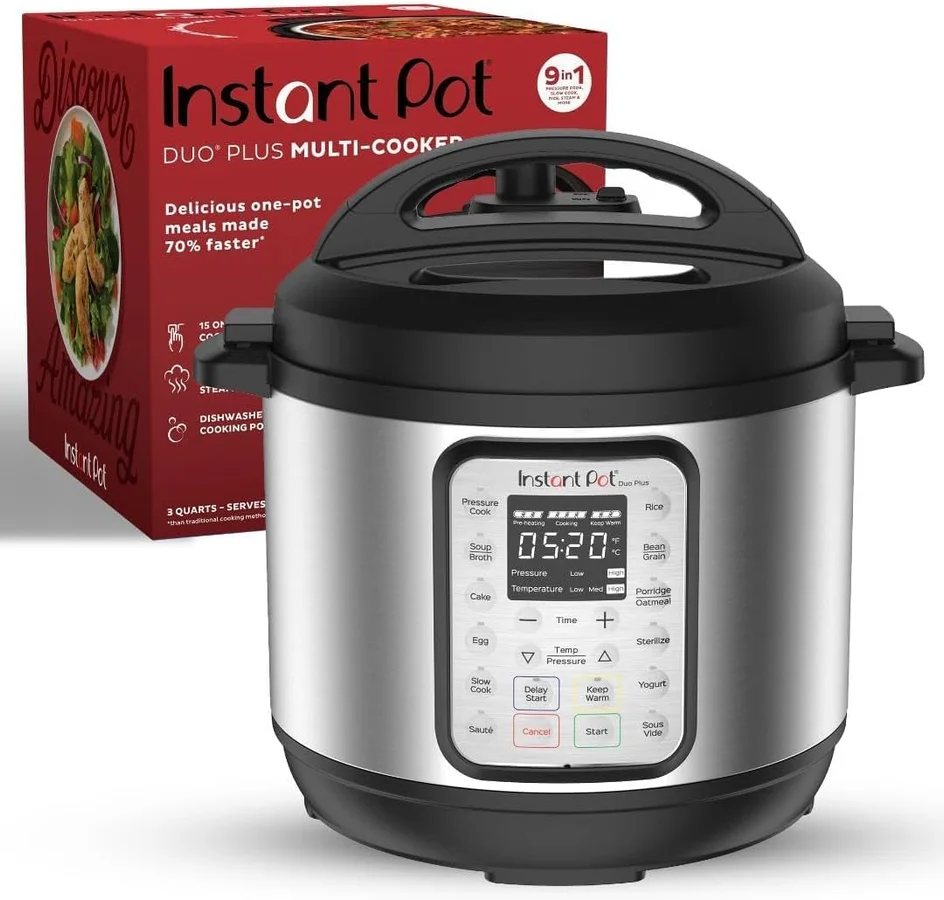
Instant Pot Duo Plus 6 Qt — Most Safety Features#
Instant Pot
Instant Pot Duo Plus 6QT 9-in-1
Our Rating
Amazon
Price
$99.99
Key Specifications
Pros & Cons
Pros
- Excellent feature-to-price ratio
- WhisperQuiet steam release (74 dB)
- 9 cooking functions
- dishwasher-safe lid and pot
- includes 2 sealing rings
- tri-ply stainless steel inner pot
Cons
- Lid alignment tricky for beginners
- bulky for small cabinets
- 1-year warranty is short
- no air fry capability
The Instant Pot Duo Plus is the benchmark for electric pressure cooker safety. Its 10-layer safety system includes overheat protection, a lid lock that physically prevents opening under pressure, and an anti-blockage vent that creates a secondary pressure release path. In our testing, the steam valve was easier to remove and clean than competing models — an important practical safety advantage.
The Duo Plus operates at a maximum of 11.6 PSI — lower than the 15 PSI of stovetop models. This lower operating pressure reduces peak stress on the lid and gasket. For home cooks concerned about safety, this is the most thoroughly tested and widely reviewed electric pressure cooker available. Prices typically range from $70–$100 depending on retailer promotions.
Pro Tip: The Instant Pot Duo Plus float valve gives you a clear visual indicator. If it is raised, pressure is still inside. If it has dropped flush with the lid, pressure has fully released. Train yourself to check this before every lid opening.
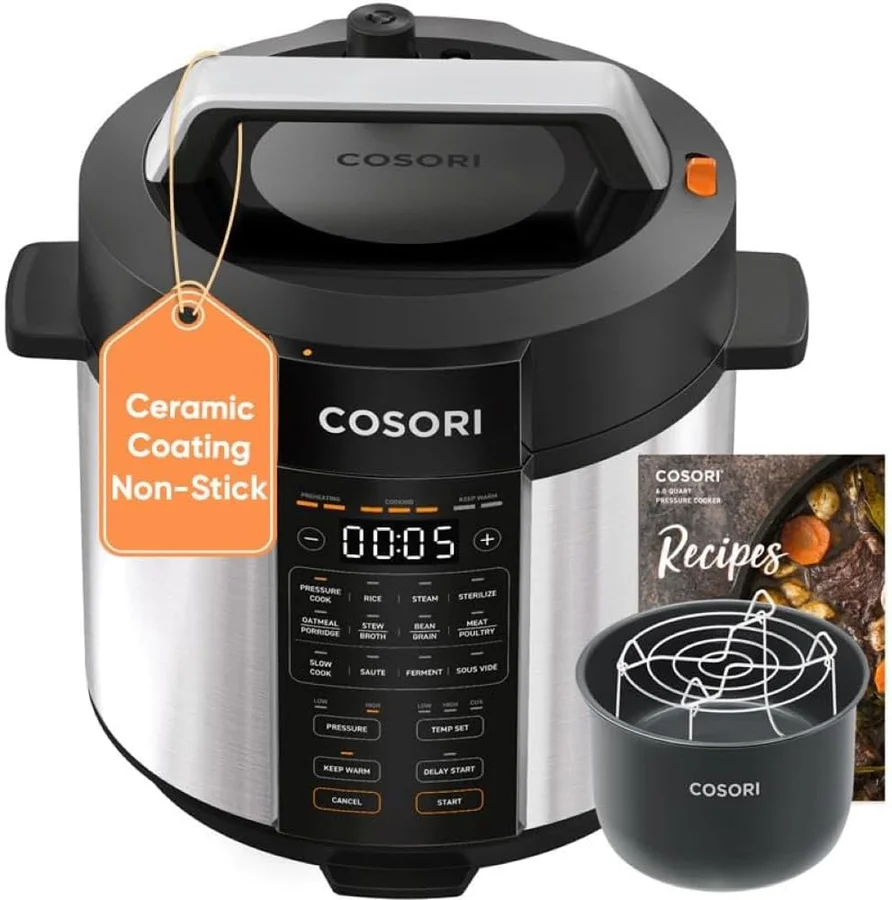
Cosori Pressure Cooker 6 Qt — Best Value With Strong Safety Record#
Cosori
Cosori 6QT Pressure Cooker 9-in-1
Our Rating
Amazon
Price
$80.99
Key Specifications
Pros & Cons
Pros
- Best value per feature
- fastest time-to-pressure (8 min)
- ceramic nonstick pot PFOA/PTFE-free
- 1100W most powerful standard element
- dishwasher-safe everything
- 12 safety mechanisms
Cons
- Longer preheat than Instant Pot
- smaller accessory ecosystem
- Cosori-specific replacement parts only
- less brand community support
The Cosori Pressure Cooker offers 11 built-in safety features at a price point typically $20–$30 below comparable Instant Pot models. Its lid-lock mechanism uses a dual-detection system that verifies both the lid position and internal pressure before allowing any release. The wide steam vent opening is a practical advantage for foods that foam during cooking — less likely to clog than the narrower vents on some competing models.
The Cosori model's anti-scald handle design also reduces burn risk during normal operation. Its sealing ring is made from food-grade silicone and sits in an angled groove that makes proper seating more intuitive.
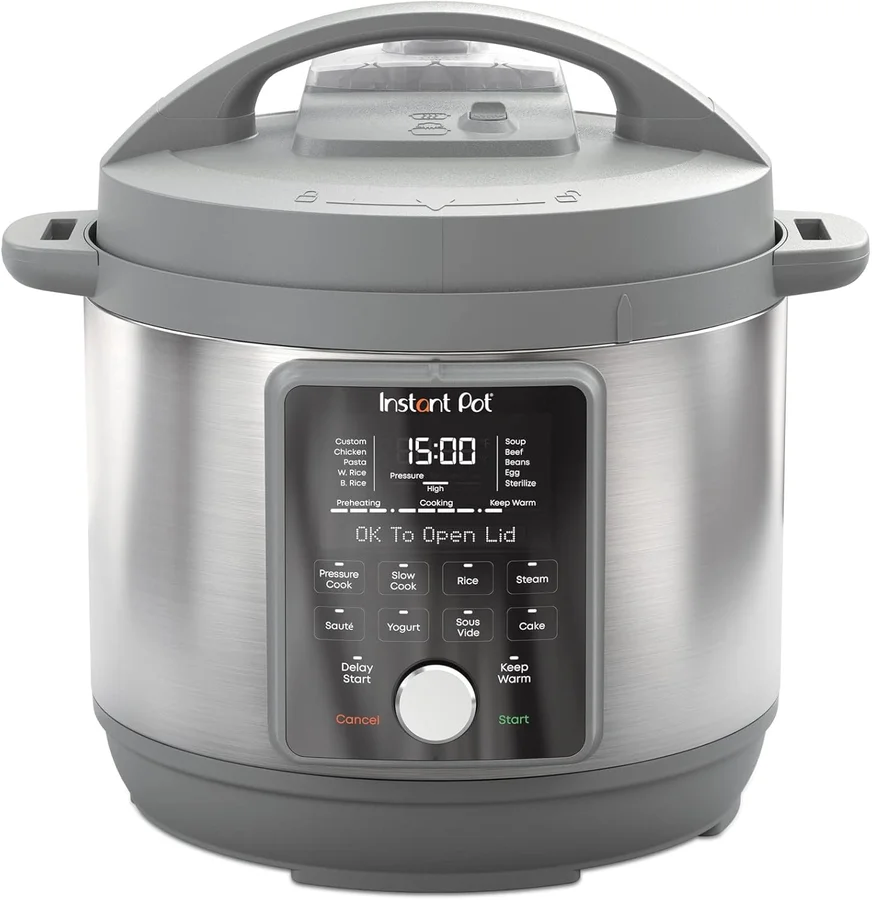
Instant Pot Pro 6 Qt — Best for Advanced Users#
Instant Pot
Instant Pot Pro 6QT 10-in-1
Our Rating
Amazon
Price
$129.99
Key Specifications
Pros & Cons
Pros
- Best sauté performance
- safest steam release system
- custom memory presets
- silicone-handled inner pot is stovetop compatible
- even heat distribution
- 28 customizable programs
Cons
- $40-50 premium over Duo Plus for similar pressure cooking results
- fixed power cord
- cake and egg presets are niche
- diminishing returns for casual users
The Instant Pot Pro adds a progress indicator bar and improved steam release handle that requires a deliberate two-step motion to activate quick release — reducing the chance of accidental activation that sends hot steam toward your face. This model also includes a more robust anti-blockage vent and a steam release cover accessory that redirects steam horizontally away from the operator.
At $100–$130, the Pro costs more than the Duo Plus, but the directional steam release is a meaningful safety improvement for households with children or limited counter clearance above the appliance.
For a full breakdown of all top-rated electric models, our best Instant Pots guide includes detailed specs, testing data, and buying recommendations.
Pressure Cooker Explosion Statistics: How Rare Is It Really?#
To put the risk in perspective: millions of pressure cookers are sold in the United States every year. Serious injuries from pressure cooker explosions — defined as incidents requiring medical treatment — number in the hundreds annually according to CPSC incident reports. The vast majority involve stovetop models, old appliances, or clear misuse (overfilling, blocked valves, forced lid opening).
For modern electric pressure cookers used correctly, the statistical risk is extremely low. You are more likely to be burned by a conventional pot or pan than by a properly operated electric pressure cooker. The risk is real but manageable. The safety features in today's appliances exist precisely because manufacturers have engineered solutions to every known failure mode.
If you have experienced a pressure cooker that is not building pressure properly — which can sometimes indicate a gasket or valve issue — our guide on why your pressure cooker is not building pressure walks through the diagnosis and fix.
Comparing Safety Features: What to Look for When Buying#
When evaluating any pressure cooker for safety, check for these specific features:
- Lid lock with pressure detection — not just a physical lock, but one that reads internal pressure
- Anti-blockage vent — secondary steam path for clog protection
- Overheat protection — automatic shutoff if temperature exceeds safe operating range
- Float valve — visual and physical pressure indicator that also blocks lid opening
- Minimum 10 PSI operating pressure for electric models (lower is safer for beginners)
- Third-party safety certifications — UL, ETL, or CE certification from recognized testing laboratories
Quick Comparison
Instant Pot
Instant Pot Duo Plus 6QT 9-in-1
Instant Pot
Instant Pot Pro 6QT 10-in-1
Cosori
Cosori 6QT Pressure Cooker 9-in-1
Instant Pot Instant Pot Duo Plus 6QT 9-in-1 | Instant Pot Instant Pot Pro 6QT 10-in-1 | Cosori Cosori 6QT Pressure Cooker 9-in-1 | |
|---|---|---|---|
| Price | $99.99 | $129.99 | $80.99 |
| Our Rating | |||
| Amazon Rating | (51,954) | (4,772) | (6,362) |
| Best For | Most households, families of 2-6, everyday multi-cooking | Daily users, experienced cooks, families who sauté frequently | Budget buyers, health-conscious cooks, easy cleanup priority |
| Buy |
The comparison table above shows the safety-relevant specs side by side. For a broader comparison that includes additional models, our best multi-cookers under $200 guide covers seven models with full safety feature breakdowns.
Who Is Most at Risk for Pressure Cooker Accidents?#
Certain situations carry higher risk than others. Understanding them helps you take the right precautions:
- First-time users — unfamiliar with release methods and fill limits
- Users of older stovetop models — pre-2000 cookers lack modern redundant safety systems
- Kitchens with children — accidental contact with steam vents or premature lid attempts
- Cooking high-starch or high-foam foods — beans, lentils, oatmeal without proper precautions
- Infrequent users — longer gaps between use mean higher likelihood of gasket degradation going unnoticed
If you have an older stovetop model and are considering upgrading to a modern electric unit, the safety improvements alone justify the switch. The reduction in operating pressure (15 PSI stovetop vs. 10–12 PSI electric) and the addition of multiple automatic safety systems represent a genuine risk reduction.
Frequently Asked Questions#
Frequently Asked Questions
8 questions answered
Yes, but it is extremely unlikely. Modern electric pressure cookers include six to ten independent safety systems, including lid locks, overheat protection, anti-blockage vents, and automatic pressure regulation. Explosions with modern appliances almost always involve blocked valves, overfilling, or a damaged sealing ring. Used correctly, a modern electric pressure cooker is one of the safest appliances in your kitchen.
Excessive steam escaping around the lid edge (not through the vent), unusual hissing or rattling from the pressure valve, the lid being difficult to open after cooking, or the safety float valve not dropping after pressure release are all warning signs. If you notice any of these, stop cooking immediately, turn off heat, and allow the cooker to cool naturally before inspecting it.
Electric pressure cookers can be left unattended once they reach full pressure, as they regulate temperature automatically. Stovetop pressure cookers should not be left unattended — they require manual heat adjustment to maintain safe operating pressure. Never leave any pressure cooker unattended in the pressurization phase.
There are two methods. Natural release means turning off the heat and waiting 10–30 minutes until pressure drops on its own — the float valve drops and the lid unlocks. Quick release means carefully turning the steam release valve to the venting position while the cooker is still hot. For quick release, keep your hand and face away from the steam vent, and use a long utensil or silicone mitt if needed. Never force the lid before the float valve has dropped.
Yes. Running a pressure cooker without adequate liquid causes the pot to overheat rapidly. Without steam, the heating element continues adding heat with nowhere to transfer it, which can damage the cooker and — in extreme cases — cause the pot body to fail. Most electric pressure cookers have burn protection that detects this condition and shuts off, but it is not a substitute for always adding the minimum required liquid, typically one cup.
Replace the sealing ring every 12–18 months with regular use, or immediately if you see cracking, hardening, or visible deformation. A damaged ring cannot maintain proper pressure and forces the cooker's safety systems to work harder. Replacement rings for popular models like the Instant Pot cost $8–$12 and take under a minute to swap out.
For most home cooks, yes. The Instant Pot and similar electric models operate at 10–12 PSI — lower than the 15 PSI of stovetop models. They also include more automatic safety systems, including overheat cutoff and lid locks that respond to internal pressure rather than just physical resistance. Stovetop models require active monitoring during cooking; electric models regulate themselves once pressurized.
Avoid or use extreme caution with foods that expand, foam, or thicken heavily: oatmeal, split peas, lentils, pasta, applesauce, cranberries, and any dairy-based sauce. These foods can clog the steam release valve. When cooking them, fill the pot no more than halfway, add a tablespoon of oil to reduce foaming, and use natural pressure release. Check the steam valve for blockages before starting.
Final Verdict: Is a Pressure Cooker Safe to Use?#
A pressure cooker can explode — but with a modern appliance used correctly, the risk is extremely low. The key variables are all within your control: keeping the steam valve clean, respecting fill lines, maintaining the sealing ring, and always allowing full pressure release before opening the lid.
Our recommendation for 2026: The Instant Pot Duo Plus remains the benchmark for safety among electric pressure cookers. Its 10-layer safety system and anti-blockage vent make it the most forgiving option for home cooks at any experience level. The Cosori Pressure Cooker is an excellent budget alternative with 11 safety features and a wider steam vent that is less prone to clogging.
Prices vary. Check Amazon for current pricing before purchasing. For more guidance on choosing the right cooker for your kitchen, see our how to choose a cooker guide or browse all pressure cooker and multi-cooker reviews.