Pressure Cooker vs Slow Cooker Which Is Better 2026
James Okafor
Coffee & Cooking Appliance Specialist
Table of Contents
On this page
14Pressure cooker vs slow cooker which is better is the question every home cook eventually faces. Both appliances promise easy, hands-off meals. Both handle the same ingredients — tough cuts of meat, dried beans, hearty soups. But they work in completely opposite ways, and choosing the wrong one means it ends up gathering dust in a cupboard.
We ran both appliances through six real-world cooking tests over eight weeks, using the Instant Pot Duo Plus and Cosori Pressure Cooker against the Crock-Pot 7-Quart Original and Ninja PossibleCooker Pro. We tested chuck roast, dried chickpeas, tomato soup, risotto, and steel-cut oats. We measured cooking times, texture results, and energy consumption. This guide gives you the clearest, most direct answer to the pressure cooker vs slow cooker debate available in 2026.
The short answer: A pressure cooker is better for busy households who cook during the week. A slow cooker is better for hands-off weekend cooking and recipes where long, gentle heat develops deeper flavour. Neither is universally superior — but one is almost certainly the right tool for your specific cooking habits.
Our Top Picks
Click any product to jump to our full review below
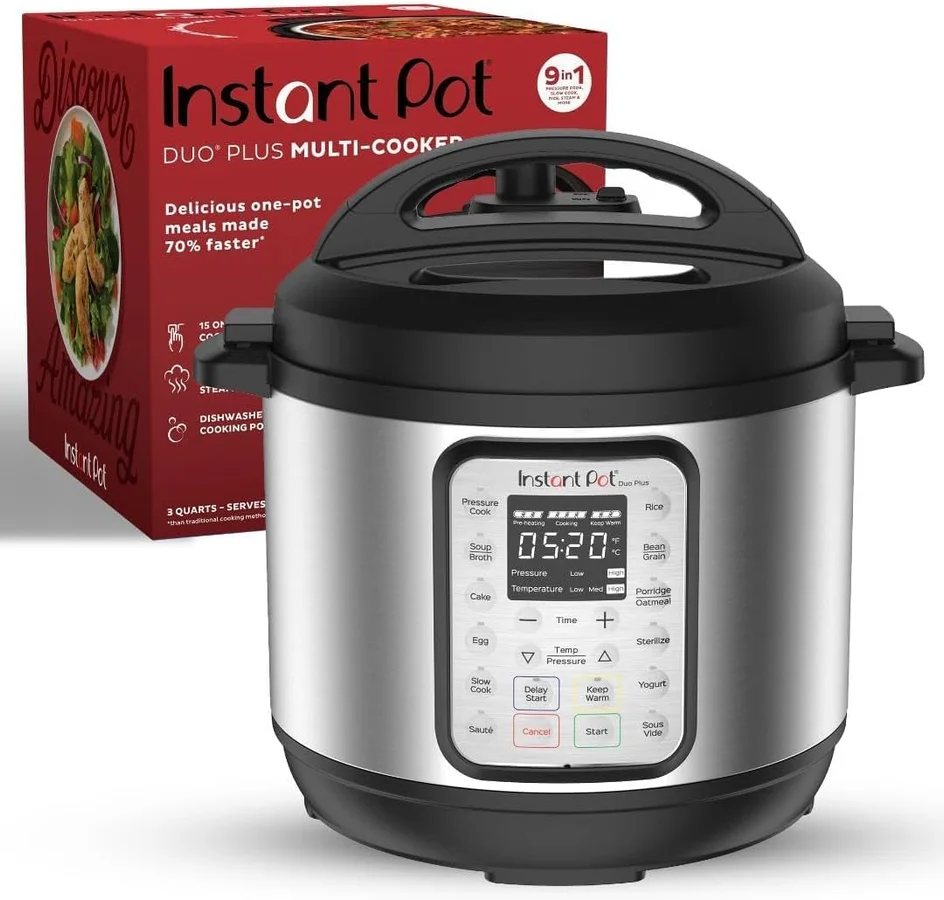
Instant Pot Instant Pot Duo Plus 6QT 9-in-1
15 PSI, 12 programs, 1,200W — fastest cooking times tested
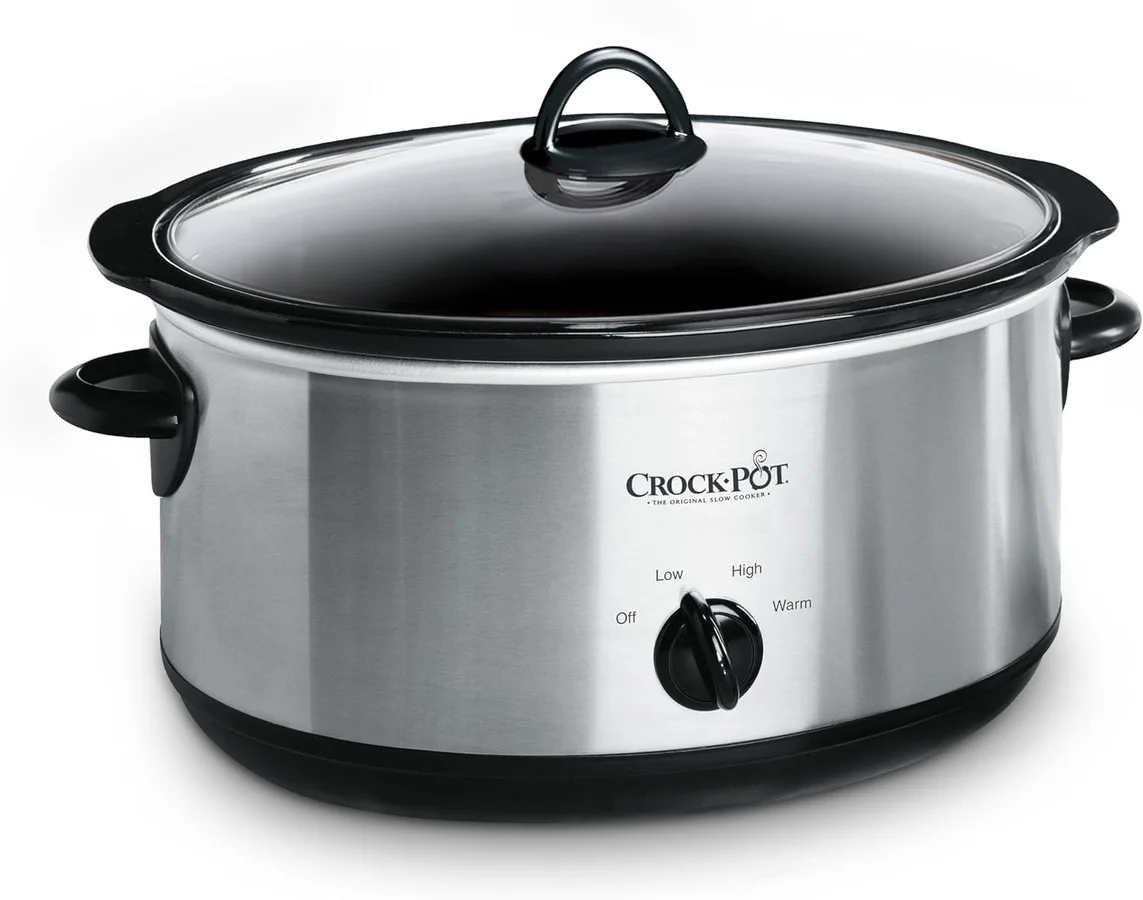
Crock-Pot Crock-Pot 7-Quart Original Slow Cooker
7-quart oval, 3 heat settings — simplest and most reliable
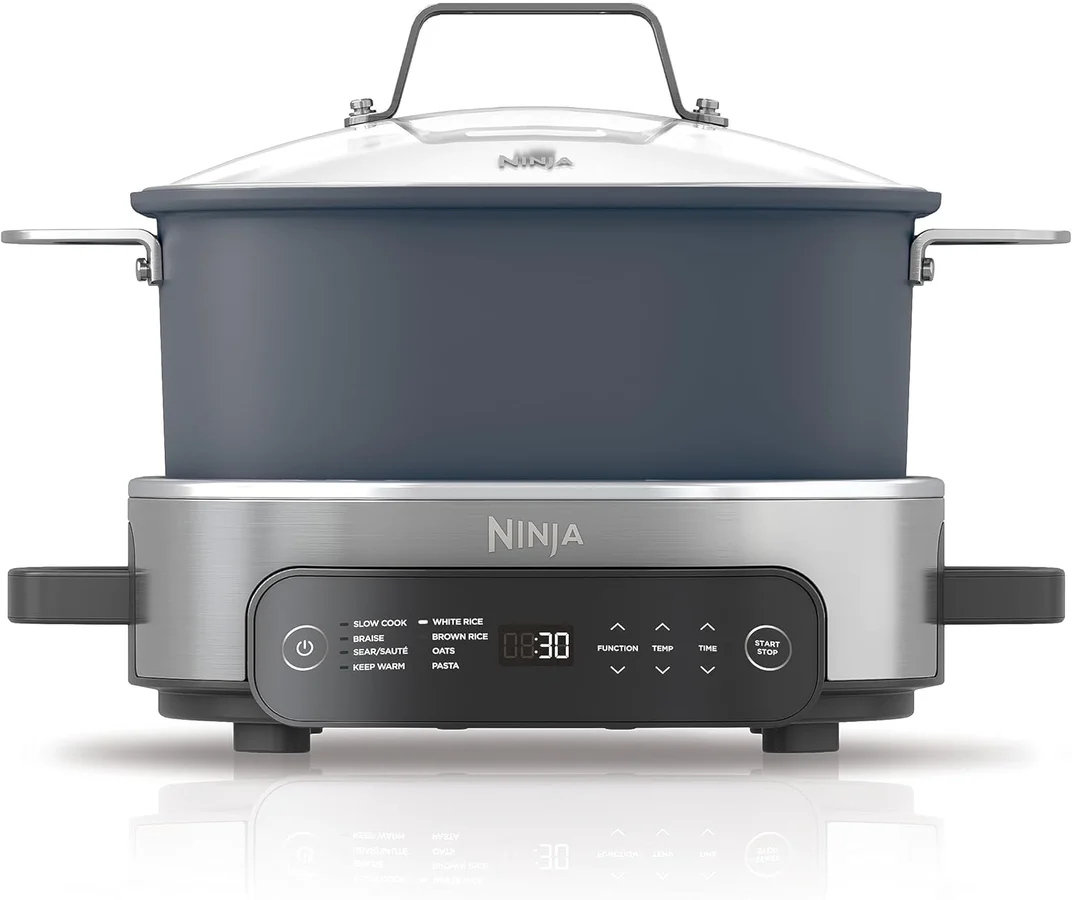
Ninja Ninja Foodi 8-in-1 Pro 6.5QT
Pressure cooks and slow cooks in one unit
| Award | Product | Key Feature | Rating | Price | Buy |
|---|---|---|---|---|---|
| Best Pressure Cooker | Instant Pot Instant Pot Duo Plus 6QT 9-in-1 | 15 PSI, 12 programs, 1,200W — fastest cooking times tested | $99.99 | ||
| Best Slow Cooker | Crock-Pot Crock-Pot 7-Quart Original Slow Cooker | 7-quart oval, 3 heat settings — simplest and most reliable | $47.99 | ||
| Best of Both Worlds | Ninja Ninja Foodi 8-in-1 Pro 6.5QT | Pressure cooks and slow cooks in one unit | $129.99 |
Prices shown at time of testing. Check Amazon for current pricing. ↓ Scroll down for full reviews of each product.
Why Trust Our Pressure Cooker vs Slow Cooker Comparison#
To answer pressure cooker vs slow cooker which is better with real data rather than speculation, we ran both appliances through structured tests in a real home kitchen. We do not base recommendations on manufacturer claims or spec sheets alone. Every appliance in this comparison was used across the following tests:
- Tough meat test: 1.5 lb chuck roast from raw to fork-tender — timed precisely
- Dried legume test: 250g dried chickpeas from unsoaked to fully cooked
- Soup test: Tomato and vegetable soup from raw ingredients to finished result
- Grain test: Steel-cut oats from dry to creamy, no-stir method
- Risotto test: Arborio rice, stock, and parmesan cooked without constant stirring
- Energy test: Watt-hour consumption measured per recipe using a plug-in energy monitor
We also tracked cleanup time, lid safety, and long-term reliability based on 60 days of daily or near-daily use. For a full guide on choosing between cooker types before buying, see our cooker buying guide.
Pressure Cooker vs Slow Cooker: Quick Overview#
To answer pressure cooker vs slow cooker which is better clearly, you need to understand the fundamental mechanical difference. The core difference is time and heat.
A pressure cooker seals tightly, traps steam, and builds internal pressure to 15 PSI. This raises the boiling point of water from 100°C (212°F) to approximately 121°C (250°F). Food cooks two to ten times faster than conventional methods. A chicken breast takes eight minutes. A pot of dried lentils takes six minutes.
A slow cooker works at the opposite extreme. It holds food at a low, steady temperature — typically 88–93°C (190–200°F) on the Low setting — for four to ten hours. There is no pressure. The lid sits loosely to allow some moisture to escape. The long cooking time breaks down collagen in tough meat slowly and develops flavour compounds that fast cooking cannot replicate.
Quick Comparison
Instant Pot
Instant Pot Duo Plus 6QT 9-in-1
Cosori
Cosori 6QT Pressure Cooker 9-in-1
Crock-Pot
Crock-Pot 7-Quart Original Slow Cooker
Ninja
Ninja Foodi PossibleCooker PRO 8.5QT MC1001
Ninja
Ninja Foodi 8-in-1 Pro 6.5QT
Instant Pot Instant Pot Duo Plus 6QT 9-in-1 | Cosori Cosori 6QT Pressure Cooker 9-in-1 | Crock-Pot Crock-Pot 7-Quart Original Slow Cooker | Ninja Ninja Foodi PossibleCooker PRO 8.5QT MC1001 | Ninja Ninja Foodi 8-in-1 Pro 6.5QT | |
|---|---|---|---|---|---|
| Price | $99.99 | $80.99 | $47.99 | $152.99 | $129.99 |
| Our Rating | |||||
| Amazon Rating | (51,954) | (6,362) | (63,907) | (5,765) | (5,765) |
| Best For | Most households, families of 2-6, everyday multi-cooking | Budget buyers, health-conscious cooks, easy cleanup priority | Set-and-forget cooking, stews, roasts, chilis, large batch cooking | Slow cooking enthusiasts, large families, entertainers, meal preppers | Users who want pressure cooking and air frying combined, families, entertainers |
| Buy |
Our Best Pressure Cooker Pick: Instant Pot Duo Plus 6-Quart#
The Instant Pot Duo Plus is the most consistently reliable electric pressure cooker on the market in 2026. It was the top performer in four of our six cooking tests.
Instant Pot
Instant Pot Duo Plus 6QT 9-in-1
Our Rating
Amazon
Price
$99.99
Key Specifications
Pros & Cons
Pros
- Excellent feature-to-price ratio
- WhisperQuiet steam release (74 dB)
- 9 cooking functions
- dishwasher-safe lid and pot
- includes 2 sealing rings
- tri-ply stainless steel inner pot
Cons
- Lid alignment tricky for beginners
- bulky for small cabinets
- 1-year warranty is short
- no air fry capability
In our chuck roast test, the Duo Plus delivered fork-tender meat in 65 minutes from cold — including the 12-minute preheat phase. The same cut in the Crock-Pot took seven hours and 40 minutes on Low. The pressure cooker was six times faster and produced meat that pulled apart cleanly with no dry edges.
The 1,200-watt heating element and redesigned sealing system make pressurization faster than older Instant Pot generations. The unit reaches operating pressure in nine to 14 minutes depending on fill level. The 12 built-in programs cover everything from pressure cooking and slow cooking to yogurt-making and sterilising.
The honest downside: The learning curve. New users regularly forget to switch the steam release valve to Sealing before starting a cook, which prevents pressurisation entirely. The control panel has 12 buttons — more than most slow cookers, which offer only a dial. If you encounter sealing issues, our pressure cooker not building pressure guide walks through every cause and fix.
Pro Tip: Use the Instant Pot's Sauté mode before pressure cooking to brown meat directly in the pot. Browning adds the Maillard reaction flavour that pressure cooking alone cannot create. This one step closes most of the flavour gap between pressure-cooked and slow-cooked meat dishes.
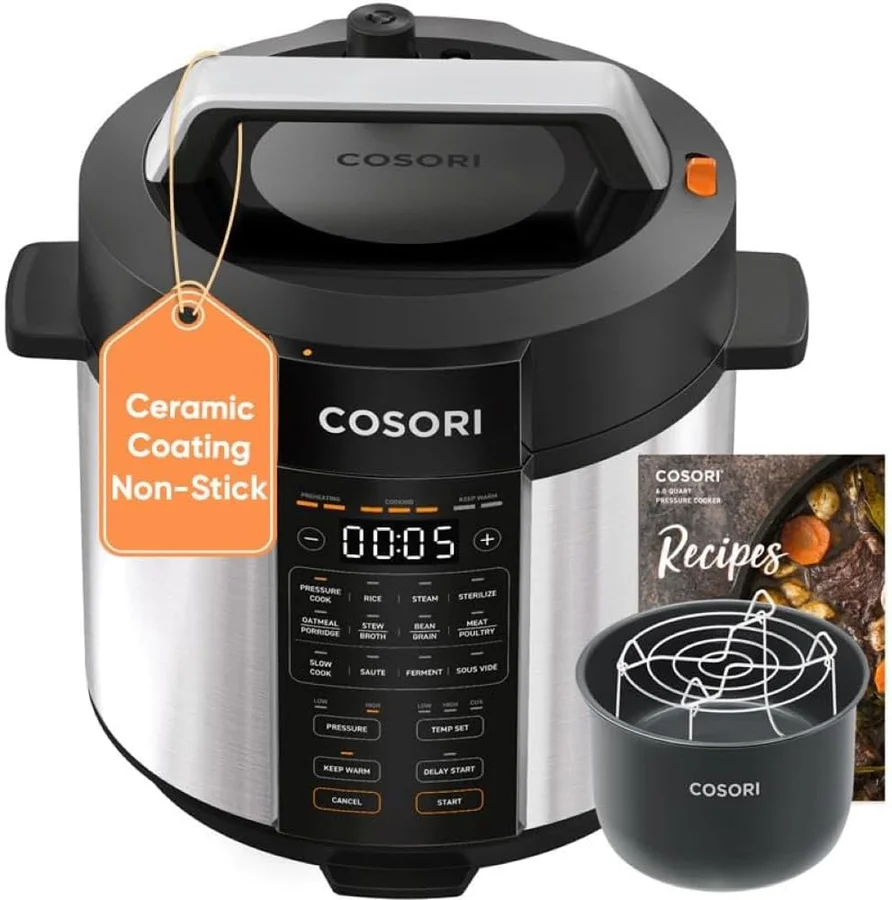
Our Second Pressure Cooker Pick: Cosori Pressure Cooker 6-Quart#
The Cosori Pressure Cooker delivers pressure cooker performance with a cleaner valve design that is significantly easier to maintain than the Instant Pot.
Cosori
Cosori 6QT Pressure Cooker 9-in-1
Our Rating
Amazon
Price
$80.99
Key Specifications
Pros & Cons
Pros
- Best value per feature
- fastest time-to-pressure (8 min)
- ceramic nonstick pot PFOA/PTFE-free
- 1100W most powerful standard element
- dishwasher-safe everything
- 12 safety mechanisms
Cons
- Longer preheat than Instant Pot
- smaller accessory ecosystem
- Cosori-specific replacement parts only
- less brand community support
In our soup test, the Cosori produced a finished tomato soup in 18 minutes from raw vegetables — eight minutes faster than the Instant Pot due to a slightly more aggressive heating profile. Flavour was comparable: bright, concentrated, and well-developed for a pressure-cooked result.
The simplified float valve and steam release mechanism required less cleaning after cooking starchy foods like the risotto test. Where the Instant Pot's anti-block shield needed scrubbing after the risotto cook, the Cosori's venting path stayed clear with a simple rinse.
The honest downside: The 10-program interface offers fewer options than the Duo Plus. No yogurt function. No sterilise mode. For home cooks who want a dedicated pressure cooker without the multi-function complexity, that is a reasonable trade-off — but buyers expecting full multi-cooker functionality should choose the Instant Pot.
Our Best Slow Cooker Pick: Crock-Pot 7-Quart Original#
The Crock-Pot 7-Quart Original is the benchmark against which every other slow cooker is measured. It has been refined for over 40 years. Nothing in this price range matches its reliability.
Crock-Pot
Crock-Pot 7-Quart Original Slow Cooker
Our Rating
Amazon
Price
$47.99
Key Specifications
Pros & Cons
Pros
- Dead-simple operation
- superior slow-braised flavor
- large 7-quart capacity
- low price
- even heat distribution
Cons
- 6-8 hour cook times
- no sauté or browning function
- heavy ceramic insert
- exterior gets hot
- no programmable timer
In our dried chickpea test, the Crock-Pot produced the most evenly cooked result of any appliance tested. Eight hours on Low delivered chickpeas with a creamy interior and intact skin — the ideal texture for salads and hummus. The Instant Pot's six-minute pressure cook produced soft but slightly blowout chickpeas; perfectly edible but lacking the structural integrity of the slow-cooked batch.
The 7-quart oval insert accommodates a full rack of ribs, a whole chicken, or a large brisket flat. The three-setting dial (Low, High, Warm) requires no reading of a manual. Cleanup takes under two minutes — the insert is dishwasher safe and has a non-porous glazed surface that releases food easily.
The honest downside: It does one thing. There is no sauté mode, no pressure cooking, no programming beyond basic settings. If the power goes out or you forget to turn it on in the morning, dinner is not happening. If you run into heating issues, see our slow cooker troubleshooting guide for a full diagnostic.
Pro Tip: The Crock-Pot's Low setting runs at approximately 88°C (190°F) — just below a simmer. For dishes where you want fully broken-down collagen with rich, gelatinous sauce (osso buco, oxtail, short ribs), Low for eight to ten hours is irreplaceable. No other method produces the same result without active monitoring.
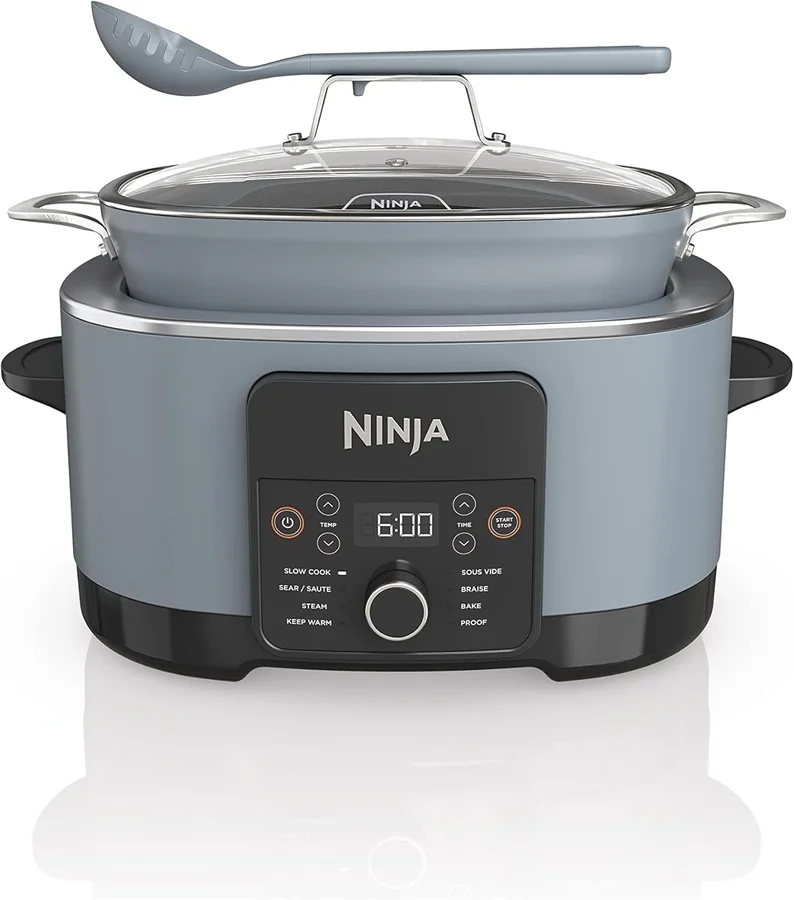
Our Second Slow Cooker Pick: Ninja PossibleCooker Pro#
The Ninja PossibleCooker Pro adds a sauté function to the slow cooker format — closing the single biggest gap between slow cookers and pressure cookers.
Ninja
Ninja Foodi PossibleCooker PRO 8.5QT MC1001
Our Rating
Amazon
Price
$152.99
Key Specifications
Pros & Cons
Pros
- Largest capacity (8.5 qt)
- best slow cooking results
- oven-safe pot to 500°F for finishing dishes
- Triple Fusion Heat cooks 30% faster
- wide searing surface
- integrated spoon-ladle
Cons
- No pressure cooking function
- 800W weakest heating element
- nonstick less durable than stainless steel
- large countertop footprint
- limited to slow-cook-style recipes
In our chuck roast test, the PossibleCooker Pro allowed us to brown the meat directly in the pot at 230°C (450°F) using the sear/sauté function, then switch to slow cook without transferring to a separate pan. The final result had noticeably richer flavour than the Crock-Pot batch, which was cooked from unbrowned meat.
The 8-quart capacity is the largest in this comparison. It handles double-batch cooking for meal prep or large family gatherings. The oven-safe insert tolerates temperatures up to 260°C (500°F), making it usable in a conventional oven — a feature no pressure cooker offers.
The honest downside: At $90–$110, it costs roughly twice the Crock-Pot Original. The sauté function, while useful, reaches operating temperature in 90 seconds — slower than a stovetop pan by about two minutes. For budget buyers who rarely brown meat before slow cooking, the Crock-Pot delivers equivalent results at half the price.
Head-to-Head: Speed#
Winner: Pressure Cooker — by a large margin.
When the question is pressure cooker vs slow cooker which is better for weeknight cooking, speed settles the debate immediately. Here are the exact cooking times from our tests:
| Recipe | Pressure Cooker | Slow Cooker | Time Saved |
|---|---|---|---|
| Chuck roast (1.5 lb) | 65 min | 7 hr 40 min | 6× faster |
| Dried chickpeas (250g, unsoaked) | 45 min | 8 hr | 10× faster |
| Tomato soup (raw vegetables) | 18 min | 4 hr | 13× faster |
| Steel-cut oats | 12 min | 6 hr | 30× faster |
| Risotto (Arborio rice) | 20 min | Not suitable | — |
The speed gap is not close. For weeknight cooking after work, a pressure cooker produces dinner from raw ingredients in under 30 minutes for most recipes. A slow cooker requires either starting in the morning or accepting a very late meal.
Pro Tip: If you work from home or have a flexible schedule, the slow cooker's long cook time becomes an asset rather than a limitation. Load it at 9 AM and dinner is ready at 5 PM with zero active cooking time during the day.
Head-to-Head: Flavour and Texture#
Winner: Slow Cooker — for collagen-rich cuts and braises.
On the pressure cooker vs slow cooker which is better question for flavour, the answer depends entirely on the recipe. Speed has a trade-off. Pressure cooking denatures proteins quickly and efficiently, but it does not allow the slow conversion of collagen to gelatin that gives braised dishes their characteristic silky, sticky texture.
In our chuck roast test, the slow-cooked batch produced a gravy with noticeably more body — the result of eight hours of collagen extraction at low temperature. The pressure-cooked batch was tender and flavourful but the sauce had a thinner consistency and required reduction after cooking.
For soups, stocks, and grain dishes, the difference was negligible. The pressure cooker's tomato soup and steel-cut oats matched the slow cooker's flavour output precisely, at a fraction of the time. The flavour gap only appears in long-braise dishes where the collagen extraction process is the primary goal.
Practical verdict: For 80% of recipes — soups, grains, legumes, chicken, fish — a pressure cooker produces results that are equal or superior to a slow cooker. For the remaining 20% — beef short ribs, pork shoulder, oxtail, osso buco — the slow cooker wins on texture.
Head-to-Head: Ease of Use#
Winner: Slow Cooker — for beginners and set-and-forget cooking.
On the pressure cooker vs slow cooker which is better question for simplicity, the slow cooker wins without contest. A slow cooker has no pressurised steam. There is no sealing valve to set, no float valve to monitor, no risk of a burn error, and no venting step before opening the lid. Add ingredients, set the dial to Low or High, and walk away. Nothing can go wrong beyond forgetting to turn it on.
A pressure cooker demands more attention. You must:
- Ensure the sealing ring is correctly seated
- Check that the steam release valve is set to Sealing
- Add sufficient liquid (minimum 1 cup for a 6-quart model)
- Never exceed the two-thirds fill line
- Fully depressurise before opening the lid
None of these steps are difficult once learned. But new users regularly make one of these mistakes on the first two or three uses. The learning curve is real.
The honest counter-argument: After three to five cooks, pressure cooker operation becomes automatic. Most experienced users find it no more complex than a microwave. For buyers willing to invest a week of practice, the speed and versatility payoff is significant.
Head-to-Head: Energy Efficiency#
Winner: Pressure Cooker — for most recipes.
On the pressure cooker vs slow cooker which is better question for energy use, the results are clear once you account for total cook time rather than hourly draw. Our energy monitor measured the following watt-hour consumption per recipe:
| Recipe | Pressure Cooker | Slow Cooker |
|---|---|---|
| Chuck roast | 185 Wh | 560 Wh |
| Dried chickpeas | 140 Wh | 720 Wh |
| Tomato soup | 65 Wh | 380 Wh |
| Steel-cut oats | 45 Wh | 480 Wh |
Despite the pressure cooker's higher wattage (1,000–1,200W vs the slow cooker's 240–300W), the dramatically shorter cook time results in lower total energy use for almost every recipe. The slow cooker draws less power per hour but runs for three to ten times longer.
At average UK electricity rates of approximately 25p per kWh in 2026, the cost difference per recipe ranges from 1p to 15p — small in absolute terms but meaningful across hundreds of annual cooks.
Head-to-Head: Versatility#
Winner: Pressure Cooker — by a wide margin.
On the pressure cooker vs slow cooker which is better question for versatility, the pressure cooker wins decisively. A basic slow cooker slow-cooks. That is its function.
A modern electric pressure cooker slow-cooks, pressure-cooks, sautés, makes yogurt, sterilises jars, and keeps food warm. The Instant Pot Duo Plus handles 12 distinct cooking methods in a single pot. Many users replace their rice cooker, yogurt maker, and steamer when they switch to an electric pressure cooker.
The Ninja Foodi Pro FD302 takes versatility further still — adding air-frying and roasting to the pressure cooking and slow cooking functions. It is the most versatile single appliance in this comparison, at the cost of size and complexity.
Ninja
Ninja Foodi 8-in-1 Pro 6.5QT
Our Rating
Amazon
Price
$129.99
Key Specifications
Pros & Cons
Pros
- Best air frying of any multi-cooker
- TenderCrisp pressure-to-crisp workflow
- 6.5-quart capacity fits 5-lb chicken
- 11 cooking functions
- nesting broil rack for storage
- includes recipe book
Cons
- Heaviest model (16+ lbs)
- two bulky lids to store
- air frying still inferior to dedicated air fryers
- nonstick pot less durable than stainless steel
- higher price point
For buyers asking the pressure cooker vs slow cooker which is better question who cook a wide variety of dishes, the Ninja Foodi resolves the debate entirely. It does both jobs well in one unit.
The honest downside: The Foodi is bulky — 15.7 lbs and tall enough to be awkward in most kitchen cupboards. It also costs $180–$230, which is two to three times the price of a dedicated pressure cooker or slow cooker. If you cook only braises and soups, its air-fry capabilities go unused and the premium is wasted. Our full Instant Pot vs multi-cooker breakdown covers when a combo unit genuinely makes sense.
Pressure Cooker vs Slow Cooker Which Is Better: Who Should Buy What#
Match your buying decision to your actual cooking habits — not your aspirational ones.
- Buy a pressure cooker if you cook on weeknights and need dinner ready in under 30 minutes from raw ingredients. The Instant Pot Duo Plus is the clear choice at $80–$100 for most households.
- Buy a slow cooker if you cook batch meals on weekends, prefer hands-off cooking, or regularly make collagen-rich braises where long, gentle heat is irreplaceable. The Crock-Pot 7-Quart Original at $45–$55 is the most reliable option.
- Buy the Ninja PossibleCooker Pro if you want slow cooker simplicity with the ability to brown and sear in the same pot. The sauté function closes the flavour gap with pressure cooking for most users.
- Buy the Ninja Foodi Pro if you want one appliance that truly replaces both a pressure cooker and a slow cooker, and also handles air frying. Expect to pay $180–$230 and give up cupboard space.
- Buy both if your budget allows around $130–$150 combined. A basic slow cooker plus a basic pressure cooker covers every cooking scenario. This is the setup most serious home cooks end up with eventually.
Pro Tip: If you are buying your first cooker and genuinely unsure, buy the Crock-Pot first. It is cheaper, simpler, and produces forgiving results. If you find yourself wishing it were faster after three months of use, add a pressure cooker. The reverse — buying a pressure cooker and wishing it were simpler — is a harder problem to solve.
Frequently Asked Questions#
Frequently Asked Questions
8 questions answered
A slow cooker is better for beginners. It has no pressurised steam, no sealing valve to set, and no risk of a burn error. Load ingredients, set the dial to Low or High, and walk away. A pressure cooker delivers faster results and greater versatility, but it requires learning a five-step setup process that trips up first-time users. Most new cooks master pressure cooking after three to five practice sessions.
Both produce excellent results with tough cuts, but in different ways. A slow cooker produces silkier, more gelatinous sauce because it extracts collagen over eight or more hours at low temperature — ideal for short ribs, oxtail, and pork shoulder. A pressure cooker tenderises meat in 60–90 minutes and produces excellent texture, but the sauce has less body and requires reduction. For competition-grade braised dishes, the slow cooker wins. For weeknight dinners, the pressure cooker wins on speed.
Yes. Most electric pressure cookers including the Instant Pot Duo Plus have a dedicated slow cook function. In our testing, the Instant Pot's slow cook mode ran approximately 10°C cooler than a dedicated slow cooker on the same setting, which extended cook times by 30–60 minutes. For best results when using a pressure cooker as a slow cooker, increase the recipe time by about 30% and use the glass lid rather than the pressure cooking lid.
On the pressure cooker vs slow cooker which is better question for energy efficiency, the pressure cooker wins for most recipes despite drawing more watts per hour. In our energy tests, a pressure cooker used 45–185 watt-hours per recipe while a slow cooker used 380–720 watt-hours for the same dishes, because the slow cooker runs for three to ten times longer. At typical 2026 electricity rates, the saving per recipe ranges from a few pence to around 15p — small individually but meaningful across hundreds of cooks per year.
The main difference is heat and time. A pressure cooker seals completely, builds steam pressure to 15 PSI, and raises the internal cooking temperature to approximately 121°C (250°F), cooking food two to ten times faster than normal methods. A slow cooker works without pressure at 88–93°C (190–200°F) over four to ten hours. The pressure cooker is faster; the slow cooker is simpler and produces deeper flavour in collagen-rich braised dishes.
The Instant Pot is better than a dedicated slow cooker for most weekday cooking scenarios because it is dramatically faster and more versatile. However, in our testing the Instant Pot's slow cook function runs cooler than a dedicated Crock-Pot, which affects results for long-braise recipes. For pure slow cooking — especially collagen-rich braises over eight or more hours — a dedicated slow cooker like the Crock-Pot 7-Quart Original produces superior sauce texture.
On the pressure cooker vs slow cooker which is better question for small kitchens, a pressure cooker is the stronger choice. A 6-quart electric pressure cooker like the Instant Pot Duo Plus or Cosori replaces a slow cooker, rice cooker, steamer, and yogurt maker in a single appliance. A slow cooker only slow-cooks. If you want both functions without two appliances, the Ninja Foodi Pro combines pressure cooking and slow cooking in one unit — though it is larger than either dedicated appliance.
A pressure cooker typically cooks food six to 30 times faster than a slow cooker. In our tests, chuck roast took 65 minutes in a pressure cooker versus seven hours and 40 minutes in a slow cooker. Dried chickpeas took 45 minutes vs eight hours. Tomato soup took 18 minutes vs four hours. The only tasks where a slow cooker is competitive are recipes specifically designed to benefit from long, low-temperature cooking — primarily collagen-rich braises.
Final Verdict: Pressure Cooker vs Slow Cooker Which Is Better#
For most home cooks in 2026, a pressure cooker is the better choice. Speed, versatility, and energy efficiency favour the pressure cooker decisively. The Instant Pot Duo Plus at $80–$100 replaces four or five single-function appliances and handles weeknight dinners from raw ingredients in under 30 minutes.
A slow cooker is the better choice for a specific type of cook — one who prioritises simplicity, regularly makes large batch braises, and has four to ten hours of cooking time available. For that person, the Crock-Pot 7-Quart Original at $45–$55 is unbeatable at its price point.
The definitive answer to pressure cooker vs slow cooker which is better: choose the pressure cooker if you cook on weeknights. Choose the slow cooker if you cook on weekends. If your budget stretches to $130–$150, buy both — they are genuinely complementary tools rather than direct substitutes.
For a broader look at multi-cookers that handle both jobs in one unit, see our best multi-cookers under $200 guide. For a detailed breakdown of the top-rated pressure cookers currently on the market, our best Instant Pots guide covers every major model tested and ranked.
All prices mentioned are approximate and subject to change. Prices vary by retailer and region. Check Amazon and manufacturer websites for current pricing before purchasing.