Why Is My Slow Cooker Not Heating: 8 Fixes That Work
James Okafor
Coffee & Cooking Appliance Specialist
Table of Contents
On this page
16Why is my slow cooker not heating? You loaded it up hours ago, and your meal is still stone cold. No steam. No heat. Nothing. This is one of the most common slow cooker complaints — and in almost every case, the fix takes under 15 minutes.
Slow cookers fail to heat for eight distinct reasons. Most involve no repair skills and no replacement parts. This guide walks through every cause in order of likelihood, with a direct fix for each. Whether you own a Crock-Pot, a Ninja PossibleCooker, or any other brand, these steps apply.
If repeated heating failures have you considering an upgrade, our best Instant Pots guide and Instant Pot vs slow cooker breakdown cover every reliable alternative at every price point. Facing pressure cooker problems too? Our pressure cooker not building pressure guide applies the same diagnostic approach to that appliance.
What You Will Need#
Before starting, have these items ready:
- Multimeter (optional but useful for electrical checks)
- A different power outlet to test
- Warm soapy water and a cloth
- A replacement fuse (standard household ceramic fuse, 5A or 13A — check your model's manual)
- Manufacturer contact details or warranty paperwork if your unit is under warranty
No specialist repair skills are required for any of the eight fixes below.
Why Is My Slow Cooker Not Heating: 8 Causes and Fixes#
Fix 1: Check the Power Source First#
Start here before anything else. A surprising number of slow cooker heating failures trace directly back to the power outlet, not the appliance itself. A tripped circuit breaker, a faulty extension lead, or a switched-off wall socket causes complete heating failure every time.
How to diagnose:
- Plug a different appliance — a phone charger, a lamp, anything — into the same outlet.
- If that appliance also fails to work, the outlet is the problem.
- Check your home's circuit breaker or fuse box for a tripped breaker.
- If you are using an extension lead or multi-socket adapter, plug the slow cooker directly into the wall instead.
How to fix:
- Reset any tripped breakers at your fuse box.
- Always plug slow cookers directly into a wall outlet. Extension leads with surge protectors sometimes limit current draw, which is enough to prevent a slow cooker's heating element from reaching operating temperature.
- Never use a slow cooker on a circuit shared with high-draw appliances like microwaves or electric kettles if your home has older wiring.
Pro Tip: Slow cookers draw 70–300 watts depending on the setting. They are low-current appliances, but older homes with 10A circuits can still experience voltage drops when multiple appliances run simultaneously.
Fix 2: Inspect the Power Cable and Plug#
If the outlet works but the slow cooker still does not heat, the fault is often in the cable or plug itself. Physical damage to the cord is easy to spot once you know what to look for.
How to diagnose:
- Unplug the slow cooker completely.
- Run your hand along the full length of the power cable. Feel for kinks, pinch points, or soft spots that suggest internal wire damage.
- Inspect both ends — where the cable meets the plug and where it enters the base unit — for fraying, burn marks, or discolouration.
- Check the plug fuse. In UK plugs, the fuse is accessible by removing the plug's faceplate with a screwdriver. In US plugs, inspect the prongs for corrosion or damage.
How to fix:
- Replace a blown fuse with the correct rated replacement (see your manual). This fix costs under $2 and resolves a large percentage of "dead" slow cookers.
- If the cable is visibly damaged, do not use the appliance. Contact the manufacturer for a replacement cable or warranty claim. Do not attempt to repair damaged mains cables with tape.
Pro Tip: Keep a small stock of 13A ceramic fuses at home. A blown fuse is the single cheapest and most common fix for any kitchen appliance that suddenly stops working.
Fix 3: Test the Heating Element#
The heating element is a resistive coil embedded in the outer base of the slow cooker. It converts electrical current to heat and radiates that heat through the base and lower walls into the ceramic insert. After five or more years of daily use, elements degrade and eventually fail completely.
How to diagnose (without a multimeter):
- Remove the ceramic insert and lid.
- Plug in the slow cooker and set it to High.
- After five minutes, carefully place your hand near — not on — the interior base.
- A working element produces clearly detectable radiant heat within three to five minutes on High.
- If the base feels room temperature after eight minutes, the element has likely failed.
How to diagnose (with a multimeter):
- Unplug the slow cooker.
- Set your multimeter to resistance (Ω) mode.
- Access the element terminals through the base (refer to your model's service manual).
- A healthy element reads 40–150Ω depending on wattage. An open circuit reading (OL or ∞) confirms element failure.
How to fix:
- A failed heating element is not a DIY repair for most home cooks. If your unit is under warranty, contact the manufacturer.
- If out of warranty, weigh the repair cost against replacement. Heating element replacements typically cost $15–$40 plus installation labour. A new mid-range slow cooker costs $40–$80, making replacement often more economical.
- See our cooker buying guide for what to look for when selecting a replacement.
Fix 4: The Ceramic Insert Is Not Seated Correctly#
This is the most overlooked cause. Slow cookers use a thermal cut-out — a safety switch that prevents the heating element from operating when it detects no load or an improperly placed insert. If the ceramic pot is even slightly off-centre, the thermal contact points do not engage, and the element stays off.
How to diagnose:
- Remove the ceramic insert completely.
- Look at the base of the insert and the interior of the slow cooker housing. Note the contact points — small raised metal tabs or sensors at the base of the unit.
- Replace the insert and press it firmly downward. It should sit flush with no rocking or tilting.
- On some models you will hear a faint click as the insert engages the thermal sensor.
How to fix:
- Remove and firmly reseat the insert. Make sure it drops fully into the housing with no gap around the rim.
- Inspect the base of the insert for chips or cracks that prevent a flat seating. Even a 2mm chip can prevent full contact.
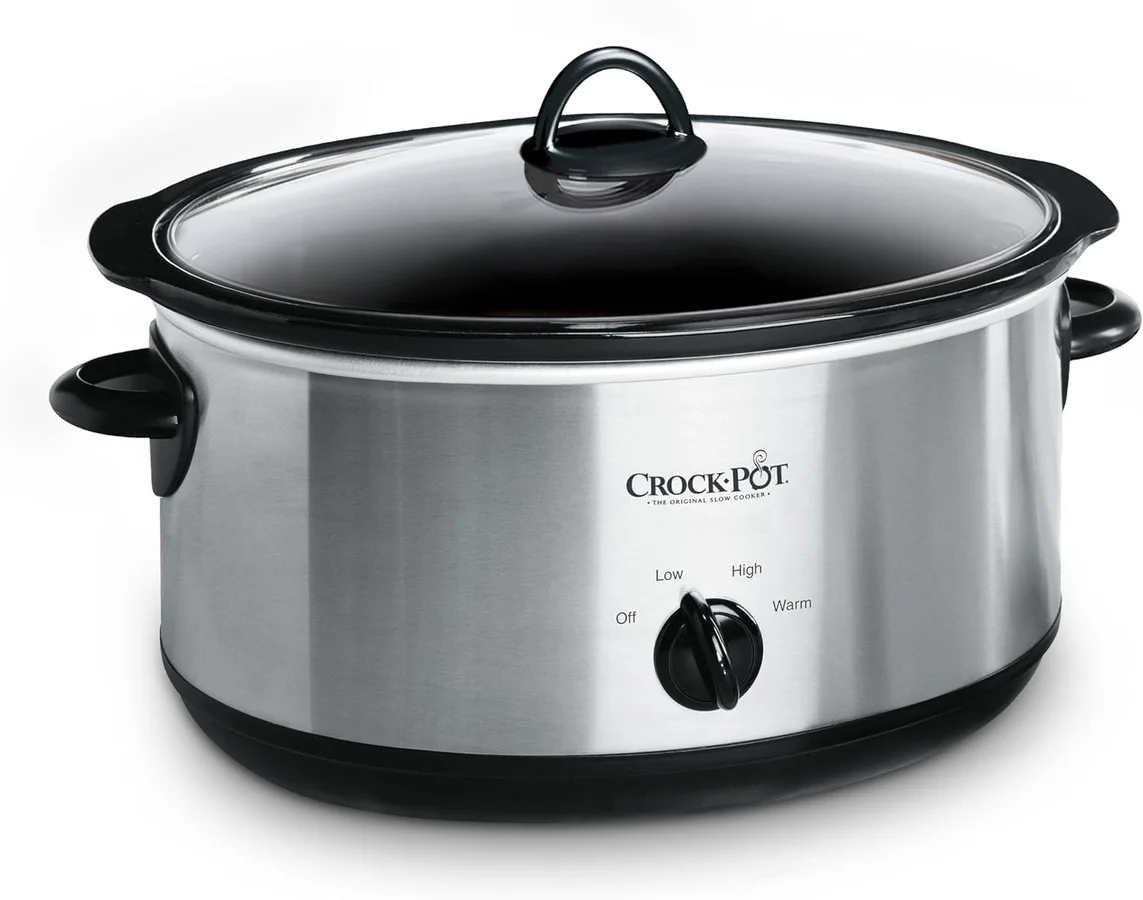
- A cracked ceramic insert must be replaced. Using a cracked insert is a safety hazard. Replacement inserts for popular models like the Crock-Pot 7-Quart Original cost $20–$35 and are widely available.
Crock-Pot
Crock-Pot 7-Quart Original Slow Cooker
Our Rating
Amazon
Price
$47.99
Key Specifications
Pros & Cons
Pros
- Dead-simple operation
- superior slow-braised flavor
- large 7-quart capacity
- low price
- even heat distribution
Cons
- 6-8 hour cook times
- no sauté or browning function
- heavy ceramic insert
- exterior gets hot
- no programmable timer
Pro Tip: Never place a cold ceramic insert directly onto a hot base or run a slow cooker empty. Thermal shock cracks ceramic inserts over time. Always bring the insert to room temperature before cooking.
Fix 5: Lid Is Damaged or Not Fitting Correctly#
Slow cookers are not pressure vessels, but the lid plays a critical role in heat retention and temperature regulation. A cracked, chipped, or poorly fitted lid causes significant heat loss. On some models with integrated temperature sensors in the lid mount, a missing or misaligned lid triggers a safety shutoff.
How to diagnose:
- Remove the lid and inspect the underside for cracks, chips along the rim, or damage to any integrated sensor components.
- Check the rim of the ceramic insert where the lid rests. Chips or warping here prevent a proper seal.
- Replace the lid and observe whether steam escapes from the sides or back rather than venting through the designated vent hole.
How to fix:
- A cracked lid must be replaced. Cooking without a lid or with a damaged lid reduces maximum temperature by 20–30°C and extends cook times significantly.
- Replacement lids are available directly from manufacturers and on Amazon. Always match by model number.
- If the lid fits loosely, check whether food debris is caught under the rim of the insert preventing a level seat.
Fix 6: Thermostat or Temperature Sensor Failure#
Inside every slow cooker, a thermostat regulates heat output by cycling the element on and off to maintain the selected temperature. A faulty thermostat holds the element off permanently, causing the cooker to produce no heat at all — or to underperform on every setting.
How to recognise a thermostat fault:
- The cooker warms up very slightly on High but never reaches cooking temperature (above 85°C / 185°F)
- The Low setting produces no heat, but High produces some
- The cooker was stored for a long period and has never worked since
How to fix:
- On basic models, the thermostat is a bimetal strip contact. On digital models, it is a thermistor. Neither is a practical home repair.
- Contact manufacturer support. Thermostat failures within a warranty period are covered in full by all major brands.
- If out of warranty, a repair technician can replace a thermostat for $25–$50. For basic slow cookers costing under $50, replacement is the more economical route.
Fix 7: Internal Thermal Fuse Has Blown#
A thermal fuse is a one-time safety device. When a slow cooker overheats — due to running empty, running too long, or a brief power surge — the thermal fuse blows to prevent fire or damage. Unlike a plug fuse, a blown thermal fuse is an internal component and requires disassembling the unit.
Signs of a blown thermal fuse:
- The slow cooker worked normally, then stopped suddenly and completely
- The unit was accidentally left running empty or with very little liquid
- There is no visible physical damage, and all external checks pass
How to fix:
- Unplug the slow cooker and allow it to cool completely.
- Turn the unit upside down and remove the base screws.
- Locate the thermal fuse — a small cylindrical component (usually white or grey) on the element circuit.
- Test it with a multimeter on continuity mode. A healthy fuse gives a continuous beep. No beep confirms it has blown.
- Replace with a matching-rated thermal fuse (check the rating stamped on the original). Replacements cost $2–$5.
This is the one fix on this list that requires basic soldering or secure connector replacement. If you are not comfortable with internal electrical work, take the unit to a small appliance repair shop or contact the manufacturer.
Pro Tip: Always add at least 1 cup of liquid to your slow cooker before turning it on. Running a slow cooker empty — even briefly — is the primary cause of thermal fuse failure. The ceramic insert needs liquid to absorb and distribute heat safely.
Fix 8: The Unit Has Reached End of Life#
Slow cookers are durable appliances, but they do not last forever. Average lifespan with regular use is six to ten years for budget models and eight to 15 years for premium units. If your slow cooker is older than eight years and failing to heat, multiple components are likely degraded simultaneously.
Signs your slow cooker has reached end of life:
- Food takes two or more extra hours to reach the stated cook time
- The unit runs warm on High but never produces a full rolling simmer
- You have already replaced the fuse and reseated the insert with no improvement
- The unit is visibly warped, discoloured at the base, or produces a burning smell even when clean
The honest answer: If a slow cooker costs $40–$60 to replace new and costs $30–$50 to diagnose and repair, replacement is the rational choice. Upgrading to a modern multi-cooker also unlocks features like sauté mode, pressure cooking, and programmable timers.
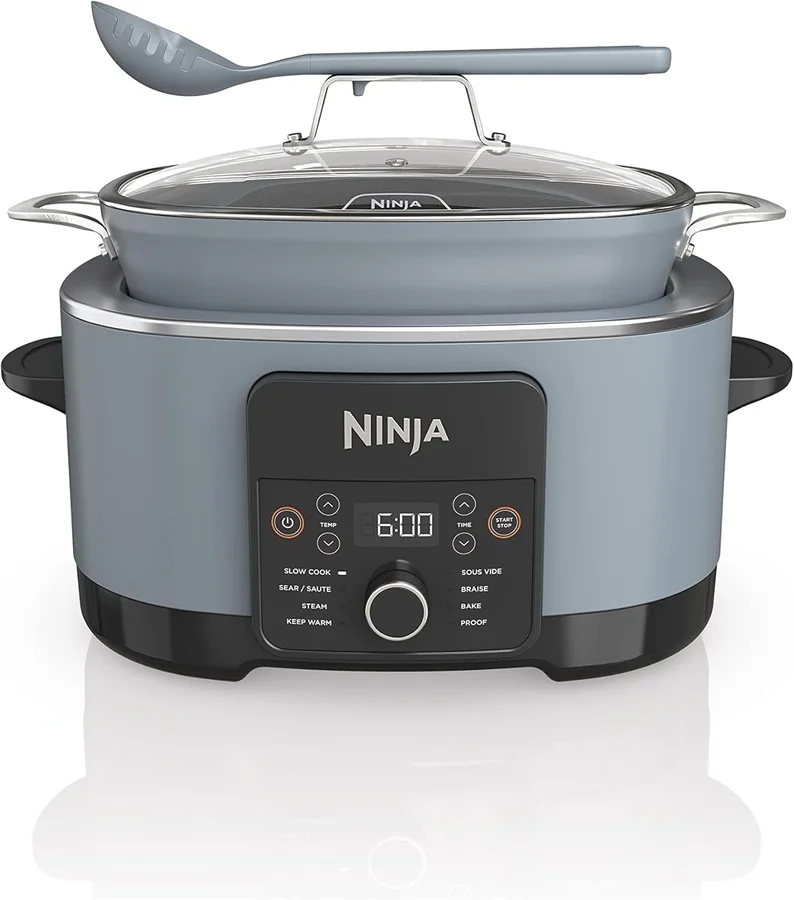
The Ninja PossibleCooker Pro handles slow cooking, steaming, searing, and baking in a single unit. It is one of the most versatile replacements for an aging dedicated slow cooker in 2026.
Ninja
Ninja Foodi PossibleCooker PRO 8.5QT MC1001
Our Rating
Amazon
Price
$152.99
Key Specifications
Pros & Cons
Pros
- Largest capacity (8.5 qt)
- best slow cooking results
- oven-safe pot to 500°F for finishing dishes
- Triple Fusion Heat cooks 30% faster
- wide searing surface
- integrated spoon-ladle
Cons
- No pressure cooking function
- 800W weakest heating element
- nonstick less durable than stainless steel
- large countertop footprint
- limited to slow-cook-style recipes
Our best multi-cookers under $200 guide covers the full range of replacement options across every budget.
Step-by-Step: Full Slow Cooker Diagnostic Sequence#
Work through this list in order. Most failures are resolved at step one, two, or four.
- Test the outlet — plug a different device into the same socket
- Inspect the plug and cable — check the fuse, look for damage
- Reseat the ceramic insert — press it firmly down and confirm no rocking
- Check the lid — inspect for cracks; replace if damaged
- Run a timed heat test — High setting, five minutes, feel for radiant heat from base
- Check the internal thermal fuse — open the base and test with a multimeter
- Contact manufacturer or consider replacement — if all above pass with no heat, the heating element or thermostat has failed
Total time for this sequence: 15–20 minutes.
How Hot Should a Slow Cooker Get?#
Understanding normal temperatures helps you diagnose whether your cooker is failing or just working as designed.
| Setting | Normal Operating Temperature | Food Safety Minimum |
|---|---|---|
| Warm | 74°C / 165°F | ✓ Safe for holding cooked food |
| Low | 88–93°C / 190–200°F | ✓ Safe for all slow cooking |
| High | 149–177°C / 300–350°F | ✓ Safe for all slow cooking |
If your slow cooker reaches Warm temperatures but not Low or High, the thermostat is the likely fault. If it reaches no temperature at all, the element, thermal fuse, or power supply has failed.
Pro Tip: Use a food thermometer to verify your slow cooker's actual temperature. Place it in 2 cups of water, set to High, and check after two hours. A reading below 82°C / 180°F confirms the unit is underperforming — even if it produces some heat.
Slow Cooker Maintenance Tips to Prevent Heating Failure#
These habits extend the life of your slow cooker significantly:
- Never run the slow cooker empty. Always add liquid before switching on.
- Avoid thermal shock. Do not place a refrigerator-cold insert directly into a hot base.
- Clean the base interior. Wipe the inside of the housing — where the insert sits — with a dry cloth after every use. Food debris under the insert affects thermal contact.
- Inspect the power cable monthly. Look for kinks or damage where the cable meets the unit.
- Store with the lid off. This prevents moisture buildup inside the unit between uses.
- Use it regularly. Slow cookers left unused for years develop corrosion on internal contacts. Run it for 30 minutes with just water every few months if storing long-term.
- Check fuses annually. A borderline fuse works intermittently before failing completely. Replace fuses that show any discolouration.
When Slow Cooking Is Not Enough: Consider Upgrading#
A slow cooker that needs repeated fixes is a sign of end-of-life degradation. Modern multi-cookers offer everything a slow cooker does — plus pressure cooking, air frying, sautéing, and steaming.
If you are weighing the choice, our Instant Pot vs slow cooker comparison gives a direct breakdown of both. For a comprehensive look at what to prioritise in your next purchase, the cooker buying guide covers every key specification.
Frequently Asked Questions#
Frequently Asked Questions
8 questions answered
The most common reason a slow cooker is not heating is a blown plug fuse or a faulty power outlet. Other frequent causes include an improperly seated ceramic insert, a failed heating element after years of use, or a blown internal thermal fuse from running the unit empty. Work through each cause in order — most are resolved without tools or replacement parts.
Set your slow cooker to High with the ceramic insert in place. After five minutes, hold your hand near the interior base without touching it. A working element produces clearly detectable radiant heat. If the base feels room temperature after eight minutes, the heating element has failed. A multimeter test showing an open circuit (OL reading) on the element terminals confirms the fault.
Yes, for most common causes. Replacing a blown plug fuse, reseating the ceramic insert, and checking the power outlet require no tools or skills. Replacing an internal thermal fuse requires opening the base and basic electrical know-how. A failed heating element or thermostat is not a practical home repair and typically warrants replacement of the unit.
A slow cooker that heats on High but not on Low has a thermostat fault. The thermostat cycles the element to maintain lower temperatures. When it fails, the element either runs continuously (High) or stays off (Low). This is not a home repair on most models — contact manufacturer support if the unit is under warranty, or weigh repair cost against replacement.
A well-made slow cooker lasts eight to 12 years with regular use. Budget models under $40 typically last five to eight years. Premium units from brands like Crock-Pot and Ninja last longer due to better heating element quality and more robust thermal management. Frequent empty-running is the single biggest cause of premature failure.
No. A cracked ceramic insert is a safety hazard and must be replaced before use. Cracks can deepen rapidly under heat cycling, allowing liquid to contact the heating element. Replacement inserts for most popular models cost $20–$35 and are available directly from manufacturers and on Amazon. Always match the replacement to your exact model number.
A slow cooker that stops working suddenly — with no prior warning — has almost certainly blown an internal thermal fuse or plug fuse. This happens when the unit overheats due to running empty, a power surge, or a blocked vent. Check the plug fuse first. If that is intact, the internal thermal fuse has blown and the base needs to be opened to access and replace it.
A properly functioning slow cooker reaches 88–93°C (190–200°F) on Low and 149–177°C (300–350°F) on High. To verify yours, place a food thermometer in 2 cups of water, run on High for two hours, and check the reading. Any result below 82°C (180°F) confirms the unit is underperforming, even if it produces some heat.
Final Verdict#
Why is my slow cooker not heating? In eight cases out of ten, the answer is a blown plug fuse, a faulty power outlet, or a ceramic insert that is not seated correctly. These three causes take under five minutes to check and cost nothing to fix.
Work through the full eight-step diagnostic sequence before assuming your slow cooker is beyond repair. A $2 fuse resolves most sudden failures. A firm push on the insert resolves most cases where the cooker gradually stopped heating. If a timed heat test still shows no warmth from the base after all checks pass, the heating element has failed and replacement is the right call.
For a reliable, versatile replacement, see our best multi-cookers under $200 — all tested for long-term heating consistency and build quality.
All prices in this article are estimates and subject to change. Prices may vary by retailer and region. Check Amazon and manufacturer websites for current pricing before purchasing.