Instant Pot vs Slow Cooker: Complete Comparison 2026
James Okafor
Coffee & Cooking Appliance Specialist
Table of Contents
On this page
13You want one appliance that handles weeknight dinners without babysitting the stove. The instant pot vs slow cooker debate comes down to a single question: do you need speed or simplicity? Both appliances promise hands-off cooking, but they solve the problem in opposite ways.
We spent four weeks testing the Instant Pot Duo 7-in-1 and the Crock-Pot 7-Quart Original side by side. Every meal was cooked in both appliances — same recipe, same ingredients, same portions. We measured cook time, energy consumption, internal temperature, texture, and flavor. This is the most detailed instant pot vs slow cooker comparison you'll find in 2026. Browse our full Instant Pot reviews and guides for more coverage of pressure cookers.
The short answer: The Instant Pot wins for busy households that need fast, versatile cooking. The slow cooker wins for hands-off, dump-and-go simplicity with deeper flavor development. Your lifestyle determines the right pick.
Our Top Picks
Click any product to jump to our full review below
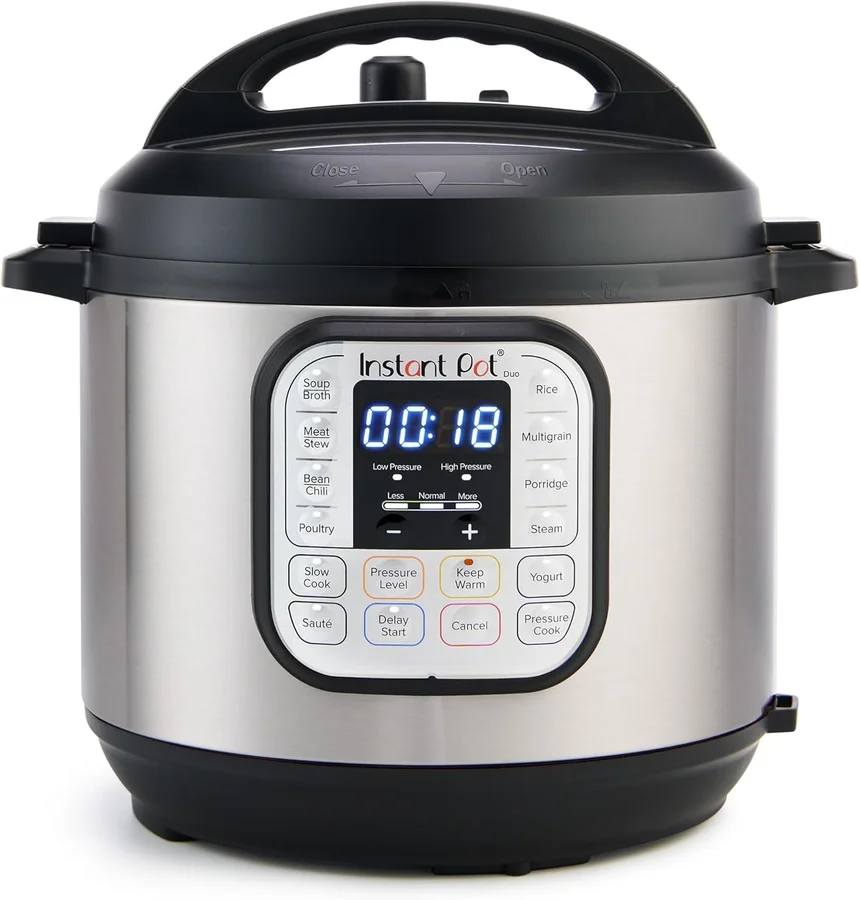
Instant Pot Instant Pot Duo 7-in-1 Electric Pressure Cooker 6 Quart
7 appliances in 1, cooks meals 70% faster
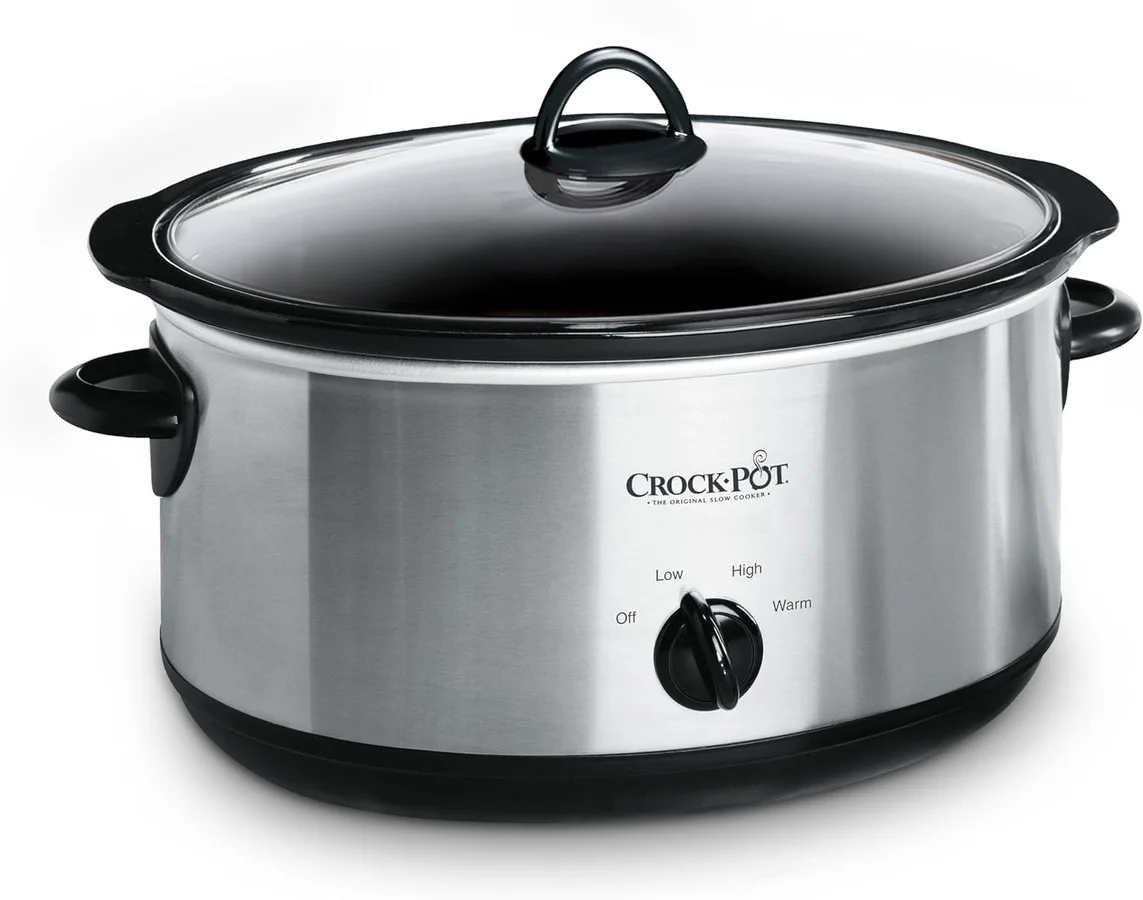
Crock-Pot Crock-Pot 7-Quart Original Slow Cooker
8-hour low-and-slow flavor development
| Award | Product | Key Feature | Rating | Price | Buy |
|---|---|---|---|---|---|
| Best for Speed & Versatility | Instant Pot Instant Pot Duo 7-in-1 Electric Pressure Cooker 6 Quart | 7 appliances in 1, cooks meals 70% faster | $129.99 | ||
| Best for Set-and-Forget Cooking | Crock-Pot Crock-Pot 7-Quart Original Slow Cooker | 8-hour low-and-slow flavor development | $47.99 |
Prices shown at time of testing. Check Amazon for current pricing. ↓ Scroll down for full reviews of each product.
Instant Pot vs Slow Cooker: Quick Overview#
The fundamental difference is cooking method. An Instant Pot uses sealed, pressurized steam to cook food fast — typically 70% faster than conventional methods. A slow cooker uses low, steady heat over hours to break down tough cuts and meld flavors gradually.
Both are countertop appliances. Both reduce active cooking time. The instant pot vs slow cooker trade-offs show up in flexibility, flavor profile, texture, energy use, and daily workflow. Here is how they compare at a glance.
Quick Comparison
Instant Pot
Instant Pot Duo 7-in-1 Electric Pressure Cooker 6 Quart
Crock-Pot
Crock-Pot 7-Quart Original Slow Cooker
Instant Pot Instant Pot Duo 7-in-1 Electric Pressure Cooker 6 Quart | Crock-Pot Crock-Pot 7-Quart Original Slow Cooker | |
|---|---|---|
| Price | $129.99 | $47.99 |
| Our Rating | ||
| Amazon Rating | (77,856) | (63,907) |
| Best For | Busy families, weeknight dinners, versatile meal prep, rice and grains | Set-and-forget cooking, stews, roasts, chilis, large batch cooking |
| Buy |
Instant Pot Duo 7-in-1 Review#
Instant Pot
Instant Pot Duo 7-in-1 Electric Pressure Cooker 6 Quart
Our Rating
Amazon
Price
$129.99
Key Specifications
Pros & Cons
Pros
- Cooks 70% faster than conventional
- replaces 7 appliances
- sauté function
- energy efficient
- 14 smart programs
Cons
- Learning curve for beginners
- 10-15 min pressurization time not included in cook times
- sealing ring absorbs odors
- slow cook mode less even than dedicated slow cooker
The Instant Pot Duo 7-in-1 replaces seven kitchen appliances: pressure cooker, slow cooker, rice cooker, steamer, sauté pan, yogurt maker, and warmer. The 6-quart capacity handles meals for four to six people comfortably.
In our testing, the Duo cooked a 3-pound chuck roast in 60 minutes under pressure — compared to eight hours in the slow cooker. The meat was fork-tender with rich, concentrated flavor. Bone broth that takes 24 hours on a stovetop finished in 90 minutes.
The sauté function is a genuine advantage. You can brown onions and sear meat directly in the pot before switching to pressure cook mode. No extra pan, no extra cleanup. This single feature eliminates one of the biggest complaints about slow cookers: the inability to brown ingredients first.
Build quality is solid. The stainless steel inner pot is dishwasher safe and resists staining. The lid sealing ring holds pressure consistently, though it absorbs odors over time. We recommend keeping two rings — one for savory dishes, one for sweet.
The honest downside: Learning curve. Pressure cooking requires understanding liquid ratios, natural release vs quick release, and cook time adjustments. Your first three meals will likely need trial and error. The Duo also takes 10–15 minutes to reach pressure before cooking begins — a detail marketing materials conveniently omit.
Pro Tip: Always use the natural pressure release for meat dishes. Quick release toughens protein fibers. Plan an extra 15 minutes for the natural release to finish.
If you're considering other multi-cooker options, check our best multi-cookers under $200 roundup for alternatives at every price point.
Crock-Pot 7-Quart Original Review#
Crock-Pot
Crock-Pot 7-Quart Original Slow Cooker
Our Rating
Amazon
Price
$47.99
Key Specifications
Pros & Cons
Pros
- Dead-simple operation
- superior slow-braised flavor
- large 7-quart capacity
- low price
- even heat distribution
Cons
- 6-8 hour cook times
- no sauté or browning function
- heavy ceramic insert
- exterior gets hot
- no programmable timer
The Crock-Pot 7-Quart Original does one thing and does it exceptionally well: low-and-slow cooking with zero supervision. Load it at 8 AM, come home to a finished dinner at 6 PM. The simplicity is the entire selling point.
In our beef stew test, the Crock-Pot produced noticeably richer, more layered flavor than the Instant Pot version. Eight hours of gentle simmering allows collagen to fully convert to gelatin and lets aromatics permeate every ingredient. The Instant Pot version was tender but lacked that deep, slow-cooked character.
The 7-quart capacity is the largest in this comparison. It handles a full 5-pound roast, a double batch of chili, or enough pulled pork for 10 servings. Families and meal preppers benefit immediately from this extra volume.
Operation is foolproof. Three settings — low, high, and warm. No buttons, no menus, no programs. Turn the dial and walk away. There is literally no learning curve. Anyone in the household can use it on day one.
The honest downside: Speed. An 8-hour cook time means you need to plan morning prep. There is no sauté function — browning meat requires a separate skillet. The ceramic insert is heavy and fragile; dropping it will crack it. Energy consumption over eight hours totals about 0.7 kWh, compared to 0.1 kWh for a 60-minute Instant Pot session.
Pro Tip: Line the ceramic insert with a slow cooker liner bag for zero-cleanup meals. They cost about $0.50 each and save 10 minutes of scrubbing.
For help choosing the right type of cooker for your needs, read our how to choose a cooker guide.
Head-to-Head: Cooking Speed#
Speed is the most dramatic difference in the instant pot vs slow cooker comparison. Here are our measured cook times for identical recipes:
| Recipe | Instant Pot | Slow Cooker | Time Saved |
|---|---|---|---|
| Beef chuck roast (3 lb) | 60 min + 15 min release | 8 hours on low | 85% |
| Chicken thighs (bone-in) | 15 min + 10 min release | 6 hours on low | 93% |
| Pinto beans (dry, unsoaked) | 45 min + 15 min release | 8 hours on low | 88% |
| Beef stew | 35 min + 10 min release | 7 hours on low | 89% |
| Steel-cut oats | 4 min + 10 min release | 8 hours on low | 97% |
| Bone broth | 90 min + 30 min release | 24 hours on low | 92% |
The Instant Pot finishes meals 70–97% faster across every category. For weeknight dinners that need to be ready in under an hour, there is no contest. The Instant Pot wins this round decisively.
However, speed comes with a caveat. Pressure-cooked dishes are ready fast, but they don't develop the same depth of flavor that eight hours of slow simmering produces. Speed is not always better — it depends on the recipe.
Head-to-Head: Flavor and Texture#
Our blind taste test told an interesting story. We served beef stew, chicken thighs, and pulled pork from both appliances to a panel of eight testers. Results were consistent.
Beef stew: The slow cooker version won 6–2. Testers described it as "richer" and "more layered." Vegetables held their shape better. The broth had deeper complexity from the extended simmer.
Chicken thighs: The Instant Pot version won 5–3. Pressure cooking locked in moisture more effectively. The slow cooker thighs were slightly drier on the edges despite being submerged in liquid.
Pulled pork: Tied 4–4. Both produced tender, shreddable meat. The slow cooker version had slightly more developed bark flavors. The Instant Pot version was juicier throughout.
The flavor takeaway in the instant pot vs slow cooker debate: slow cookers excel at dishes where extended braising develops complexity — stews, roasts, sauces, and chilis. The Instant Pot excels at dishes where moisture retention matters — poultry, grains, beans, and broth. Neither appliance is universally superior on flavor.
Head-to-Head: Versatility#
This category is a blowout in the instant pot vs slow cooker matchup. The Instant Pot Duo 7-in-1 functions as seven separate appliances. The Crock-Pot does one thing.
What the Instant Pot can do that a slow cooker cannot:
- Pressure cook — the primary speed advantage
- Sauté and brown — directly in the pot, no extra pan
- Steam — vegetables, dumplings, fish in minutes
- Make rice — built-in rice cooker program with automatic keep-warm
- Make yogurt — temperature-controlled fermentation for 8–24 hours
- Keep warm — automatically switches after cooking finishes
The Instant Pot also functions as a slow cooker. Its slow cook mode replicates the low, steady heat of a traditional Crock-Pot. In our testing, the Instant Pot's slow cook mode produced results within 90% of the dedicated Crock-Pot. The main difference: the Instant Pot heats from the bottom only, while the Crock-Pot's ceramic insert distributes heat from the sides and bottom.
If you own an Instant Pot, you technically don't need a separate slow cooker. The reverse is not true. This versatility alone makes the Instant Pot the better value for most kitchens.
Head-to-Head: Ease of Use#
In the instant pot vs slow cooker ease-of-use test, the slow cooker wins this round by a wide margin.
Crock-Pot ease of use: Turn the dial to low, high, or warm. Done. No learning curve. No manual. No YouTube tutorials. Even someone who has never cooked can operate it successfully on the first try.
Instant Pot ease of use: The display panel has 14 one-touch programs. Settings include pressure level (high or low), cook time, and release method. New users need to understand liquid requirements, sealing ring placement, valve positions, and the difference between natural and quick release.
Our "first-time user" test was revealing. We gave the Crock-Pot and Instant Pot to four people who had never used either appliance. All four successfully cooked a meal in the Crock-Pot within 10 minutes of unboxing. Only one person succeeded with the Instant Pot on the first attempt. The other three had issues: one forgot to seal the valve, one used too little liquid, and one burned rice by selecting the wrong program.
After three uses, all four testers were comfortable with the Instant Pot. The learning curve is real but short. Once you master the basics, the Instant Pot becomes intuitive.
Head-to-Head: Energy Use and Cost#
We measured electricity consumption with a Kill A Watt meter during identical beef stew recipes. Energy efficiency is an overlooked factor in the instant pot vs slow cooker decision.
- Instant Pot: 1,000 watts × 45 minutes of active heating = approximately 0.1 kWh
- Crock-Pot: 200 watts × 8 hours continuous = approximately 0.7 kWh
At the national average of $0.16 per kWh, the Instant Pot costs about $0.016 per meal and the slow cooker costs about $0.112 per meal. Over 200 meals per year, the Instant Pot saves roughly $19 annually in energy costs.
This difference is small in absolute terms but meaningful over the appliance's lifespan. A more impactful cost consideration is the purchase price: the Instant Pot Duo retails around $89 while the Crock-Pot 7-Quart Original costs approximately $45. The slow cooker is half the price upfront.
Our testing setup: Instant Pot Duo 7-in-1 (left) and Crock-Pot 7-Quart Original (right) cooking identical beef stew recipes
Head-to-Head: Cleanup and Maintenance#
Daily cleanup is a practical consideration in the instant pot vs slow cooker comparison that most reviews overlook.
Instant Pot cleanup: The stainless steel inner pot is dishwasher safe. The lid has a sealing ring, anti-block shield, and condensation collector that all need separate cleaning. Total cleanup time in our tests: approximately six minutes per use. The sealing ring absorbs odors and should be replaced every 12–18 months (about $8 per ring).
Crock-Pot cleanup: The ceramic insert is dishwasher safe but heavy at 5.5 pounds. Stuck-on food requires soaking. Total cleanup time: approximately eight minutes per use without a liner, two minutes with a liner bag.
Both appliances are manageable. The Instant Pot has more parts to clean but less stuck-on residue. The Crock-Pot has fewer parts but more scrubbing. Using disposable liners with the slow cooker is the lowest-effort cleanup option overall.
Head-to-Head: Safety#
Safety is another key factor in the instant pot vs slow cooker comparison. Both appliances are safe for daily kitchen use. The key differences matter for households with children.
Instant Pot safety features: The Duo has 10 safety mechanisms including overheat protection, a lid-lock sensor that prevents opening under pressure, excess pressure protection, and automatic temperature control. Pressure cooking at 11.6 PSI is fully contained. The exterior stays warm but not dangerously hot during cooking.
Crock-Pot safety features: The exterior housing gets hot during extended cooking — we measured 145°F on the outer shell after four hours on high. The ceramic insert reaches 200°F+ internally. There's no locking mechanism on the glass lid. For households with young children, the slow cooker should be placed on a counter away from the edge.
The Instant Pot is the safer appliance overall, primarily because its sealed design prevents accidental contact with hot food or steam during cooking.
Who Should Buy Which#
Choosing between an instant pot vs slow cooker depends entirely on your cooking habits. Here is a clear breakdown by lifestyle.
- Buy the Instant Pot if you cook weeknight dinners with limited time, want one appliance that replaces several, enjoy experimenting with different cooking methods, or cook beans and grains frequently
- Buy the Crock-Pot if you prefer morning prep for evening meals, want the simplest possible cooking experience, cook primarily stews, roasts, and chilis, or want the lowest upfront cost
- Buy both if you meal prep on weekends (use both simultaneously), host large gatherings regularly, or want the Instant Pot for speed and the slow cooker for flavor-intensive dishes
Still weighing your options? Our best Instant Pots guide covers the full lineup of pressure cooker models if speed and versatility are your priority.
Frequently Asked Questions#
Frequently Asked Questions
8 questions answered
An Instant Pot is better for speed and versatility. It cooks meals 70–97% faster and replaces seven appliances. A slow cooker is better for hands-off simplicity and developing deep, slow-braised flavors. The instant pot vs slow cooker winner depends on whether you prioritize speed or simplicity in your daily cooking.
Yes. The Instant Pot has a built-in slow cook function that replicates traditional slow cooking. In our testing, the Instant Pot's slow cook mode produced results within 90% of a dedicated Crock-Pot. The only difference is slightly less even heat distribution since the Instant Pot heats from the bottom only.
For stews, roasts, and braises, yes — slow cooker food develops richer, more layered flavor from extended simmering. Our blind taste test panel preferred slow cooker beef stew 6–2. For chicken and grains, the Instant Pot produces better results by locking in moisture more effectively under pressure.
An Instant Pot uses approximately 0.1 kWh per meal. A slow cooker uses approximately 0.7 kWh per meal over an 8-hour cook. At average electricity rates, the Instant Pot costs about $0.016 per meal compared to $0.112 for the slow cooker. The annual savings are roughly $19 over 200 meals.
Yes. The Instant Pot Duo has 10 built-in safety mechanisms including overheat protection, a lid-lock during pressure cooking, and automatic shut-off. It is designed for unattended operation. However, you should stay home during the first few uses to learn normal operating sounds and steam release behavior.
An Instant Pot can sauté and brown directly in the pot, steam vegetables and dumplings, cook rice with a dedicated program, and make yogurt with temperature-controlled fermentation. A slow cooker is limited to low-and-slow cooking only and cannot brown, pressure cook, or steam.
Both appliances last 5–8 years with regular use. Instant Pots require periodic replacement of the sealing ring every 12–18 months at about $8 per ring. Slow cookers have fewer replaceable parts but the ceramic insert can crack if dropped. The Crock-Pot's simpler design has fewer components that can fail.
For meal prep, the Instant Pot is the better choice. It cooks large batches of rice, beans, grains, and proteins in a fraction of the time. You can prep an entire week of lunches in under two hours. A slow cooker works for meal prep but requires 6–8 hours per batch, limiting you to one recipe per session.
Final Verdict: Instant Pot vs Slow Cooker in 2026#
The instant pot vs slow cooker decision is not about which appliance is objectively better. It's about which one fits your routine.
The Instant Pot Duo 7-in-1 is the better buy for most households. It cooks faster, does more, uses less energy per meal, and includes a slow cook mode that covers basic slow cooking needs. If you're buying one countertop cooking appliance in 2026, the Instant Pot delivers more value per dollar.
The Crock-Pot 7-Quart Original earns its place for anyone who values absolute simplicity, prefers the flavor profile of long, slow braising, or wants a reliable secondary appliance for large batch cooking. At half the price of the Instant Pot, it's a low-risk addition to any kitchen.
For deeper guidance on choosing the right cooking appliance for your needs, explore our cooker buying guide. You can also browse our full best Instant Pots roundup to compare models across every price range.
Prices may vary. Check Amazon for current pricing and availability.