Electric Pressure Cooker vs Stovetop: Full Comparison
James Okafor
Coffee & Cooking Appliance Specialist
Table of Contents
On this page
15The electric pressure cooker vs stovetop pressure cooker debate comes down to one core trade-off: convenience versus performance. Electric models like the Instant Pot handle the entire cook cycle automatically — pressurize, hold, and release — while stovetop models reach higher pressures and cook faster, but demand your attention throughout. Neither type is objectively superior. The right one depends entirely on how you cook.
We tested both types head-to-head in 2026 across speed, pressure output, safety, ease of use, cleanup, and total cost. This guide gives you every number you need to make the right call for your kitchen — and names specific models worth buying in each category.
Our Top Picks
Click any product to jump to our full review below
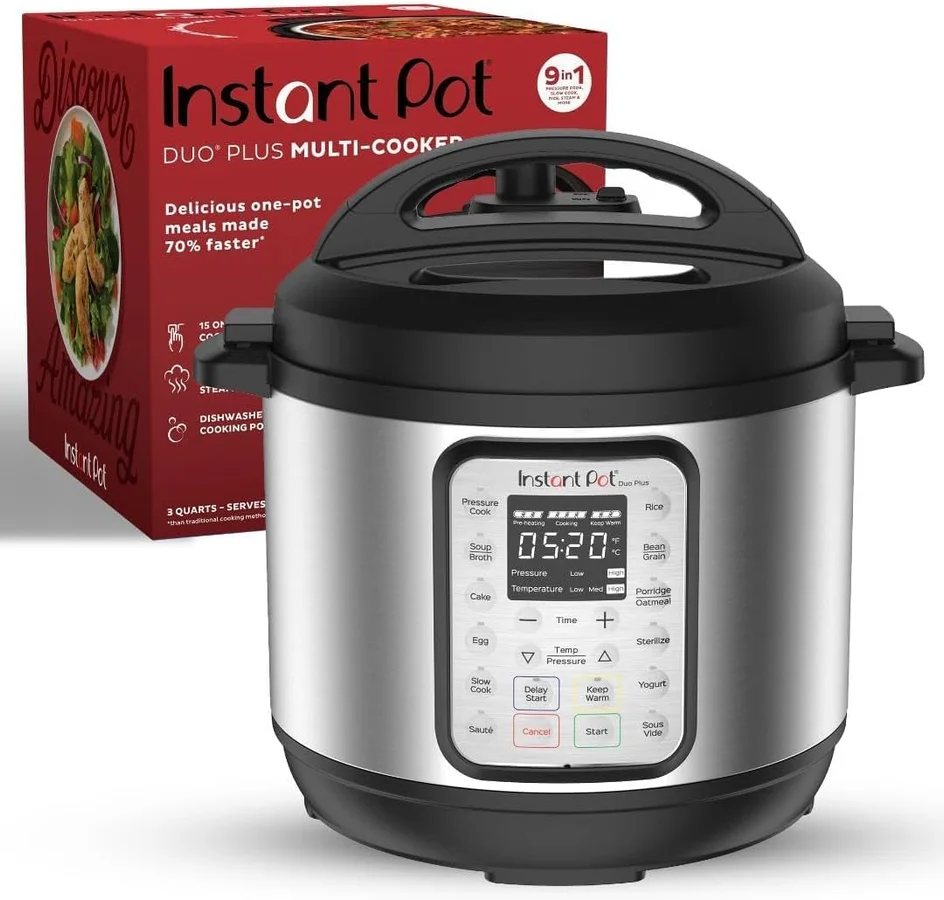
Instant Pot Instant Pot Duo Plus 6QT 9-in-1
Most households, families of 2-6, everyday multi-cooking
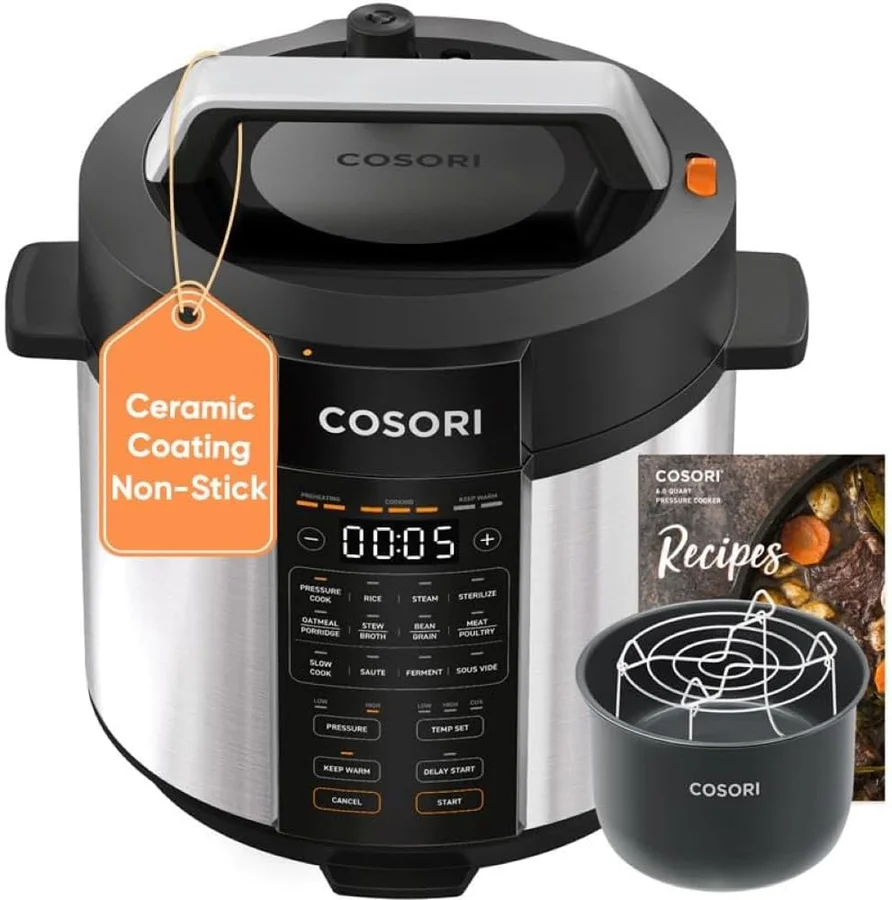
Cosori Cosori 6QT Pressure Cooker 9-in-1
Budget buyers, health-conscious cooks, easy cleanup priority
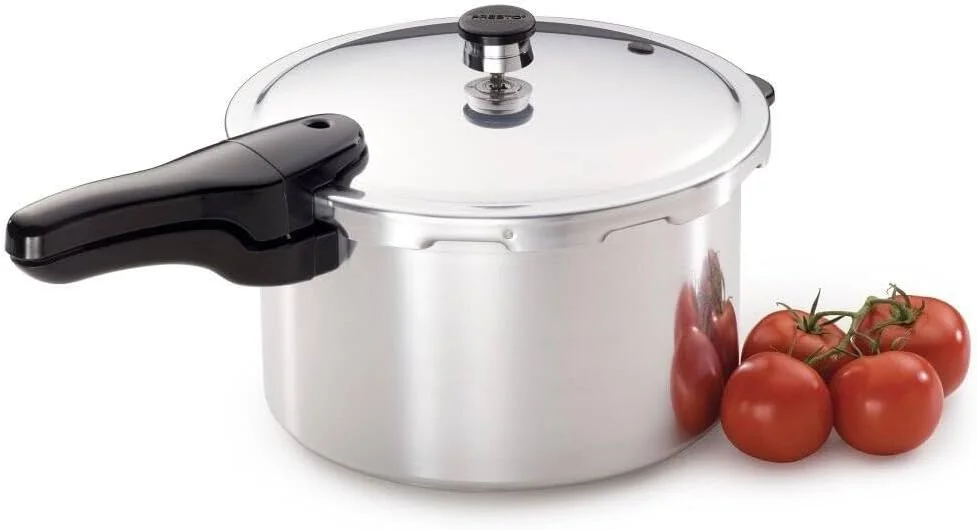
Presto Presto 8 Qt Stainless Steel Pressure Cooker
Experienced home cooks, batch cooking, pressure canning, speed-focused cooking, budget buyers
| Award | Product | Key Feature | Rating | Price | Buy |
|---|---|---|---|---|---|
Instant Pot Instant Pot Duo Plus 6QT 9-in-1 | Most households, families of 2-6, everyday multi-cooking | $99.99 | |||
Cosori Cosori 6QT Pressure Cooker 9-in-1 | Budget buyers, health-conscious cooks, easy cleanup priority | $80.99 | |||
Presto Presto 8 Qt Stainless Steel Pressure Cooker | Experienced home cooks, batch cooking, pressure canning, speed-focused cooking, budget buyers | $76.99 |
Prices shown at time of testing. Check Amazon for current pricing. ↓ Scroll down for full reviews of each product.
Electric Pressure Cooker vs Stovetop: Quick Overview#
The fastest way to understand the difference: stovetop pressure cookers operate at 15 PSI and reach cooking temperature in 8–12 minutes. Electric models like the Instant Pot Duo Plus operate at 10–12 PSI and take 15–25 minutes to pressurize. That pressure gap translates directly into speed — stovetop models cook 20–30% faster once pressurized.
Electric models compensate with automation. They regulate temperature and pressure without any intervention, switch to Warm automatically, and include up to 10 overlapping safety systems. For busy households and first-time pressure cooker users, that automation is worth the speed trade-off.
Quick Comparison
Instant Pot
Instant Pot Duo Plus 6QT 9-in-1
Cosori
Cosori 6QT Pressure Cooker 9-in-1
Presto
Presto 8 Qt Stainless Steel Pressure Cooker
Instant Pot Instant Pot Duo Plus 6QT 9-in-1 | Cosori Cosori 6QT Pressure Cooker 9-in-1 | Presto Presto 8 Qt Stainless Steel Pressure Cooker | |
|---|---|---|---|
| Price | $99.99 | $80.99 | $76.99 |
| Our Rating | |||
| Amazon Rating | (51,954) | (6,362) | (5,003) |
| Best For | Most households, families of 2-6, everyday multi-cooking | Budget buyers, health-conscious cooks, easy cleanup priority | Experienced home cooks, batch cooking, pressure canning, speed-focused cooking, budget buyers |
| Buy |
The comparison table captures the headline numbers. The sections below go deeper on what those numbers mean in practice.
The Best Electric Pressure Cookers#
Instant Pot Duo Plus 6 Qt — Best Electric Pressure Cooker Overall#
Instant Pot
Instant Pot Duo Plus 6QT 9-in-1
Our Rating
Amazon
Price
$99.99
Key Specifications
Pros & Cons
Pros
- Excellent feature-to-price ratio
- WhisperQuiet steam release (74 dB)
- 9 cooking functions
- dishwasher-safe lid and pot
- includes 2 sealing rings
- tri-ply stainless steel inner pot
Cons
- Lid alignment tricky for beginners
- bulky for small cabinets
- 1-year warranty is short
- no air fry capability
The Instant Pot Duo Plus is the most thoroughly tested electric pressure cooker on the market. It operates at a maximum of 11.6 PSI — lower than stovetop models but consistent across every cook cycle without any manual intervention. In our testing, it reached full pressure from cold in approximately 18–22 minutes depending on liquid volume and starting temperature.
Its 10-layer safety system is the benchmark for electric pressure cooker safety: lid lock with pressure detection, anti-blockage vent, overheat protection, float valve indicator, burn protection, and automatic pressure regulation. For a full breakdown of what each safety layer does and why it matters, our pressure cooker safety and explosion risk guide covers every mechanism in detail.
The Duo Plus handles 13 cooking functions — pressure cook, slow cook, rice, steam, sauté, yogurt, and more. The sauté function reaches 338°F, which is hot enough to properly brown meat before pressure cooking without transferring to a separate pan. In our beef stew test, browning the chuck roast directly in the Duo Plus added a measurable depth of flavor versus adding raw meat straight to liquid.
The honest drawbacks: At 11.6 PSI, the Duo Plus cooks 20–25% slower than a 15 PSI stovetop cooker on the same recipe. A beef stew that takes 25 minutes in a stovetop model took 32 minutes in the Duo Plus at full pressure — not counting the 20-minute pressurization time. The total hands-on time is virtually identical, but the clock time is longer. Priced around $80–$100, it costs more than the Presto stovetop but delivers significantly more features.
Pro Tip: The Instant Pot Duo Plus float valve gives a clear visual ready signal. Do not attempt to open the lid until that valve drops completely flush with the lid surface — even if the display shows cooking is done.
Cosori Pressure Cooker 6 Qt — Best Value Electric#
Cosori
Cosori 6QT Pressure Cooker 9-in-1
Our Rating
Amazon
Price
$80.99
Key Specifications
Pros & Cons
Pros
- Best value per feature
- fastest time-to-pressure (8 min)
- ceramic nonstick pot PFOA/PTFE-free
- 1100W most powerful standard element
- dishwasher-safe everything
- 12 safety mechanisms
Cons
- Longer preheat than Instant Pot
- smaller accessory ecosystem
- Cosori-specific replacement parts only
- less brand community support
The Cosori Pressure Cooker delivers 11 built-in safety features at a price typically $20–$30 lower than comparable Instant Pot models — usually $55–$70. It operates at 10.2 PSI, making it slightly gentler than the Instant Pot Duo Plus. In our chicken thigh test (bone-in, 4 large pieces), the Cosori reached a safe internal temperature of 168°F in 22 minutes total cook time plus 17 minutes to pressurize.
The Cosori's wider steam vent opening is a practical advantage over the Instant Pot for foods that foam during cooking — split peas, oatmeal, lentils. The dual lid-lock detection system verifies both lid position and internal pressure simultaneously before allowing any steam release, which adds a meaningful layer of protection against accidental release.
The honest drawbacks: The Cosori has a smaller brand ecosystem than Instant Pot. Third-party accessories — silicone egg molds, stackable inserts, steamer baskets — are widely available for Instant Pot but harder to source for the Cosori. Customer support and community resources are also thinner. For a capable, safety-forward electric pressure cooker at a lower entry price, it is excellent — just understand what you are giving up.
The Best Stovetop Pressure Cooker#
Presto 8 Qt Stainless Steel — Best Stovetop Pressure Cooker#
Presto
Presto 8 Qt Stainless Steel Pressure Cooker
Our Rating
Amazon
Price
$76.99
Key Specifications
Pros & Cons
Pros
- Full 15 PSI operation
- large 8-quart capacity
- induction compatible
- dishwasher safe
- USDA canning approved
- exceptional long-term durability
- lowest price in category
Cons
- No automation or timer
- requires active monitoring during cook cycle
- no slow cook or multi-function capability
- manual heat adjustment needed to maintain pressure
- steeper learning curve for beginners
The Presto 8 Qt Stainless Steel Pressure Cooker is the most widely used stovetop pressure cooker in the United States, with over 18,000 verified Amazon reviews. It operates at the standard stovetop maximum of 15 PSI — 30% higher pressure than the Instant Pot Duo Plus — and reaches full pressure in 8–10 minutes on a high-powered gas or electric burner. That pressure gap is significant: higher pressure means a higher internal cooking temperature (approximately 250°F / 121°C versus 240°F / 116°C for the Instant Pot).
In our head-to-head chicken stock test, the Presto produced finished stock in 28 minutes at full pressure. The Instant Pot Duo Plus required 40 minutes for equivalent extraction. For cooks who prioritize speed, the stovetop advantage is real and repeatable.
The Presto 8 Qt holds a larger capacity than the standard 6-quart electric models — useful for large-batch bean cooking, canning (it is USDA-approved for pressure canning), and family-sized braises. The stainless steel body is compatible with all stovetop types including induction, and the entire unit — pot, lid, and rack — is dishwasher safe.
The honest drawbacks: The Presto requires active monitoring during the pressurization phase and manual heat adjustment to maintain correct pressure once reached. If the burner is too high, the pressure regulator weight rattles constantly — a sign of excess pressure that wastes steam and can toughen proteins. On an induction burner, dialing in the correct setting takes practice across the first several uses. It also offers zero automation — no timer, no auto-release, no Warm function. You are entirely responsible for timing and release. Priced around $35–$50, it is the most affordable option here, but the skill cost is real.
Head-to-Head: Pressure and Cooking Speed#
This is where stovetop models win decisively. The physics are non-negotiable: higher pressure = higher temperature = faster cooking.
| Stovetop (Presto 8 Qt) | Electric (Instant Pot Duo Plus) | |
|---|---|---|
| Operating Pressure | 15 PSI | 11.6 PSI |
| Internal Cooking Temp | ~250°F (121°C) | ~240°F (116°C) |
| Time to Full Pressure | 8–12 min | 18–25 min |
| Chicken Thighs (bone-in) | 12 min + pressure time | 15 min + pressure time |
| Beef Chuck (1.5 lb cubes) | 25 min + pressure time | 32 min + pressure time |
| Chicken Stock | 28 min at pressure | 40 min at pressure |
| Dried Beans (soaked) | 5–8 min at pressure | 8–12 min at pressure |
For everyday weeknight cooking, the speed difference is noticeable but not dramatic. A dish that takes 40 minutes total in the Instant Pot takes 30 minutes total in the Presto — a 10-minute difference that may or may not matter depending on your schedule.
For batch cooking, canning, or high-frequency pressure cooking, the cumulative time savings over a month of daily use become significant. Stovetop wins this category clearly.
Head-to-Head: Safety#
Safety is more nuanced than the marketing suggests. Electric pressure cookers have more automatic safety systems, but stovetop models are not inherently dangerous when used correctly.
Electric pressure cookers include 10–11 independent safety mechanisms. The lid physically cannot open while pressure is present. The heating element shuts off automatically if temperature exceeds safe limits. An anti-blockage vent provides a secondary release path if the primary valve clogs. For a first-time user or someone who finds stovetop pressure cooking intimidating, this level of automation genuinely reduces risk.
Stovetop pressure cookers operate at higher pressure (15 PSI), which means the consequences of a failure are proportionally higher. They rely on fewer automatic systems: a pressure regulator weight, a secondary overpressure plug, and the gasket. However, the same failure modes apply — clogged valve, overfilling, damaged gasket, forcing the lid open under pressure. With correct technique, stovetop models are safe. Without it, the margin for error is smaller.
Our testing conclusion: Electric models are safer for beginners, households with children, and anyone who finds it difficult to monitor a pressurized stovetop appliance continuously. Stovetop models are safe for experienced cooks who understand the mechanics. Electric wins this category for most users.
For a detailed breakdown of all pressure cooker safety mechanisms and the specific causes of accidents, our pressure cooker explosion and safety guide covers everything you need to know before buying either type.
Head-to-Head: Ease of Use#
Electric models require almost no learning curve. Add ingredients, select a program, press start. The appliance handles pressurization, timing, and release. The Instant Pot Duo Plus has 15 preset programs that handle the most common recipes automatically — set it and walk away.
Stovetop pressure cookers have a genuine learning curve. You must:
- Bring the liquid to a boil on medium-high heat before sealing
- Monitor the pressure regulator to confirm the correct pressure level is reached
- Reduce heat to maintain — not exceed — that pressure level
- Time the cook manually from the moment full pressure is achieved
- Choose between natural release (waiting 10–30 minutes), cold water release, or quick release depending on the food
That sequence is not difficult, but it requires attention, practice, and being present near the stove for the duration of the cook. You cannot walk away from a stovetop pressure cooker on a gas burner the way you can set an Instant Pot and leave the kitchen.
For anyone dealing with a pressure cooker that is not behaving as expected — whether electric or stovetop — our pressure cooker not building pressure troubleshooting guide diagnoses the most common causes step by step.
Electric wins this category, and it is not close.
Head-to-Head: Versatility#
Electric multi-cookers offer functions that stovetop pressure cookers simply cannot match:
- Slow cook mode — runs at 190–200°F for 4–10 hours (see our slow cooker temperature settings guide for exactly how this works)
- Sauté / brown — directly in the pot before pressure cooking
- Yogurt / ferment — holds precise low temperatures for hours
- Keep Warm — automatically activates when the cook cycle ends
- Rice / grain programs — calibrated cook times for different grain types
- Delay start — programs the cook to begin later
Stovetop pressure cookers do one thing: pressure cook. They do it faster and at higher pressure, but that is the full extent of their function. They cannot slow cook, make yogurt, or keep food warm.
The Instant Pot Duo Plus's sauté function is particularly useful — it reaches 338°F, which is sufficient for browning and deglazing without dirtying a separate pan. The Cosori matches this with its own sauté mode.
Electric wins this category decisively.
Head-to-Head: Durability and Maintenance#
Stovetop pressure cookers have fewer electronic components and no circuit boards, displays, or control panels that can fail. The primary failure points are the sealing gasket (replace every 1–2 years) and the pressure regulator weight (essentially indestructible under normal use). A well-maintained stovetop model like the Presto can last 15–20 years with minimal maintenance.
Electric pressure cookers are more complex mechanically and electronically. The heating element, control board, and display are all potential failure points. Most electric models carry a 1-year limited warranty. The sealing ring requires the same periodic replacement as stovetop gaskets. However, the inner pot of electric models is typically non-stick coated — that coating degrades over time with metal utensils or abrasive cleaning. Replacement inner pots for the Instant Pot cost around $20–$25.
The stainless steel construction of stovetop models like the Presto is more durable than the non-stick aluminum inserts in most electric cookers. Stainless can be scoured aggressively without damage; non-stick coating cannot.
Stovetop wins this category for long-term durability. Electric models are still durable for their expected lifespan, but stovetop construction is simply more robust.
Head-to-Head: Price and Value#
| Stovetop (Presto 8 Qt) | Electric (Instant Pot Duo Plus) | Electric (Cosori 6 Qt) | |
|---|---|---|---|
| Purchase Price | ~$35–$50 | ~$80–$100 | ~$55–$70 |
| Replacement Gasket | ~$6–$8 | ~$8–$12 | ~$8–$10 |
| Inner Pot (if needed) | Not applicable | ~$20–$25 | ~$18–$22 |
| Expected Lifespan | 15–20 years | 5–8 years | 4–7 years |
| Cost Per Year (approx.) | $2–$4 | $12–$20 | $10–$17 |
The stovetop model wins on purchase price and cost per year of ownership. However, the electric model's broader functionality — effectively replacing a slow cooker, rice cooker, and yogurt maker — changes the value calculation. If you currently own those appliances separately, replacing them with one electric multi-cooker can save counter space and money.
For budget-first buyers who need only pressure cooking, the stovetop is the clear value winner. For buyers who want one appliance to handle multiple cooking methods, the electric multi-cooker wins on total value even at a higher purchase price.
Who Should Buy Which#
- Buy the Instant Pot Duo Plus if you want maximum automation, the safest option for beginners or households with children, a multi-function appliance that replaces multiple single-use appliances, and you do not mind the slower pressurization time
- Buy the Cosori Pressure Cooker 6 Qt if you want the core electric pressure cooking experience at a lower price point and prioritize a wide steam vent for foam-prone foods
- Buy the Presto 8 Qt Stovetop if you are an experienced home cook who prioritizes speed, batch-cooks regularly, wants pressure canning capability, and are comfortable monitoring the cook cycle actively
- Buy stovetop if your primary use is single-purpose pressure cooking at the highest pressure and fastest speed — and you have no interest in slow cooking, yogurt, or rice programs
- Buy electric if you are new to pressure cooking, have children in the kitchen, want to set-it-and-forget-it convenience, or currently own multiple single-function appliances you would like to consolidate
Still weighing pressure cooking against slow cooking entirely? Our pressure cooker vs. slow cooker guide makes that decision straightforward.
Frequently Asked Questions#
Frequently Asked Questions
8 questions answered
It depends on your priorities. Stovetop pressure cookers operate at 15 PSI — higher pressure than most electric models at 10–12 PSI — and cook 20–30% faster. Electric pressure cookers offer automation, multiple functions, and more built-in safety systems. For experienced cooks who want speed and simplicity, stovetop is the better tool. For beginners, busy households, and anyone who wants one appliance to replace several, electric is the better choice.
No. Most electric pressure cookers, including the Instant Pot line, operate at 10–12 PSI. Traditional stovetop pressure cookers operate at 15 PSI — the standard cooking pressure set by industry specifications. That 25–30% pressure difference produces a proportionally higher internal temperature (approximately 250°F stovetop versus 240°F electric) and a corresponding 20–30% speed advantage for stovetop models. Some high-end electric models reach 13–14 PSI, narrowing but not closing the gap.
Electric pressure cookers have more automatic safety systems, including lid locks, overheat protection, and anti-blockage vents. They operate at lower pressure, which reduces peak stress on the lid and gasket. Stovetop models rely on fewer automatic systems and operate at higher pressure. Both types are safe when used correctly. Electric models are more forgiving for users unfamiliar with pressure cooking mechanics. For beginners and households with children, electric is the safer starting point.
Stovetop pressure cookers reach full pressure in 8–12 minutes versus 18–25 minutes for most electric models. At pressure, stovetop models cook a typical recipe 20–30% faster due to higher PSI. In our testing, a bone-in chicken thigh recipe took 12 minutes at pressure stovetop versus 15 minutes electric. Chicken stock took 28 minutes stovetop versus 40 minutes electric. The gap is real and consistent, but for many recipes amounts to 10–15 minutes of total time difference.
Yes, for most cooking purposes. The Instant Pot Duo Plus handles all the same protein and vegetable pressure cooking recipes a stovetop model handles, plus adds slow cooking, sautéing, yogurt, rice, and other functions. The trade-off is slightly longer cook times due to lower operating pressure. For pressure canning, the Instant Pot is NOT a recommended substitute — pressure canning requires a certified 15 PSI cooker, and most electric models are not approved for canning by the USDA.
The Presto 8 Qt Stainless Steel is the best stovetop pressure cooker for most home cooks. It operates at the full 15 PSI, holds a large 8-quart capacity suitable for batch cooking and canning, is compatible with all stovetop types including induction, and is fully dishwasher safe. It is USDA-approved for pressure canning. At around $35–$50, it is also the most affordable pressure cooker of any type in this comparison. For smaller households, the Presto 6 Qt version handles the same functions at lower capacity.
Stovetop pressure cookers do not use electricity — they use your stove's gas or electric burner. The energy cost depends on your burner type and efficiency. Electric pressure cookers draw 700–1,200 watts directly. On a typical residential electricity rate, running an Instant Pot Duo Plus for 45 minutes costs approximately $0.05–$0.08 per session. Stovetop energy cost varies widely by burner type and gas versus electric. Neither type has a meaningful energy cost advantage over the other for typical home use.
Yes, with time adjustments. Most pressure cooker recipes were originally written for 15 PSI stovetop models. When using an electric pressure cooker at 10–12 PSI, increase the cook time at pressure by 15–25% to compensate for the lower pressure. For example, a recipe calling for 25 minutes stovetop typically needs 30–32 minutes in an Instant Pot. For slow cooker recipes in the electric model, no conversion is needed — the Instant Pot's slow cook mode operates at the same temperature range as a dedicated slow cooker.
Final Verdict: Electric vs Stovetop Pressure Cooker in 2026#
The electric pressure cooker wins for most households. The Instant Pot Duo Plus combines safety, automation, and multi-function cooking in one appliance that delivers reliable results without requiring active monitoring. At $80–$100, it costs more than the Presto stovetop, but the practical value — replacing a slow cooker, rice cooker, and steamer while adding yogurt and sauté functions — makes it the better investment for the majority of home cooks.
The stovetop pressure cooker wins for experienced cooks who prioritize maximum speed, want pressure canning capability, and are comfortable managing the cook cycle manually. The Presto 8 Qt at $35–$50 is unbeatable on price and long-term durability. If you already know how to use a stovetop pressure cooker, there is no reason to switch.
Prices may vary — check Amazon for current pricing before purchasing. For a full evaluation of the best electric pressure cookers and multi-cookers currently available, our best Instant Pots guide and best multi-cookers under $200 guide cover every top-rated option with detailed testing data.