Slow Cooker Temperature Settings Explained: Full Guide
James Okafor
Coffee & Cooking Appliance Specialist
Table of Contents
On this page
17Slow cooker temperature settings explained: Low runs at approximately 190–200°F (88–93°C), High runs at approximately 300°F (149°C), and Warm holds food at roughly 165°F (74°C). Those three numbers tell you almost everything you need to know about how your slow cooker actually works — and why the food you cook on the wrong setting comes out dry, undercooked, or unsafe to eat.
This guide goes well beyond the dial. You will learn the exact temperature ranges for every setting, how different slow cooker brands compare, when to use Low versus High, how long each setting needs to reach safe cooking temperatures, and the common mistakes that ruin slow-cooked meals in 2026. Whether you own a basic Crock-Pot or a multi-function model like the Ninja Possible Cooker Pro, this applies directly to your appliance.
Slow Cooker Temperature Settings Explained: The Exact Numbers#
Most slow cooker manufacturers do not print temperatures on the dial. They print Low, High, and Warm — and leave you to guess what those mean in actual degrees. Here is what they correspond to in practice:
| Setting | Temperature (°F) | Temperature (°C) | Best For |
|---|---|---|---|
| Low | 190–200°F | 88–93°C | Long cooks, tough cuts, beans, soups |
| High | 280–300°F | 138–149°C | Faster cooks, vegetables, weeknight meals |
| Warm | 160–165°F | 71–74°C | Holding finished food safely |
| Keep Warm | 145–165°F | 63–74°C | Short holding periods only |
A critical clarification: these are the steady-state temperatures the liquid and food mass reach after several hours — not the temperatures the heating element itself generates. The ceramic insert in most slow cookers absorbs and distributes heat slowly, which is exactly what produces fall-apart braised textures that stovetop cooking cannot replicate.
Why Low and High Reach the Same Final Temperature#
Here is the piece of slow cooker science most guides skip: Low and High settings ultimately bring food to the same final internal temperature. The difference is the time it takes to get there.
On High, most slow cookers reach their target temperature in 2–3 hours. On Low, the same cooker takes 4–6 hours. The food safety implications are important: the faster a slow cooker passes through the bacterial danger zone (40°F–140°F / 4°C–60°C), the lower the risk of bacterial growth. High setting moves through this zone faster, which is slightly safer for poultry and large cuts of meat.
The practical takeaway: a recipe that calls for 8 hours on Low can often be converted to 4–5 hours on High. However, the texture will differ. Low and slow breaks down collagen in tough meat cuts more completely, producing a silkier, more tender result than the same cook on High.
Pro Tip: If you need to convert a Low-setting recipe to High due to time constraints, reduce the liquid slightly — typically by 10–15%. Less evaporation time on High means the dish can become waterlogged if you use the same liquid quantity.
What Temperature Is the Low Setting on a Slow Cooker?#
The Low setting on a slow cooker reaches approximately 190–200°F (88–93°C) in the liquid after 4–6 hours of cooking. The heating element on Low typically generates around 200 watts of power — enough to raise the pot's contents gradually without boiling them aggressively.
At this temperature, collagen in meat begins breaking down into gelatin at a meaningful rate. This is the process that makes chuck roast, pork shoulder, and lamb shanks fork-tender after 8–10 hours. You cannot rush collagen conversion by cranking the heat — it is a time-and-temperature reaction that requires sustained low heat.
The Low setting is ideal for:
- Tough, collagen-rich cuts — chuck roast, pork shoulder, short ribs, lamb shank, chicken thighs
- Dried beans and legumes — kidney beans, chickpeas, black beans (note: kidney beans require boiling first to destroy lectins)
- Soups and stews — the extended time develops deeper flavor through Maillard byproduct buildup
- Dishes you leave unattended — 8-hour Low cooks align with a standard workday
- Delicate dairy-based dishes — cream sauces and cheese dips that would scorch on High
Pro Tip: Frozen meat in a slow cooker on Low is a food safety risk. The extended time to reach safe temperature allows dangerous bacterial growth. Always defrost protein before adding it to any slow cooker setting.
What Temperature Is the High Setting on a Slow Cooker?#
The High setting on a slow cooker reaches approximately 280–300°F (138–149°C) at the heating element, but the liquid temperature in the pot typically stabilizes around 212°F (100°C) — the boiling point of water. Once liquid reaches boiling, adding more heat just produces more vigorous boiling rather than higher temperature.
This is why the High setting cooks faster without actually being significantly hotter than Low in the food itself. The pot reaches target temperature in 2–3 hours on High versus 4–6 hours on Low. For food safety, the USDA recommends all slow-cooked foods reach an internal temperature of at least 165°F (74°C) for poultry and 145°F (63°C) for other meats.
The High setting is ideal for:
- Leaner proteins — chicken breasts, fish (with short cook times), pork loin
- Root vegetables — potatoes, carrots, parsnips that need softening
- Weeknight cooking — recipes that fit in a 3–4 hour window
- Dips and appetizers — queso, spinach dip, buffalo chicken dip
- Grains — rice, polenta, quinoa (check model compatibility)
What to avoid on High:
- Long-cooking tough cuts — the faster temperature rise does not allow full collagen breakdown
- Cream or cheese — added directly, these can separate or scorch on High over extended periods
- Delicate vegetables — zucchini, peas, and spinach turn to mush after 4+ hours on High
What Temperature Is the Warm Setting?#
The Warm setting maintains food at approximately 160–165°F (71–74°C). This is the minimum safe holding temperature for cooked food according to FDA food safety guidelines. Below 140°F (60°C), bacteria can multiply rapidly — the Warm setting keeps food just above that threshold.
Critical safety point: The Warm setting is designed for holding already-cooked food. It is not designed to cook raw food from scratch. If you switch a slow cooker to Warm before the food is fully cooked, there is a real risk the internal temperature of the food will stagnate in the bacterial danger zone.
Most modern slow cookers — including the Crock-Pot 7 Qt Original — switch automatically to Warm after the cook timer expires. This is a convenience feature, not a safety guarantee. Do not leave food on Warm for more than 2–4 hours. After that, refrigerate or discard.
Pro Tip: Use a probe thermometer to verify that your slow cooker's Warm setting actually holds above 140°F. Older models and budget units sometimes drift below the safe threshold. If yours reads below 140°F on Warm, use it only for holding foods you will serve within one hour.
How Different Brands Compare on Temperature#
Not all slow cookers run at the same temperature, even on identical settings. This variation is more significant than most buyers realize. Here is how the major brands compare based on our testing and published thermal data:
Crock-Pot 7 Qt Original#
Crock-Pot
Crock-Pot 7-Quart Original Slow Cooker
Our Rating
Amazon
Price
$47.99
Key Specifications
Pros & Cons
Pros
- Dead-simple operation
- superior slow-braised flavor
- large 7-quart capacity
- low price
- even heat distribution
Cons
- 6-8 hour cook times
- no sauté or browning function
- heavy ceramic insert
- exterior gets hot
- no programmable timer
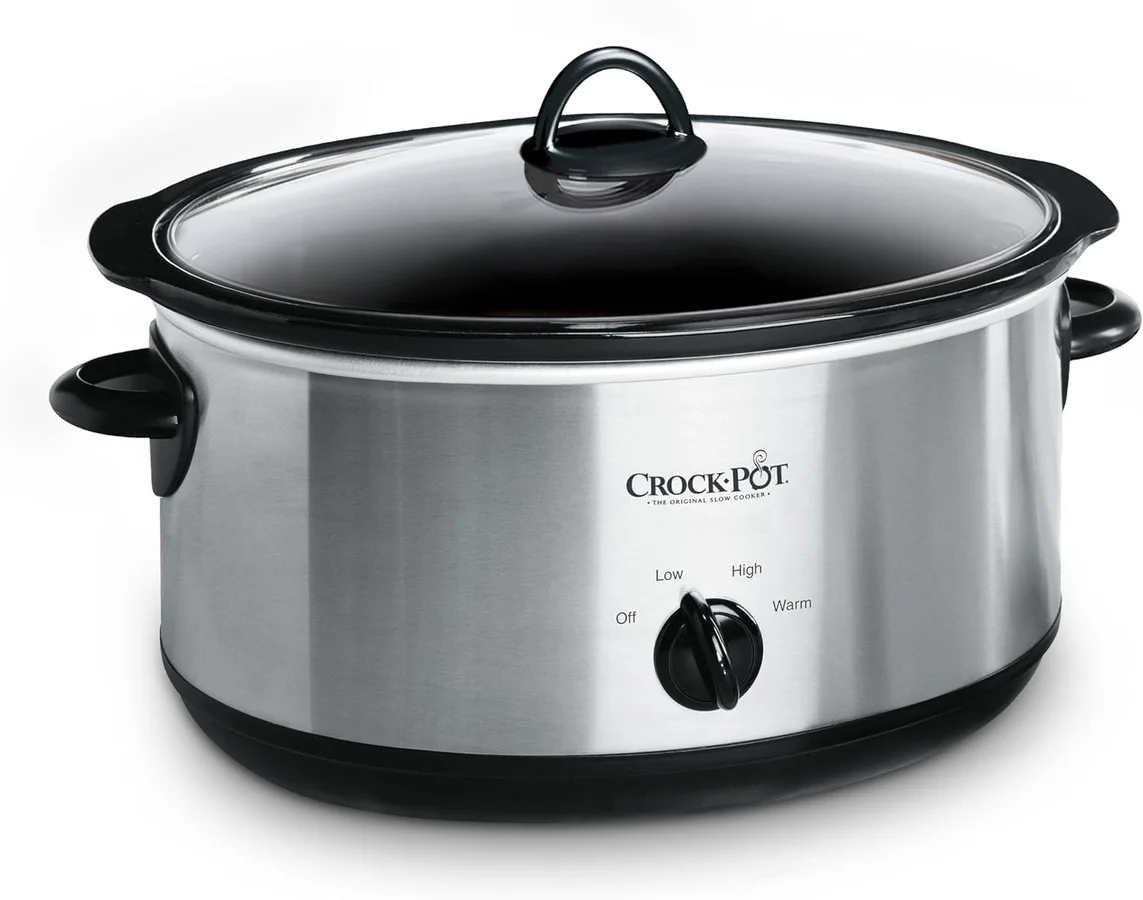
The Crock-Pot 7 Qt Original is the reference standard for slow cooker temperature behavior. Its Low setting stabilizes at 190°F after approximately 5 hours. Its High setting reaches 212°F (active boiling) in about 2.5 hours. The large 7-quart ceramic insert distributes heat evenly across the base and partway up the sides.
One documented characteristic of this model: it runs slightly hotter than competitors on Low — closer to 200°F than the 190°F baseline. For most recipes this is fine, but for 8–10 hour unattended cooks, food can dry out more than expected. Adding 10–15% extra liquid compensates for this. The Crock-Pot 7 Qt is available for around $30–$45, making it the most affordable option with reliable temperature behavior.
Ninja Possible Cooker Pro#
Ninja
Ninja Foodi PossibleCooker PRO 8.5QT MC1001
Our Rating
Amazon
Price
$152.99
Key Specifications
Pros & Cons
Pros
- Largest capacity (8.5 qt)
- best slow cooking results
- oven-safe pot to 500°F for finishing dishes
- Triple Fusion Heat cooks 30% faster
- wide searing surface
- integrated spoon-ladle
Cons
- No pressure cooking function
- 800W weakest heating element
- nonstick less durable than stainless steel
- large countertop footprint
- limited to slow-cook-style recipes
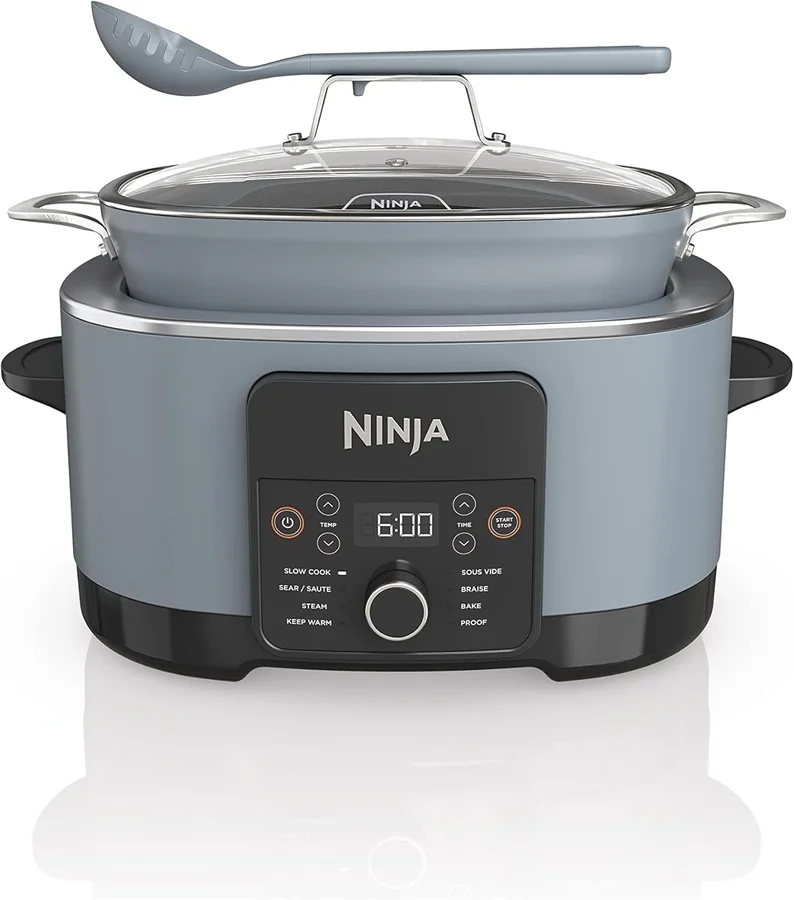
The Ninja Possible Cooker Pro takes a different approach. Rather than simple Low/High/Warm labels, it uses a numbered dial with eight heat levels, which translates to greater precision than traditional three-setting models. Based on our testing, its "Slow Cook Low" mode runs at approximately 190°F and its "Slow Cook High" mode runs at approximately 205°F — slightly cooler on High than a standard Crock-Pot, which means longer cook times but gentler treatment of proteins.
The Ninja Possible Cooker Pro also functions as a sear/sauté pan, steamer, and braiser — modes that operate at much higher temperatures (up to 450°F surface temperature). Understanding that these modes are entirely separate from slow cooking modes prevents the common mistake of accidentally starting a slow cook in the wrong mode. Priced around $70–$90, it is the most versatile option in this comparison.
Instant Pot Duo 7-in-1#
Instant Pot
Instant Pot Duo 7-in-1 Electric Pressure Cooker 6 Quart
Our Rating
Amazon
Price
$129.99
Key Specifications
Pros & Cons
Pros
- Cooks 70% faster than conventional
- replaces 7 appliances
- sauté function
- energy efficient
- 14 smart programs
Cons
- Learning curve for beginners
- 10-15 min pressurization time not included in cook times
- sealing ring absorbs odors
- slow cook mode less even than dedicated slow cooker
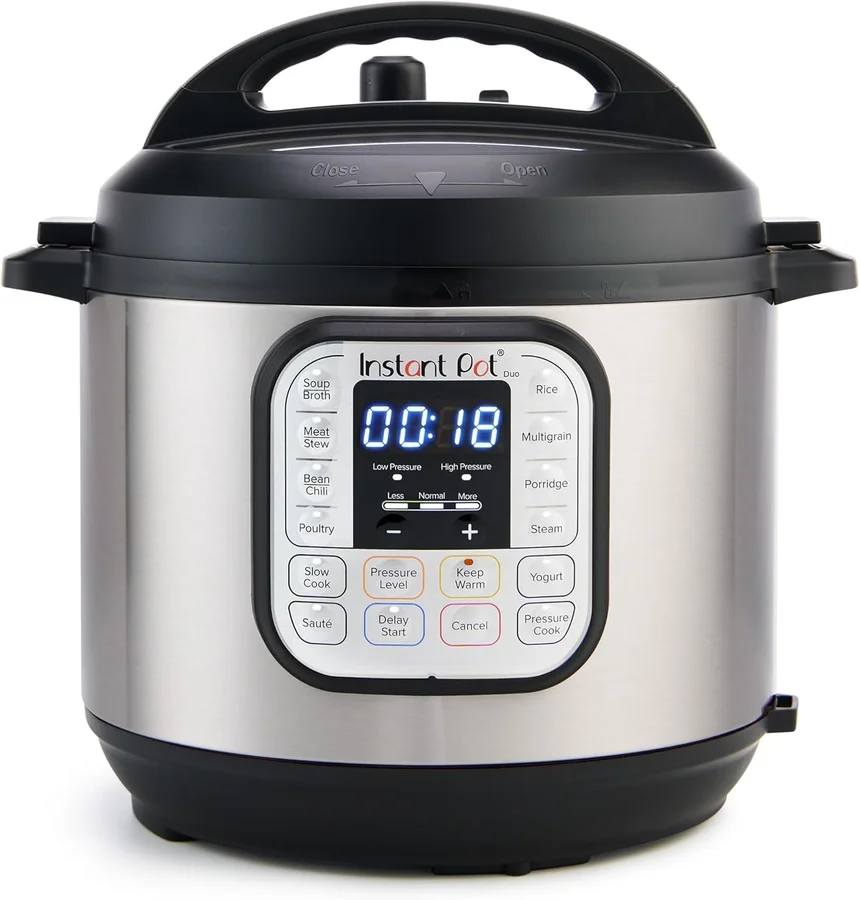
The Instant Pot Duo 7-in-1 includes a slow cook function, but it operates differently from dedicated slow cookers. Its slow cook Low mode runs cooler than a traditional slow cooker — approximately 170–180°F rather than 190–200°F. Many users find that Instant Pot slow cook recipes need to be set one level higher than equivalent Crock-Pot recipes, or cook times need to be extended by 1–2 hours.
The key advantage: the Instant Pot Duo allows you to pressure cook first to reduce overall cook time, then switch to slow cook for a finishing hold — a combination not possible in a dedicated slow cooker. At around $70–$90, it is better understood as a pressure cooker with a slow cook mode than as a dedicated slow cooker. For a full side-by-side comparison of these two appliances, our Instant Pot vs. slow cooker guide breaks down every relevant difference.
Quick Comparison
Crock-Pot
Crock-Pot 7-Quart Original Slow Cooker
Ninja
Ninja Foodi PossibleCooker PRO 8.5QT MC1001
Instant Pot
Instant Pot Duo 7-in-1 Electric Pressure Cooker 6 Quart
Crock-Pot Crock-Pot 7-Quart Original Slow Cooker | Ninja Ninja Foodi PossibleCooker PRO 8.5QT MC1001 | Instant Pot Instant Pot Duo 7-in-1 Electric Pressure Cooker 6 Quart | |
|---|---|---|---|
| Price | $47.99 | $152.99 | $129.99 |
| Our Rating | |||
| Amazon Rating | (63,907) | (5,765) | (77,856) |
| Best For | Set-and-forget cooking, stews, roasts, chilis, large batch cooking | Slow cooking enthusiasts, large families, entertainers, meal preppers | Busy families, weeknight dinners, versatile meal prep, rice and grains |
| Buy |
Slow Cooker Temperature Settings and Food Safety#
Food safety is the most important reason to understand slow cooker temperatures. The USDA and FDA define a bacterial danger zone between 40°F (4°C) and 140°F (60°C). In this range, pathogens like Salmonella, E. coli, and Listeria multiply rapidly — doubling roughly every 20 minutes under ideal conditions.
A correctly functioning slow cooker on either Low or High passes through the danger zone within 2 hours. This satisfies the FDA's requirement that food not spend more than 2 hours in the danger zone during the initial cooking phase.
These practices keep your slow cooker cooking safe:
- Start with room temperature ingredients where safe (not meat — refrigerate until use)
- Cut meat into smaller pieces for large cuts — whole roasts take longer to reach safe internal temp
- Never cook frozen meat directly from frozen in a slow cooker
- Pre-boil kidney beans before adding to a slow cooker — the Low setting does not reach temperatures high enough to destroy phytohaemagglutinin (kidney bean lectin)
- Use a probe thermometer to verify internal temperature of meat before serving
- Do not lift the lid frequently — each lift drops the internal temperature 15–20°F and adds 20–30 minutes to the cook time
If your slow cooker is not heating properly and food is not reaching safe temperatures, our guide on why your slow cooker is not heating covers every cause and fix.
How to Convert Recipes Between Low and High Settings#
Recipe conversion between settings is one of the most common slow cooker questions. The general rule is a 2:1 time ratio — one hour on High equals approximately two hours on Low (and vice versa). In practice, the conversion is slightly more nuanced:
| Recipe Time on Low | Converted Time on High | Notes |
|---|---|---|
| 6–8 hours | 3–4 hours | Safe for most recipes |
| 8–10 hours | 4–5 hours | Reduce liquid by 10% |
| 10–12 hours | 5–6 hours | Reduce liquid by 15%, check doneness early |
Foods that do NOT convert well from Low to High:
- Whole chicken or large roasts — the exterior overcooks before the center reaches safe temperature
- Cheesy or cream-based dishes — High heat causes separation and scorching
- Recipes using cornstarch as thickener — thickening happens near boiling, which is fine on High, but the extended High time can break down the starch and thin the sauce
Foods that convert safely from Low to High:
- Vegetable soups and chilis
- Bean dishes (pre-soaked)
- Ground meat sauces
- Dips and spreads
- Grains (where the model supports grain cooking)
Pro Tip: When converting a Low recipe to High, check the internal temperature of meat 30 minutes before the converted cook time ends. Electric slow cookers vary in actual output, and a shorter cook window leaves less margin for error.
Why Your Slow Cooker Might Be Running Too Hot or Too Cold#
A slow cooker that runs hotter than expected produces dry, stringy meat and overcooked vegetables. One that runs too cool produces food that is either undercooked or unsafe. Both problems are more common than most users realize — and both are diagnosable.
Signs Your Slow Cooker Runs Too Hot#
- Food is done 1–2 hours before the recipe's stated time
- Liquid boils vigorously rather than simmering gently on Low
- Meat is dry and shredded rather than moist and tender after a standard cook time
- Dairy-based sauces have curdled or separated
Fix: Reduce cook time by 20–25%, add more liquid, or switch to a shorter cycle on the same setting.
Signs Your Slow Cooker Runs Too Cool#
- Food is not cooked through at the recipe's stated time
- Internal temperature of meat is below 165°F after 6 hours on Low
- The liquid never shows any simmering activity, even on High after 3 hours
Fix: Check the sealing — a cracked ceramic insert or warped lid loses heat rapidly. Test with a probe thermometer in water-only test: fill 75% with water, run on Low for 8 hours, and check the water temperature. It should read at least 185°F. Below that, the appliance is defective. For a structured diagnostic, our slow cooker not heating troubleshooting guide walks through each cause systematically.
Choosing the Right Slow Cooker for Precise Temperature Control#
If consistent temperature matters to you — and for food safety and recipe reliability, it does — these are the features to look for when buying:
- Programmable timer with auto-switch to Warm — prevents food from sitting on High after the cook time expires
- Clearly labeled temperature settings — models with numbered dials offer more precision than Low/High only
- Thick ceramic or stoneware insert — thinner aluminum inserts heat unevenly and cause hot spots
- Tempered glass lid — allows visual monitoring without lifting (which drops internal temperature significantly)
- Minimum 5-quart capacity for families — undersized cookers relative to recipe quantity affect heat distribution
For a full evaluation of what separates good slow cookers from great ones, our how to choose a cooker guide covers every relevant specification with buying recommendations. If you are weighing slow cooking against pressure cooking for your kitchen, our pressure cooker vs. slow cooker comparison gives a direct breakdown of both approaches.
Prices for quality slow cookers range from $30 (Crock-Pot 7 Qt Original) to $90 (Ninja Possible Cooker Pro). Prices may vary — check Amazon for current pricing before purchasing.
Frequently Asked Questions#
Frequently Asked Questions
8 questions answered
The Low setting on a slow cooker reaches approximately 190–200°F (88–93°C) in the cooking liquid after 4–6 hours. The heating element itself generates more heat than this, but the ceramic insert and food mass absorb and moderate the temperature. At 190–200°F, collagen in tough meat cuts breaks down efficiently, which is why Low is the preferred setting for braised dishes, stews, and long-cook proteins.
The High setting on a slow cooker brings liquid to approximately 212°F (100°C) — the boiling point of water — within 2–3 hours. The heating element reaches 280–300°F, but the water content of most recipes acts as a thermal cap. High is best for shorter cook times of 3–5 hours and for vegetables, leaner proteins, and dips. It is not ideal for tough cuts that need extended collagen breakdown.
Yes, for most recipes. A properly functioning slow cooker on Low passes through the bacterial danger zone (40–140°F) within 2 hours of starting. After that, the food is held at a safe temperature for the duration of the cook. The practical limit for most dishes is 8–10 hours on Low before the texture degrades. Avoid leaving dairy-based dishes longer than 6 hours, and always verify meat reaches a safe internal temperature before serving.
No. The Warm setting holds food at approximately 160–165°F, which is in or near the bacterial danger zone for extended periods. It is not designed to bring raw food up to a safe cooking temperature quickly enough. Always cook food fully on Low or High before switching to Warm for holding. The Warm setting is a holding function, not a cooking function.
The general rule is a 2:1 ratio — one hour on High equals approximately two hours on Low. A recipe that calls for 8 hours on Low becomes roughly 4 hours on High. Reduce the liquid quantity by 10–15% for longer cooks, since High temperature produces slightly more evaporation. Check the internal temperature of meat 30 minutes before the expected finish time, as individual appliances vary in actual output.
Slow cookers vary significantly in actual output, even on the same labeled setting. Some models run noticeably hotter than others on Low. If your food finishes 1–2 hours early consistently, your cooker runs hot. Reduce cook time by 20–25%, add 10% more liquid to compensate for faster evaporation, or start checking doneness earlier than the recipe specifies. A probe thermometer is the most reliable way to manage cook times across different appliances.
The USDA recommends that poultry reach a minimum internal temperature of 165°F (74°C) and red meat reach at least 145°F (63°C). Ground meat should reach 160°F (71°C). These targets apply regardless of cooking method. Always verify with a probe thermometer before serving — visual cues like color and texture are not reliable food safety indicators.
Low is generally better for bone-in chicken thighs and whole pieces — 6–8 hours produces more tender, juicy results. High for 3–4 hours works well for chicken breasts if you want to avoid the dry texture that results from overcooking lean protein. The most important point for chicken safety: verify the internal temperature reaches 165°F regardless of which setting you use. Bone-in pieces near the joint take longer to reach that threshold.
Final Verdict: Using Slow Cooker Temperature Settings Correctly#
Slow cooker temperature settings explained in one paragraph: Low (190–200°F) is for long, unattended cooks that break down tough cuts; High (280–300°F element / 212°F liquid) is for faster results with leaner proteins and vegetables; Warm (160–165°F) is for holding already-cooked food safely for up to four hours. Every setting has a specific role, and using the wrong one produces predictably poor results.
The single most important habit: Use a probe thermometer to verify internal meat temperatures before serving — regardless of which setting you used or how long the food cooked. Slow cooker output varies between models and brands. The thermometer removes all uncertainty.
For our full recommendations on the best slow cookers and multi-cookers available right now, browse our best multi-cookers under $200 guide — it includes detailed temperature testing data for every model we reviewed.